
Table of Contents:
The Intense Blue of the Croatia Coast Sea
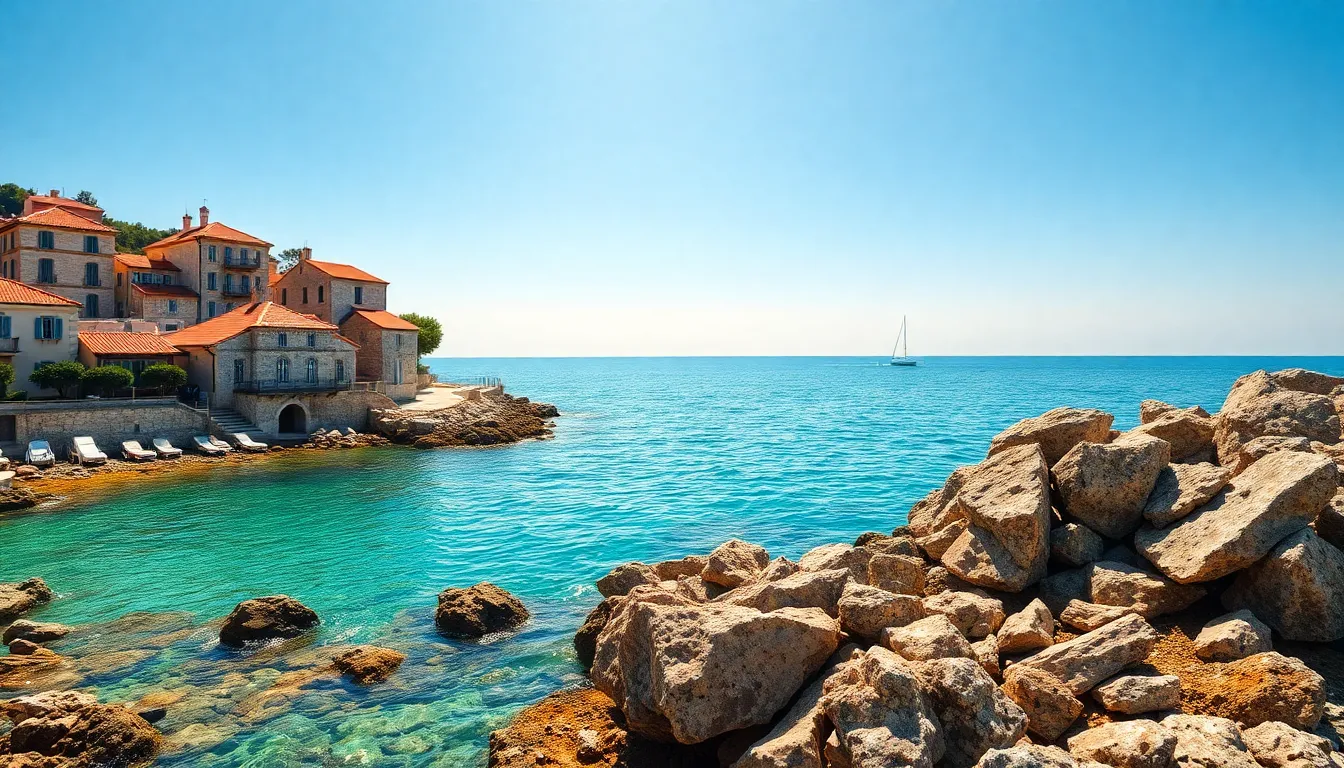
Along the croatia coast sea, blue is more than a postcard colour. It shifts with depth, light, wind, and the shape of the shore. Near a bright limestone ledge, the water may look turquoise; farther offshore, it turns cobalt or deep indigo. This changing palette gives the croatia mediterranean coast its vivid visual character.
The effect is strongest on clear summer days. Sunlight enters the upper water, scatters through tiny particles, and returns in shades ranging from green-blue to sapphire. Pale limestone below the surface can make shallow coves glow, while deeper channels appear darker and richer. The scene feels almost painted, yet it has a physical cause.
Many Croatian coastal views also benefit from strong contrast. White stone, dark green pine, and open blue water sit close together. In places such as the Dalmatian shore, this contrast changes by the hour: morning light often looks soft and silver, midday makes the sea sharper and brighter, and sunset can bring violet or steel-blue tones.
For travellers, colour offers a useful way to read the coast. Pale turquoise usually marks a shallow shelf or sheltered cove, while darker blue can signal a sudden drop in depth. Colour alone, however, is not a safety guide: boat traffic, underwater rocks, currents, and weather can change conditions quickly.
The Croatian name Jadransko more carries a strong cultural presence, but the sea has no single shade or fixed mood. It is lively beside sunlit stone, calm under a clear sky, and almost austere when wind darkens the surface. That changing character is one reason the Croatia coast sea remains so memorable long after the journey ends.
Warm Waters for Swimming, Snorkeling, and Play
The warm season turns the croatia coast sea into a natural playground for swimmers of many ages. Summer water temperatures often reach about 22–26 °C, so a short dip can easily become an afternoon in the sea. The warmth feels gentle rather than heavy, especially when a light coastal breeze moves across the surface.
For families, shallow entry points make water play simple. Children can practise floating, paddle close to shore, or explore with an adult nearby. A pair of water shoes is useful on unfamiliar beaches, since natural shorelines may contain sharp stones, sea urchins, or uneven rock.
Snorkelling reveals a different side of the croatia mediterranean coast. Fish gather around submerged rock, sea grass, and small walls near the shore. Early morning is often the best time to look underwater: visibility can be better, boat traffic is lower, and the surface is less disturbed. Bring a mask that seals well, and never touch marine life or remove shells.
- Choose a sheltered entry point and check local signs before swimming.
- Use a brightly coloured float if you move away from shore.
- Stay clear of marked boat lanes and mooring areas.
- Watch children closely, even where the water seems shallow.
- Leave sea grass, rocks, and animals exactly where you find them.
Water temperature also changes with location and weather. Sheltered bays may warm faster, while exposed areas can feel cooler after wind or rain. A thin rash vest helps during longer snorkelling sessions, even in mid-summer, and protects against sunburn because water does not block ultraviolet light.
The appeal of the croatia coast sea lies in its easy shift from quiet recreation to discovery. One moment is spent wading with a child; the next brings a glimpse of a wrasse, a crab, or a silver shoal below the surface. A mask, careful attention, and time in the water are often enough.
Key Features of Croatia’s Adriatic Coast
| Coastal Feature | What Visitors Can Expect | Best Way to Experience It | Important Consideration |
|---|---|---|---|
| Crystal-clear sea | Turquoise shallows, cobalt channels, and visible seabeds | Swimming, snorkelling, or kayaking | Avoid touching marine life and protected seagrass |
| Warm summer waters | Sea temperatures commonly around 22–26 °C | Family swimming, floating, and water play | Wear water shoes near rocky beaches and sea urchins |
| Islands and channels | More than 1,000 islands, islets, and reefs create varied routes | Ferry trips, sailing, or island-hopping | Check ferry schedules and local wind forecasts |
| Historic coastal towns | Stone lanes, fortifications, harbours, markets, and local traditions | Walking tours and visits outside peak hours | Respect residents, religious sites, and working harbours |
| Dramatic landscapes | Limestone cliffs, pine-covered slopes, beaches, and mountain backdrops | Hiking, scenic ferries, and coastal viewpoints | Carry water and use caution on exposed or uneven terrain |
| Mediterranean climate | Hot, dry summers and milder, wetter winters | Visit from May to June or September to October for gentler conditions | Protect yourself from midday heat and check wildfire notices |
| Local coastal culture | Fishing, salt production, olive growing, shipbuilding, and maritime heritage | Explore markets, family-run restaurants, and waterfront communities | Choose locally owned businesses and reduce plastic waste |
The Calm, Gentle Rhythm of the Adriatic
The gentle surface of the croatia coast sea comes from more than calm weather. Sheltered bays, offshore islands, and the long, indented shoreline can reduce the reach of open-water swell. Many coves therefore feel protected, while exposed headlands may still show the full force of the wind.
This contrast matters for travellers. A quiet bay may suit a relaxed paddle, but conditions can change near a cape or channel. The croatia mediterranean coast is also shaped by local winds. The bura is a dry, powerful northeasterly wind that can arrive suddenly, while the jugo brings moist air and a longer build-up of rougher weather.
Before taking a small boat, paddleboard, or kayak offshore, check a local forecast and look at the water, not only the sky. Whitecaps, gusts funneling between islands, and a fast-moving cloud bank are useful warning signs. Harbours and marinas may feel calm even when conditions outside are less forgiving.
- Choose sheltered routes when wind warnings are active.
- Keep a safe distance from cliffs, ferries, and moored boats.
- Wear a personal flotation device on kayaks and paddleboards.
- Return early if the wind shifts or visibility falls.
- Ask local harbour staff about exposed passages before departure.
The Adriatic’s rhythm is soft, but never entirely predictable. Its calm moments invite slow travel: a quiet paddle at dawn, a short sail between nearby islands, or an evening spent watching the surface settle. Respect for the wind makes that peace more enjoyable and far safer.
Crystal-Clear Water and Visible Seabeds
The clarity of the croatia coast sea is easiest to understand through its underwater structure. Much of the shoreline drops over pale rock, gravel, and limestone shelves rather than soft sediment. These surfaces release fewer fine particles when water moves across them, so sunlight can travel farther through the upper sea.
That visibility changes how travellers experience the croatia mediterranean coast. A swimmer can often read the shape of the seabed before entering: a flat ledge, a narrow channel, or a sudden darker hollow. Coastal exploration consequently feels more precise. You are not simply entering blue water; you are reading a submerged landscape.
Clear water also supports careful observation. Small fish gather near crevices, while sea urchins often occupy shaded rock. Patches of Posidonia oceanica, a protected seagrass species, provide shelter and feeding grounds for marine life. They may look like underwater meadows, and they are important ones. Avoid anchoring on them or dragging equipment across the leaves.
- Use reef-safe sunscreen and apply it before entering the water.
- Do not stand on living seagrass or fragile rock communities.
- Carry a small waterproof bag for personal items, not for collecting nature.
- Keep a respectful distance from octopuses, fish, and other animals.
- Use marked swimming zones when exploring near busy coastal areas.
Visibility is not constant. Rain, boat movement, algae, and local currents can reduce it within hours. Near river mouths or harbours, the water may look less transparent than in an open cove. That difference is natural and does not automatically indicate poor conditions.
The real charm of the croatia coast sea lies in this close view of the underwater world. Limestone forms, seagrass beds, tiny creatures, and changing depths create a quiet mosaic below the surface. Look carefully, move slowly, and leave the seabed untouched.
Intimate Towns Along the Croatia Mediterranean Coast
Small coastal towns give the croatia mediterranean coast its human scale. Their identity often grew from work rather than design: fishing, salt making, shipbuilding, olive farming, and trade. The waterfront is therefore practical as well as scenic. A stone quay may serve local boats in the morning and become a meeting place at dusk.
Town plans reveal this layered past. Medieval settlements often sit on a raised point or behind old walls, with narrow lanes that limit heat and wind. In places such as Ston, defensive walls and salt pans show how closely security, food, and coastal geography once belonged together. On Korčula, stone buildings and alleyways reflect centuries of maritime contact without losing a distinctly local character.
Daily life remains visible in details that large resorts can hide. Residents may buy fish near the harbour, repair nets beside a boat shed, or gather in a small square after work. Cafés are not only visitor spaces; they can function as informal living rooms. That mix makes the croatia coast sea feel inhabited rather than staged.
- Walk through residential lanes early, before deliveries and day trips begin.
- Keep voices low near homes, churches, and working harbours.
- Choose family-run taverns where menus reflect the local catch and season.
- Use public ferries and buses when possible to reduce pressure on narrow streets.
- Ask permission before photographing people, boats, or private courtyards.
Several towns also preserve an architectural dialogue between Venetian, Roman, and Slavic influences. Fortified gates, bell towers, stone loggias, and simple fishermen’s houses may stand within a few minutes of one another. The result is not a museum frozen in time but a living coastline, sometimes busy, sometimes wonderfully scruffy, where heritage and ordinary routines share the same doorstep.
To experience these places well, stay beyond the busiest midday hours. Morning markets show the working town; late afternoon reveals its social rhythm. That slower approach turns a brief coastal stop into a more meaningful encounter with the croatia mediterranean coast.
Islands, Cliffs, and Dramatic Coastal Landscapes
The islands of the croatia coast sea create a rare sense of scale. More than 1,000 islands, islets, and reefs break the eastern Adriatic into countless passages. Only about 66 islands are permanently inhabited, leaving wide stretches of shore quiet and sparsely built. From a ferry deck, the view keeps changing: a bare ridge becomes a wooded slope, then a pale cliff drops into open water.
Many islands run parallel to the mainland because their rock layers were shaped by the Dinaric mountain system. This geological pattern produces long profiles, narrow channels, and sheltered routes. It also explains why nearby islands can look related yet feel entirely different. Hvar combines cultivated slopes and ridges; Brač is known for bright limestone and its high summit, Vidova Gora; Korčula has a more wooded, enclosed character.
On the croatia mediterranean coast, cliffs are not simply scenic walls. They record the hard structure of the land. Exposed limestone faces reveal fractures, ledges, and layers formed over geological time. In the south, the coast becomes especially rugged around the Dubrovnik region and the Pelješac Peninsula, where steep terrain meets narrow sea channels.
These landscapes reward different forms of travel:
- Ferries: ideal for seeing the relationship between island ridges and mainland mountains.
- Sea kayaking: useful for exploring coves and rock arches at a quiet pace.
- Hiking: best on marked paths, especially where loose limestone and exposed edges require care.
- Sailing: suited to island-hopping, but local charts and wind forecasts remain essential.
Weather can transform the scenery quickly. A clear day reveals distant islands in sharp layers; haze later softens them into silhouettes. The bura can make exposed cliffs and narrow channels hazardous, while summer heat increases the risk of dehydration on treeless trails. Good footwear, enough water, and respect for access signs are essential: the terrain is beautiful because it is still genuinely wild in places.
One of the coast’s strongest charms is this constant dialogue between height and depth. Mountain slopes rise behind the shore, islands divide the horizon, and channels draw the eye toward another hidden passage. The croatia coast sea feels less like a single viewpoint than a moving map—layered, rugged, and difficult to take in all at once.
A Mediterranean Climate for Long Summer Days
The croatia mediterranean coast has a classic Mediterranean climate, but its weather varies from north to south and from shore to island. Summers are usually hot and dry, while winters bring more rain. This seasonal pattern shapes the best time for walking, sailing, and exploring coastal heritage.
For long summer days, June to September offers the most dependable conditions. Daylight lasts well into the evening, and clear mornings are common. July and August are the hottest months, with daytime temperatures often reaching 28–32 °C in coastal areas. Heat can feel stronger on stone streets and exposed paths, so plan active outings before 11 a.m. or after 4 p.m.
The croatia coast sea also reflects local weather differences. Northern areas, including Istria and the Kvarner region, can feel slightly cooler and more changeable. Southern Dalmatia is often warmer and drier. Islands may receive less rain than nearby mountains, while sudden wind can still alter conditions within a few hours.
- Carry water and use high-factor sunscreen during midday excursions.
- Choose light, breathable clothing and a hat for exposed sites.
- Book demanding hikes for spring, early summer, or September.
- Keep a light layer for evenings, ferry decks, and windy viewpoints.
- Check wildfire notices and local access rules during dry periods.
Spring and autumn offer a quieter version of the coast. April, May, October, and early November can bring pleasant temperatures for cycling, archaeology, and food-focused travel, though rain becomes more likely. Sea temperatures also cool outside summer, so swimming plans need more flexibility.
Winter has its own coastal character. Rainfall increases, tourist services may run on reduced schedules, and strong northeasterly winds can sweep across exposed routes. Yet the lower visitor numbers reveal a more settled side of the croatia mediterranean coast. For travellers who value space, local life, and clear seasonal contrast, that quieter period can be the real surprise.
Fazit: Experience Croatia’s Coast Sea Up Close
Seeing the croatia coast sea up close means choosing depth over speed. Do not try to cover every island in one trip. Select one mainland area and one nearby island, then leave room for an unplanned swim, a local meal, or a weather-led change of plan. This slower approach gives the coast space to become more than a sequence of viewpoints.
The best final impression often comes from small decisions. Travel by ferry instead of staying only on main roads, visit a market before the day warms up, and return to the same waterfront at different times. The croatia mediterranean coast changes with fishing activity, light, wind, and the arrival of evening crowds. A second look can reveal more than another destination.
- Choose licensed local guides for protected areas and heritage sites.
- Use official ferry timetables, since seasonal routes can change.
- Carry cash for small island businesses and rural coastal villages.
- Reserve accommodation early for July and August.
- Travel in May, June, September, or October for more space and gentler prices.
- Support businesses that reduce plastic use and respect marine habitats.
Responsible travel matters because the coast is both fragile and heavily visited. Refill a bottle, avoid disposable beach items, and never take archaeological fragments, shells, or stones from protected locations. Small choices add up, especially across thousands of kilometres of shoreline and island paths.
For a richer journey, combine three perspectives: water, land, and local memory. Spend time on a boat or ferry, walk beyond the main promenade, and learn why a harbour, fortress, vineyard, or salt pan shaped its community. That combination reveals the living character of the croatia coast sea far better than a checklist ever could.
In the end, Croatia’s Adriatic charm is not one attraction. It is the meeting of travel choices, natural force, and human history. Approach the croatia mediterranean coast with patience and curiosity, and its most enchanting details tend to appear when you stop looking for them.
Frequently Asked Questions About Croatia’s Adriatic Coast
What makes Croatia’s Adriatic coast so special?
Croatia’s Adriatic coast combines clear blue water, limestone landscapes, more than 1,000 islands, historic coastal towns, sheltered bays, and a Mediterranean climate. Its varied scenery allows travellers to enjoy swimming, snorkelling, sailing, hiking, cultural visits, and relaxed waterfront experiences.
When is the best time to visit the Croatia coast sea?
The best time depends on your travel goals. June to September generally offers the warmest weather and sea temperatures of around 22–26 °C. May, June, September, and October are often more comfortable for sightseeing, hiking, and island-hopping because visitor numbers and temperatures are usually lower.
What activities are popular along the Croatia Mediterranean coast?
Popular activities include swimming, snorkelling, kayaking, sailing, ferry trips, island-hopping, coastal hiking, scenic walks, and exploring historic towns. Visitors can also discover local food traditions, fishing harbours, salt pans, fortifications, and maritime heritage.
Are the waters along Croatia’s Adriatic coast suitable for families?
Many sheltered bays and shallow entry points are suitable for families, especially during calm weather. Adults should supervise children continuously, check local signs, avoid boat lanes, and consider water shoes because rocky shores may contain sharp stones, uneven surfaces, or sea urchins.
How can travellers explore Croatia’s coastline responsibly?
Travellers can protect the coast by avoiding single-use plastics, using refillable bottles, staying on marked paths, respecting residents and working harbours, not touching marine life, and avoiding seagrass beds. Supporting local businesses and following ferry, weather, wildfire, and protected-area guidance also helps preserve the Croatia coast sea for future visitors.