
Table of Contents:
Croatian Tipping Customs for Sail Croatia Guests
In Croatia, tipping is a polite way to show appreciation, not a compulsory charge. Sail Croatia guests may notice tips in cafés, restaurants, taxis, and other visitor services, especially when staff provide attentive or thoughtful help.
For cruise guests, the key point is simple: Sail Croatia’s crew is fairly paid, so a tip is optional. It is still warmly accepted when the service has made your trip more enjoyable. Local service workers often rely on the busy summer season for a large share of their yearly income, so a modest tip can be a meaningful thank-you for careful work, long hours, or help beyond the basic service. The amount should reflect your experience and budget; there is no need to tip because of pressure, embarrassment, or a fixed social rule.
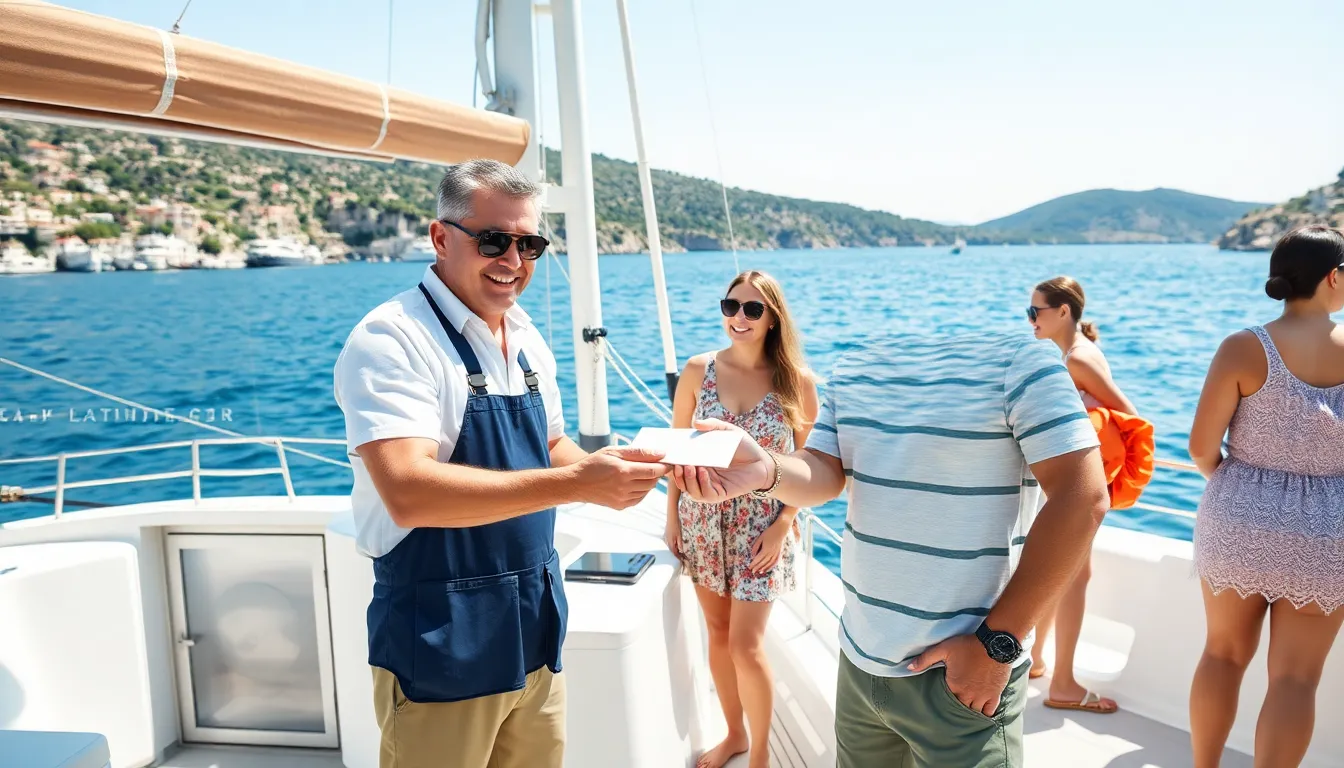
At the end of the cruise, Sail Croatia provides two anonymous envelopes. Use the crew envelope if you want your tip shared equally among the crew. Use the tour-manager envelope if you want to thank the person who guided and supported your group directly. This division keeps the gesture clear and avoids awkward comparisons between individual staff members.
Sail Croatia lists guidance of up to about €210 per guest for the crew as a whole and up to about €105 for the tour manager. These are upper reference amounts, not mandatory fees. A smaller contribution, or no tip at all, is perfectly acceptable when the experience does not justify more.
The company’s tipping guidance was updated on 21 May 2026. Check your cruise documents and Sail Croatia’s official guidance for any later change before departure, particularly if your sailing has special arrangements.
When Sail Croatia Tipping Is Optional but Welcome
Sail Croatia tipping is best viewed as a personal thank-you, not an extra charge for receiving standard service. A tip may feel appropriate when staff remain helpful during long days, solve a practical problem quickly, or make the group feel comfortable throughout the voyage. Small acts matter too: a calm response to a request, thoughtful local advice, or extra care when plans change.
Guests may also choose not to tip if the service was disappointing, inconsistent, or affected by serious problems. A gratuity should never excuse poor treatment, hidden charges, or conduct that should be reported to the company. In such cases, clear feedback is more useful than money.
Good etiquette means avoiding comparisons with other passengers. One guest may have a generous budget, while another may be travelling carefully. Both choices can be respectful. A sincere “thank you” is also appropriate when a cash tip does not fit your circumstances.
- Tip when: the service felt attentive, reliable, and genuinely helpful.
- Tip less when: the experience was mixed or only met basic expectations.
- Do not feel obliged when: you cannot afford it or the service did not meet a reasonable standard.
- Report serious concerns: use the company’s official support channel rather than trying to resolve them through a gratuity.
Judge the complete cruise, choose an amount that feels comfortable, and give it without expecting special treatment in return. That keeps the gesture warm, voluntary, and free from awkward strings attached.
Sail Croatia Tipping Amounts and Envelope Options
| Recipient or situation | Recommended approach | Reference amount | Practical note |
|---|---|---|---|
| Crew as a whole | Use the crew envelope when you want the tip shared equally among all crew members. | Up to approximately €210 per guest | This is optional guidance, not a mandatory fee. |
| Tour manager | Use the tour-manager envelope to thank the person who guided and supported your group. | Up to approximately €105 per guest | Choose an amount based on the quality of the manager’s service. |
| Very good or exceptional service | Give a generous contribution if the staff were attentive, reliable, and especially helpful. | Any comfortable amount below or up to the published references | Do not treat the upper guidance as a target. |
| Average or mixed service | Leave a smaller amount or tip only the service group you valued most. | Flexible | Your budget and overall satisfaction should guide the decision. |
| Disappointing service | No tip is required. | €0 is acceptable | Report serious concerns through Sail Croatia’s official support channel. |
| Other tourism workers | Round up or leave a modest tip for attentive service in restaurants, cafés, taxis, or accommodation. | Flexible | Check whether a service charge is already included. |
| End-of-cruise handover | Prepare the amount in euros and place it in the correct anonymous envelope. | Based on personal choice | Keep crew and tour-manager tips separate and ask staff if the collection point is unclear. |
How Sail Croatia Tip Envelopes Work
Sail Croatia keeps the process simple: at the end of the cruise, guests may use two separate anonymous envelopes. This lets you direct appreciation to the right service group without handing cash to individual staff members.
- Crew envelope: The amount is shared equally among all crew members.
- Tour manager envelope: The money goes directly to the tour manager responsible for your cruise.
Choose one envelope or both, depending on whom you wish to thank. You can also leave either envelope empty. There is no required split, and a personal division is fine when one part of the service stood out more than another.
Because the envelopes are anonymous, write the amount clearly before sealing one. Keep the two envelopes separate, and place each in the designated collection point at the end of the voyage. If you are unsure where to hand them in, ask the tour manager before departure procedures begin.
Do not give the crew envelope to one preferred crew member. Its purpose is equal distribution, so a direct handover could create confusion. Likewise, use the tour manager envelope only when you want the recognition to reach that specific role.
A practical approach is to decide your total amount privately, divide it between the envelopes, and prepare the cash in euros. This avoids a rushed decision during the final farewell, when everyone is packing, settling bills, and saying goodbye.
How to Tip the Crew Fairly
Base your decision on the whole team’s work rather than on one memorable interaction. Deck duties, meal service, housekeeping, safety tasks, and behind-the-scenes preparation all shape the cruise, even when guests do not see them.
Use the crew envelope when you want your contribution to reach the group as a whole. Since the money is shared evenly, this is the most balanced choice for a generally positive experience and recognises quieter roles that may receive less direct praise.
- Consider the crew’s consistency across the voyage.
- Think about practical help that improved your comfort or safety.
- Keep your contribution within a sum that feels financially sensible.
- Do not give cash to one crew member with the expectation that it will be divided later.
Guests travelling together should agree privately on whether to pool their contributions. A shared amount can prevent confusion, but every passenger may also make an individual choice. Neither method is more correct.
If several crew members made a special effort, a brief written note can add a personal touch without changing how the money is distributed. Mention the team’s work rather than naming one person if you are using the shared envelope.
The stated reference amount for the crew is up to approximately €210 per guest. Treat this as guidance, not a target. Service quality, cruise length, personal means, and your overall satisfaction are all reasonable factors when choosing the final sum.
How Much to Tip the Tour Manager
Sail Croatia’s reference amount for the tour manager is up to approximately €105 per guest. Treat this as a ceiling for guidance, not as a standard fee or expected payment. Your own satisfaction should decide the final amount.
The tour manager is the person to consider when one individual has shaped your experience through organisation, communication, local guidance, or quick solutions during the cruise. Focus on the value of that role across the voyage, rather than on one brief conversation or a single successful activity.
- Exceptional service: Consider an amount closer to the published upper reference.
- Good, steady support: A moderate contribution is suitable.
- Mixed experience: Choose a smaller amount, or leave no gratuity.
- Serious concerns: Report them through the company’s formal contact route instead of using the tip to signal dissatisfaction.
Each guest can decide independently. Couples or groups may pool money, but nobody should feel obliged to match another passenger’s contribution. A tour manager’s envelope is not a payment for extra access, better treatment, or a personal favour.
Keep the sum private and place it in the correct envelope at the end of the cruise. A short note naming the helpful service can make the gesture more personal, especially when several guests contribute together.
Example Tip Amounts for Different Satisfaction Levels
Use these examples as a planning aid, not as a price list. The figures below apply per guest and show how satisfaction may influence the amount placed in each envelope.
- Outstanding experience: Up to €210 for the crew and up to €105 for the tour manager, if both parts of the service deserve strong recognition.
- Very good experience: A substantial amount below those upper references, divided according to the roles that made the biggest difference.
- Acceptable experience: A modest contribution, directed mainly to the group or person whose work you valued most.
- Mixed experience: A small amount, or no gratuity, while you consider which parts of the cruise met your expectations.
- Disappointing experience: No tip is reasonable. Share useful feedback instead, especially if a problem affected safety, communication, or basic service.
These examples are intentionally flexible. A seven-night cruise, a shorter sailing, and a private group may create different impressions, so a fixed percentage would be misleading. Your travel budget matters just as much as the service level.
For a simple decision, rate the cruise privately as excellent, very good, acceptable, mixed, or disappointing. Then choose a comfortable amount within the relevant range. Do not treat the highest figure as a target; it is only Sail Croatia’s published upper guidance.
Keep your choice separate from passenger comparisons. Generosity should feel good, not become a quiet contest. Even a smaller contribution can carry real appreciation when it is given freely and thoughtfully.
When and Where to Leave Your Tip
The best time to leave a gratuity is during the final handover at the end of the cruise, once you have reviewed the full experience. Do not place money in a cabin, leave it at the bar, or hand it to a random staff member, as it may not reach the intended recipient.
Before the farewell process begins, prepare the cash and confirm which envelope is meant for which recipient. If the collection point is not obvious, ask a staff member discreetly. This is especially useful when the vessel is busy and several guests are leaving at once.
- Keep the envelopes dry and secure until the final collection.
- Seal each envelope after checking the amount and intended recipient.
- Hand it to the designated collection point or responsible staff member.
- Do not leave cash unattended in a public area or cabin.
- Ask for clarification before placing money in an unidentified container.
If you must leave the ship early, speak to the tour manager before disembarkation. They can explain the available procedure and help ensure that your contribution is handled correctly. Avoid passing cash through another passenger unless the company specifically advises it.
It is also sensible to keep a small amount of cash separate from your travel documents until the final day. That way, your intended contribution remains available even if your main wallet is misplaced or used for other expenses.
A private, deliberate handover through the official end-of-cruise process gives the crew a clean, respectful farewell.
Cash, Currency, and Practical Tipping Advice
Use euros for a Sail Croatia gratuity. The country’s official currency is the euro, and using the same currency avoids exchange-rate questions or a shortfall caused by conversion. Prepare clean notes before the final day; smaller denominations make it easier to choose a precise amount.
Cash is the practical choice for the envelope system. Do not assume that a card terminal, mobile wallet, or bank transfer can be used for gratuities. If you are unsure, ask the tour manager discreetly before the closing procedure rather than improvising at the last moment.
- Set aside the amount before spending money on shore excursions or meals.
- Carry a few euro notes in different denominations.
- Check each note for tears or heavy damage, as worn cash can be inconvenient to use.
- Write your name only if the company specifically asks for it; anonymous giving is normally the point of the envelopes.
- Keep gratuity money separate from the cash used for the onboard bar bill.
Exchange offices and cash machines may not always offer the note sizes you want, especially on smaller islands. Getting suitable cash in Split before sailing can make the final handover less fiddly. Avoid changing a large sum solely because you feel pressured to tip.
Never add a gratuity to a restaurant bill or taxi fare and assume it will reach the ship’s crew. Those payments belong to separate services. For a local café, restaurant, driver, or other worker, round up or add a modest amount only when the service merits it.
Decide the total in euros, separate it into the intended portions, and then stop thinking about it. Tipping should be straightforward—not a small financial puzzle at the end of an otherwise lovely voyage.
Tipping Other Tourism Workers in Croatia
Tips for other tourism workers in Croatia are also optional. A small amount is a suitable way to recognise friendly, careful service, but no worker should treat it as an automatic charge.
- Restaurant staff: Round up the bill or add a modest amount when service was attentive. Check the bill first so you do not pay the same charge twice.
- Café staff: Leave a small amount for table service or simply round up a low bill.
- Taxi drivers: Rounding up the fare is enough for a smooth, helpful ride. Give more only when the driver provides extra assistance, such as handling heavy luggage.
- Housekeeping staff: Leave a small cash thank-you at the end of your stay if the room was kept clean and comfortable. A short note can prevent confusion about its purpose.
- Park attendants: A modest tip may be appropriate when the attendant actively helps with parking or watches over the vehicle.
- Boat crew and sailors outside your cruise: Tip only when their service merits it, and follow the operator’s own system if one exists.
Do not tip a beach seller merely because a purchase was offered. Payment for the item is normally enough. A gratuity is better reserved for genuine help, such as assistance with equipment or a difficult request.
During the busy summer season, many tourism workers handle longer hours and heavier visitor demand. That context can make a thoughtful tip meaningful, but it never removes your freedom to decline. Good service, not location or pressure, should guide the decision.
Use local judgment rather than importing a fixed percentage from another country. In Croatia, rounding up or leaving a modest cash amount often feels more natural than calculating a large percentage. If a service charge is already included, extra money is entirely optional.
Fazit: Tip According to Your Satisfaction
Choose a gratuity that matches your genuine satisfaction, not a number chosen by pressure or comparison. Consider the quality of service, the time and care involved, and what fits your own budget.
If the voyage was memorable because staff were thoughtful, dependable, and attentive, a generous gesture may feel right. If the experience was ordinary, a smaller amount is enough. When serious problems affected the service, leaving nothing is a valid decision; useful feedback then matters more.
- Excellent experience: Give a generous amount that reflects the strong overall impression.
- Good experience: Choose a comfortable middle ground.
- Average experience: A modest gesture is entirely suitable.
- Poor experience: Skip the tip and explain important concerns through the company’s official feedback channel.
Do not borrow money, cut into essential travel funds, or feel obliged to match another guest. A gratuity has value only when it is freely given. A warm farewell and a specific word of thanks can also leave a lasting impression, especially when cash is not practical.
For the most current figures and procedure, check Sail Croatia’s official guidance before departure. Its published information was updated on 21 May 2026, but cruise arrangements can change. Reward service that deserves recognition, and let your satisfaction—not social pressure—set the amount.
Frequently Asked Questions About Tipping on Sail Croatia Cruises
Is tipping required on a Sail Croatia cruise?
No. Tipping is optional because Sail Croatia’s crew is fairly paid. Guests may nevertheless leave a gratuity to show appreciation for attentive, reliable, or especially helpful service.
How much should I tip the Sail Croatia crew?
Sail Croatia lists up to approximately €210 per guest for the crew as a whole as a reference amount. This is not a required fee or target; guests should choose an amount based on their satisfaction, budget, and the quality of service.
How much should I tip the tour manager?
The published reference amount for the tour manager is up to approximately €105 per guest. A smaller amount or no tip is perfectly acceptable if the service was average, mixed, or disappointing.
How do the Sail Croatia tip envelopes work?
At the end of the cruise, guests may use two anonymous envelopes. The crew envelope is shared equally among all crew members, while the tour-manager envelope goes directly to the tour manager. Guests may use either envelope, both, or neither.
Should Sail Croatia tips be paid in cash or euros?
Euros in cash are the practical choice for the anonymous envelope system. Prepare the amount before the final day, keep the crew and tour-manager contributions separate, and place them in the designated collection point at the end of the cruise.