Table of Contents:
Croatia's Island Archipelago: Geography, Scale and Regional Groups
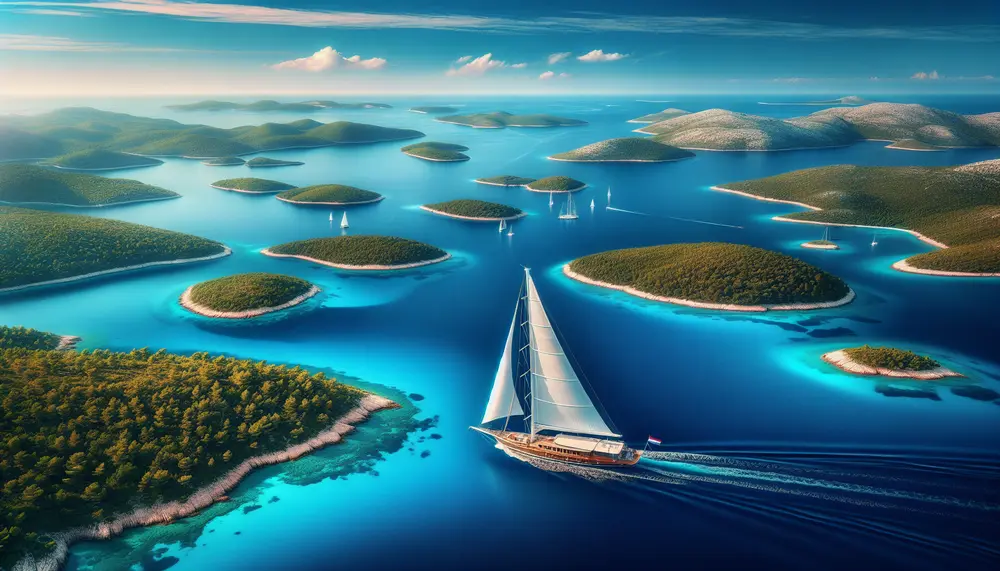
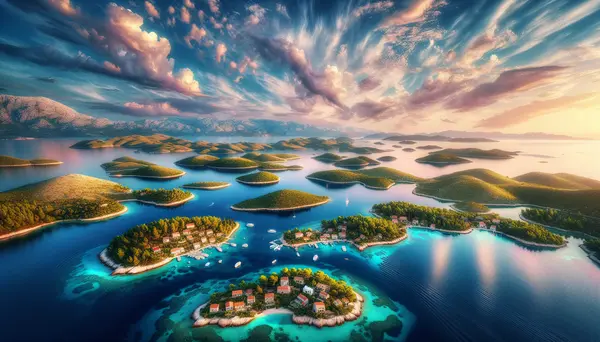
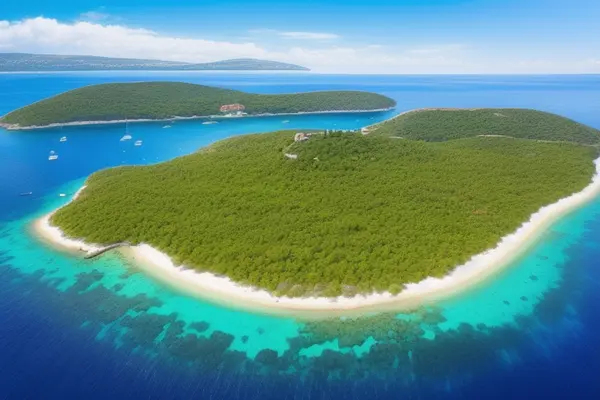
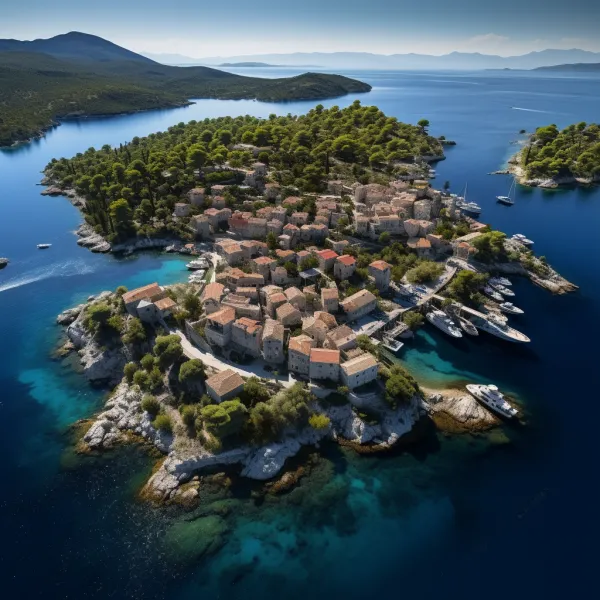
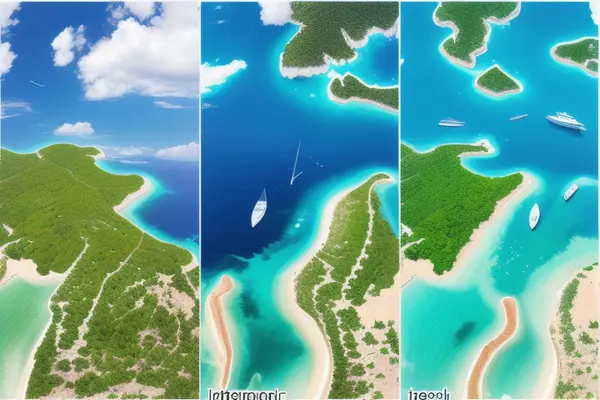
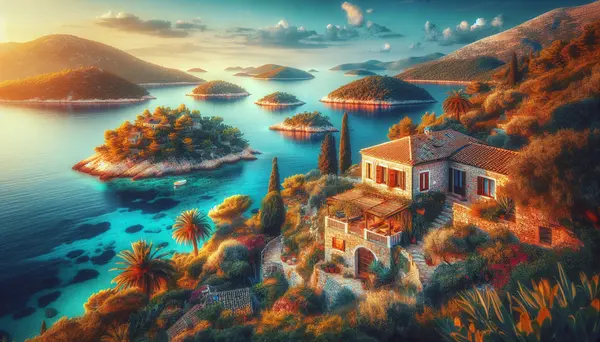
Croatia's Adriatic coastline harbors one of Europe's most complex and rewarding island systems. With 1,244 islands, islets, rocks and reefs officially recorded along its 1,777-kilometer coastline, the country ranks among the Mediterranean's most island-rich nations. Of these, only about 48 are permanently inhabited — a fact that shapes everything from ferry schedules to property investment strategies. The sheer density of islands along the central Dalmatian coast means that in some stretches, you're never more than a few nautical miles from land, making this one of the safest and most scenic sailing corridors in Europe.The Three Primary Archipelago Regions
Croatian islands are conventionally grouped into three regional clusters, each with its own character, infrastructure level and visitor profile. Understanding these distinctions is essential for anyone planning an extended stay or building a regional itinerary. A comprehensive look at how these distinct island clusters differ from each other reveals why choosing the wrong region for your goals can mean missing the experience entirely.- Kvarner Islands: The northernmost group, including Krk, Cres, Lošinj and Rab. Krk holds the distinction of being connected to the mainland by bridge, making it Croatia's most accessible major island. This region sees stronger bora winds and cooler temperatures, which actually attract a dedicated wellness and nature tourism crowd.
- Northern and Central Dalmatian Islands: Stretching from Zadar southward through Split's hinterland, this belt includes Ugljan, Pašman, Brač, Hvar and Šolta. The proximity to Split — one of Croatia's two main ferry hubs — gives these islands excellent year-round connections. Hvar in particular has evolved into a premium destination with corresponding property prices and a well-developed hospitality infrastructure.
- Southern Dalmatian Islands: The Korčula, Mljet and Lastovo group, plus the Elaphiti Islands near Dubrovnik. These islands sit farther from major transport hubs, which has preserved their character but also limits off-season access significantly.
Size, Scale and What the Numbers Actually Mean
Raw island counts can be misleading. The vast majority of Croatia's 1,244 recorded features are uninhabited rocks under one hectare. When planning any itinerary, the relevant figure is closer to 67 — the number of islands exceeding one square kilometer. The country's largest islands by surface area tell a story of agricultural heritage, elevation variation and internal road networks that smaller islands simply can't offer. Cres, for example, covers 405 km² and reaches elevations above 600 meters, with entirely different microclimates between its northern and southern halves. The geological backbone of the archipelago is Dinaric karst limestone, which explains the characteristic white-grey rock, turquoise water clarity and the near-total absence of sandy beaches on most islands. This geology also creates the distinctive naming patterns you'll encounter — terms like *Dugi* (long), *Mali* (small) and *Veli* (big) appear repeatedly across the archipelago. The naming logic behind Croatia's islands often encodes practical geographic information that local sailors have relied on for centuries. For anyone approaching Croatia seriously — whether as a sailor, investor or long-stay traveler — the full breadth of Croatia's coastal and island landscape extends well beyond the predictable Hvar-Dubrovnik circuit. The archipelago rewards systematic exploration, and understanding its geographic structure is the necessary starting point.The Premier Islands: Hvar, Korčula, Brač and Rab Compared
Croatia counts over 1,200 islands along its Adriatic coastline, but four names consistently dominate serious travel conversations: Hvar, Korčula, Brač, and Rab. Each occupies a distinct niche in Croatia's island ecosystem, and understanding these differences is what separates a memorable trip from a mismatched one. Choosing between them isn't about ranking — it's about fit.
Hvar and Korčula: The Glamour versus the Authentic
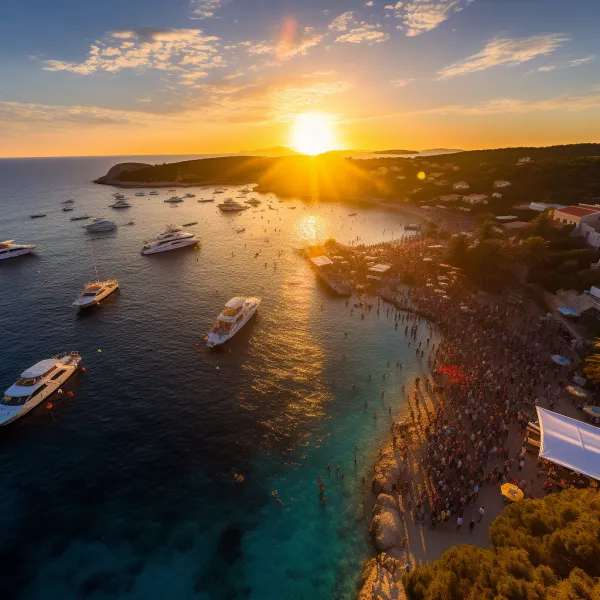
Hvar is Croatia's most internationally recognized island, drawing around 1 million visitors annually to its 300+ days of sunshine and UNESCO-listed lavender fields. The town of Hvar itself serves as the social epicenter — a 13th-century Venetian loggia framing a harbor where superyachts anchor alongside local fishing boats. If you're exploring the island's layered identity beyond the beach clubs, you'll find centuries of Venetian, Illyrian, and Austro-Hungarian history embedded in its stone architecture. Hvar rewards those who venture inland toward Stari Grad Plain, a UNESCO World Heritage Site that has been cultivated continuously since Greek colonization in 384 BC.
Korčula operates at a different register entirely. Often called "Little Dubrovnik" for its walled old town, Korčula Town sits on a compact peninsula with fishbone street planning designed to channel sea breezes. The island produces Pošip and Grk, two indigenous white wine varieties that serious oenophiles travel specifically to taste at the source. With roughly 15,600 permanent residents compared to Hvar's 11,000, Korčula maintains stronger local community ties and significantly less party tourism — making it the sharper choice for travelers who want a well-rounded Croatian island experience without the crowds of peak-season Hvar.
Brač and Rab: The Beach Purist and the Hidden Gem
Brač is home to Zlatni Rat, arguably the most photographed beach in the Adriatic — a 500-meter shingle peninsula near Bol that shifts shape with tidal currents. Beyond this landmark, Brač delivers something equally compelling: the Pučišća quarry, which has supplied the white limestone used in Diocletian's Palace and, reportedly, portions of the White House. The island is the easiest day trip from Split (ferry crossing: approximately 50 minutes), making it ideal for travelers who want flexibility without committing to overnight stays.
Rab sits in the Kvarner Gulf, north of the Dalmatian mainstream, and that geographic separation is precisely its advantage. The medieval town of Rab features four Romanesque bell towers rising from a narrow peninsula — a skyline unlike anything in southern Croatia. Rab's combination of medieval architecture and natural beaches creates an experience that feels genuinely unhurried, particularly outside July and August. The island's Lopar Peninsula holds 22 sandy beaches, rare along Croatia's predominantly rocky coastline.
- For nightlife and prestige: Hvar — but book accommodation by March for July visits
- For wine, culture, and local atmosphere: Korčula, especially in shoulder season (May–June, September)
- For beach quality and Split accessibility: Brač, specifically the Bol area
- For medieval history and sandy beaches without the crowds: Rab, particularly the northern Kvarner positioning
For those debating which island warrants deeper research before booking, Hvar's geography and microclimate diversity often surprise even repeat visitors — the island spans 68 kilometers in length, meaning the eastern and western ends offer genuinely different travel experiences within a single destination.
Pros and Cons of Visiting Croatia's Islands
| Pros | Cons |
|---|---|
| Stunning natural beauty with over 1,200 islands | Popular islands can get crowded, especially in peak season |
| Diverse microclimates and cultural experiences across islands | Limited access to some islands during off-peak seasons |
| Rich history with UNESCO heritage sites like Hvar | Transportation logistics may be complicated for new visitors |
| Excellent sailing and water sports opportunities | Some islands lack tourist infrastructure and amenities |
| Vibrant local cuisine and wine culture | Ferry schedules can be inconsistent, especially in off-season |
Off-the-Radar Destinations: Croatia's Hidden and Small Islands
Croatia officially counts 1,244 islands, islets, and reefs along its Adriatic coastline, yet the average tourist visits fewer than five of them — almost always the same ones. While Hvar and Brač absorb the bulk of summer crowds, a parallel archipelago exists just nautical miles away, largely untouched and infinitely more rewarding for those willing to navigate beyond the obvious. The key distinction between a tourist and a genuine island explorer in Croatia is knowing which ferry routes end and which private boat charters begin.
The Case for Uninhabited and Micro-Islands
Croatia's lesser-known small islands form a category of their own — places with populations under 100, no tourist infrastructure, and seascapes that look exactly as they did in the 1970s. Islands like Žut, Kornat, and Lastovo sit within protected national park zones where construction is heavily restricted. Lastovo, for instance, covers 53 km² but hosts fewer than 800 permanent residents, giving it a density that makes even remote Greek islands feel crowded by comparison. Reaching these places requires either a chartered sailboat or detailed knowledge of infrequent county ferry schedules — which themselves change seasonally.
Gaz Island, located in the Šibenik archipelago, represents the extreme end of this spectrum. It's the kind of place that doesn't appear on standard Croatian tourism brochures, and for travelers who've done their research on what makes Gaz a genuinely rewarding detour, the payoff is access to crystalline bays without another boat in sight. The island has no permanent settlement, no hotel, no restaurant — just pine forest, rocky coastline, and Adriatic water in shades that don't photograph accurately because they seem implausible.
Vis: The Benchmark for What "Hidden" Can Mean
Not every off-the-radar island is uninhabited. Vis occupies a fascinating middle ground — it has genuine infrastructure, a functioning fishing community, and enough cultural depth to support a week-long stay, yet it remained closed to foreign visitors until 1989 due to its role as a Yugoslav military base. That isolation preserved an authenticity that other islands traded away decades ago. The wine culture alone — Vugava white and Plavac Mali red grown on the island — justifies the 2.5-hour catamaran ride from Split.
Then there are islands that reward a slower, more contemplative kind of travel. Luc, a small island in the central Dalmatian chain, typifies the kind of destination where the absence of organized tourism is itself the attraction. Travelers who've spent time exploring Luc's quieter character consistently report it as a recalibrating experience — the kind of place that makes the more famous islands feel performative by contrast.
Practical navigation tips for reaching these destinations:
- Ferry schedules from Split and Šibenik to outer islands run 1-3 times weekly outside peak season — always verify with Jadrolinija directly, not third-party aggregators
- Water taxis from larger island hubs like Korčula or Hvar Town can reach micro-islands within 20–40 minutes
- Chartered sailing remains the most flexible option, with bareboat charters from Split or Trogir starting around €800–€1,200 per week for a 38-foot vessel in shoulder season
- Anchoring fees in national park waters (Kornati, Lastovo) range from €15–€40 per night and must be paid in advance via the park authority
The fundamental advantage of Croatia's hidden islands is that they remain genuinely accessible to independent travelers — no special permits, no exclusivity — just the willingness to do the logistical groundwork that most visitors skip.
National Parks and Untouched Nature: Mljet, Kornati and Beyond
Croatia protects two of its island ecosystems as full national parks — a designation that fundamentally shapes how you experience them. Unlike the heavily developed tourist islands of the southern Dalmatian coast, these protected areas operate under strict entry regulations, limit motorized traffic, and charge park entrance fees that directly fund conservation. For travelers who want genuine wilderness rather than a curated beach resort experience, understanding how these parks function is essential before you book.
Mljet: Dense Forest and Saltwater Lakes in the Deep South
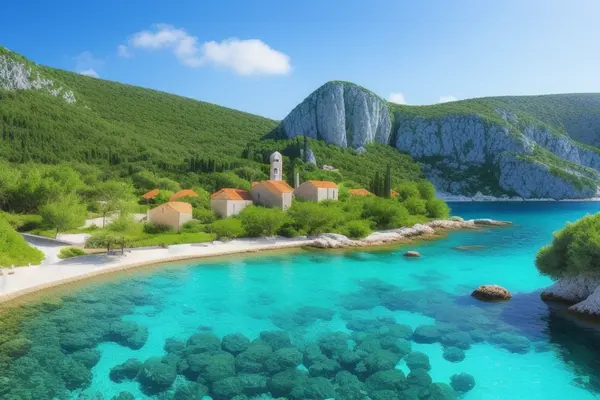
Mljet National Park covers the western third of the island — approximately 54 km² — and is one of the most ecologically intact island environments in the entire Mediterranean. The park's defining feature is its two interconnected saltwater lakes, Malo and Veliko Jezero, formed when rising sea levels flooded a karst valley thousands of years ago. Water temperatures in these lakes reach 26–28°C by late July, making them exceptional for swimming while remaining sheltered from open-sea winds. If you want to understand why this island has earned its reputation, reading deeper into what makes Mljet so distinctive will save you from treating it like a standard day-trip destination — it genuinely rewards a two- or three-night stay.
The 12th-century Benedictine monastery on the islet of St. Mary within Veliko Jezero is Mljet's most photographed landmark, accessible by a short boat transfer included in the park ticket. Beyond the lakes, the island is blanketed in dense Aleppo pine and holm oak forests — a rarity on the Adriatic coast, where centuries of charcoal production stripped most islands bare. Mljet's forest survived largely due to its low population density and the monks' land stewardship.
Kornati: The Bare Archipelago That Defines Adriatic Sailing
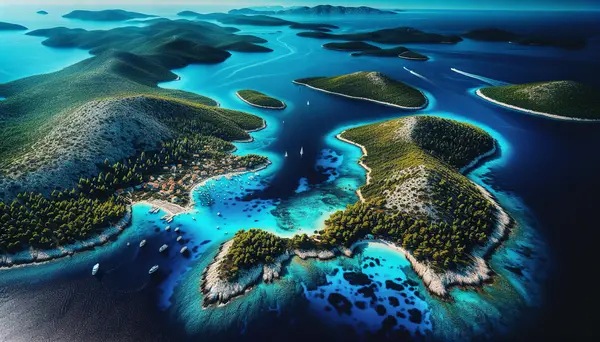
Kornati National Park encompasses 89 islands, islets, and reefs spread across roughly 320 km² of sea — making it one of the most concentrated archipelagos in the Mediterranean. The islands are almost entirely barren, stripped of soil by centuries of sheep grazing, which creates the moonscape aesthetic that distinguishes Kornati from anywhere else in the Adriatic. The dramatic crowns — sheer cliffs dropping up to 80 meters into the sea on the western exposed edges — are geological formations unique to this park. For anyone planning to sail this region, navigating Kornati properly requires advance preparation: park permits must be purchased before entry, and anchoring is restricted to designated bays.
The marine component of Kornati is equally significant. The underwater walls mirror the surface cliffs, descending to depths of 50+ meters and hosting exceptional populations of grouper, amberjack, and dense gorgonian sea fans. Visibility regularly exceeds 30 meters, which is why this remains a benchmark dive destination in Europe.
Other Protected Island Ecosystems Worth Knowing
- Lastovo Nature Park — Croatia's most remote inhabited island, with virtually no mass tourism infrastructure and exceptional dark-sky conditions for astronomy
- Telašćica Nature Park on Dugi Otok — combines dramatic cliff formations, a saltwater lake with therapeutic mud, and sheltered anchorages
- Biševo's Blue Cave — not a park, but a protected geomorphological site requiring timed entry permits during peak season
Croatia's protected island areas represent a small fraction of its 1,244 islands, but they punch far above their weight in biodiversity value. The broader archipelago contains dozens of lesser-known island gems that sit outside formal protection zones yet remain strikingly undeveloped — understanding the full spectrum helps you calibrate expectations and plan an itinerary that matches your tolerance for infrastructure versus rawness.
Island Hopping Strategies: Routes, Ferries and Sailing Itineraries
Croatia's archipelago of over 1,200 islands demands a proper strategy — not just a rough plan. The difference between a frustrating trip and a seamless one often comes down to understanding how the ferry network actually operates, which routes are served daily versus seasonally, and how sailing charters integrate with public transport. Anyone serious about planning a multi-island journey through Croatia should map out their route before booking a single accommodation.
Understanding the Jadrolinija Ferry Network
Jadrolinija, Croatia's state-owned ferry operator, runs the backbone of inter-island transport. Their coastal service connects Rijeka to Dubrovnik with stops at Split, Hvar, Korčula, and Mljet — a route that takes roughly 22 hours end-to-end but can be broken into multi-day legs. Catamaran services are faster (Split to Hvar Town takes just 60 minutes) but carry no vehicles and fill up quickly in July and August. Always book catamarans at least two to three days in advance during peak season; walk-on availability disappears by 8am.
The most efficient island hopping corridor runs along the Split–Hvar–Korčula–Dubrovnik axis. This route is served by multiple daily connections in summer and remains manageable in shoulder season (May–June, September–October). The Brac–Solta pairing near Split works well for a two-island day trip from the mainland — Supetar on Brac is a 50-minute car ferry from Split, making it one of the most accessible island entry points in Dalmatia. For those wanting to explore without a rigid timetable, some of Croatia's best single-day island excursions can be done directly from Split or Dubrovnik as a base.
Sailing as the Definitive Island Hopping Method
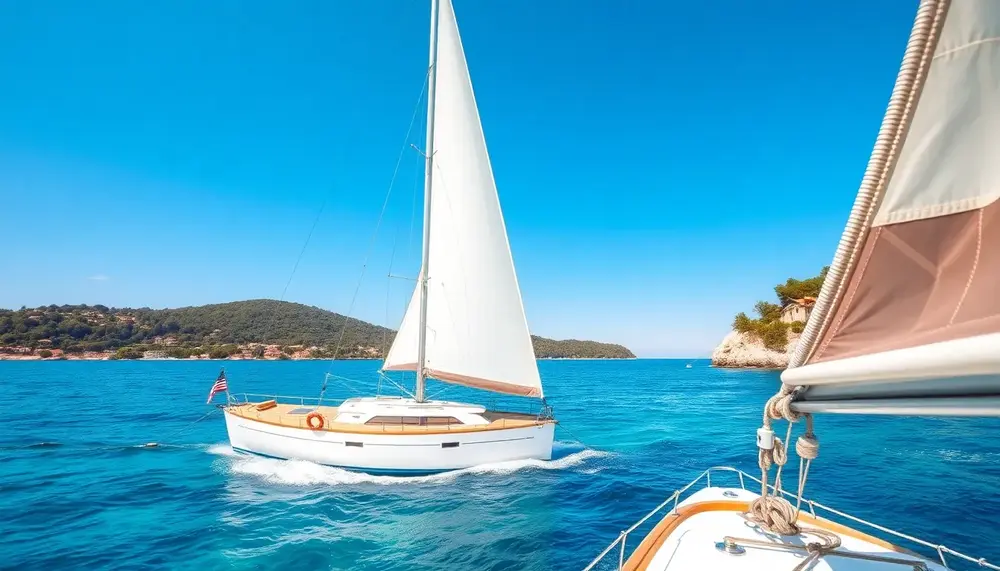
For anyone wanting genuine flexibility and access to anchorages unreachable by ferry, a sailing charter is the superior option. The Kornati Islands, for instance, have no scheduled ferry service — the only way to explore that archipelago's 89 islands is by private or chartered boat. The Dalmatian coast's prevailing winds (the Maestral from the northwest in summer, the notorious Bura in winter) make sailing predictable and enjoyable from late May through September. Those who have explored Croatia's islands by sailboat consistently report it as the most immersive way to experience the coastline.
Charter options range from bareboat rentals (from around €1,200/week for a basic monohull in low season) to fully crewed gulet voyages that accommodate larger groups. Week-long itineraries departing from Split typically cover Hvar, Vis, Korčula, and occasionally Lastovo — Croatia's most remote inhabited island, 20 nautical miles offshore. If you're undecided on how much time to allocate, a detailed breakdown on choosing the right sailing trip duration helps clarify whether a 7-day or 14-day itinerary suits your pace.
Key practical considerations for any island hopping strategy:
- ACI marinas (22 across Croatia) provide reliable berthing but fill up without advance reservation in July–August
- Inter-island distances in the central Dalmatian chain average 10–25 nautical miles — manageable day sails
- The Kvarner Gulf (Krk, Lošinj, Cres) has a separate ferry logic, operated partly by Jadrolinija, partly by Krilo and local operators
- Vehicle ferries require online booking in summer; foot passengers retain more spontaneity
Gateway Cities as Launchpads: Split, Dubrovnik and Zadar Routes
Croatia's three main coastal cities function as distinct ferry hubs, each unlocking a different archipelago cluster. Understanding which gateway serves which islands saves hours of backtracking and eliminates the common mistake of routing through Split when your destination sits firmly in Zadar's orbit. The ferry networks radiate outward from each city like spokes, and the overlaps between systems are minimal — choosing your launchpad is arguably the most consequential logistical decision of any island-hopping itinerary.
Split: The Central Powerhouse
Split's Trajektna Luka handles more ferry traffic than any other Croatian port, processing over 4 million passenger movements annually. From here, Jadrolinija and Krilo fast catamarans service Brač (45 minutes to Supetar), Hvar Town (60 minutes on the fast boat), Vis (2 hours 15 minutes), Korčula (under 3 hours via Hvar), and Šolta. The range and frequency make Split the logical base for anyone targeting the central Dalmatian islands. Anyone planning to hop between the central islands departing from Split will find the most comprehensive timetables running from late June through August, with the Vis line reduced to twice daily outside peak season. One practical note: car ferries and passenger-only catamarans leave from different quays within the port, roughly 400 meters apart — a detail that trips up first-timers carrying luggage.
The Split-anchored network also enables island combinations that no other gateway can match. A logical five-day circuit runs Split → Šolta → Hvar → Vis → Korčula → Split, using a mix of direct lines and inter-island connections. Vis deserves particular attention: as the outermost inhabited island in this cluster, positioned 45 kilometers offshore, it sees significantly fewer day-trippers and rewards those who stay overnight.
Dubrovnik: Southern Access and the Elafiti Chain
Dubrovnik's ferry network is more compact but strategically vital for southern Dalmatia. The Elafiti Islands — Koločep, Lopud, and Šipan — are accessible only from Dubrovnik's Gruž harbor, with multiple daily departures covering all three islands in sequence. Mljet's western national park section connects via Prapratno (near Ston), though a faster catamaran runs directly from Dubrovnik's old port in summer. Travelers who want to reach the quieter southern islands from Dubrovnik should note that Korčula is also reachable via a 3-hour catamaran — useful for building a one-way itinerary from south to north without retracing steps.
Zadar: The Northern Dalmatian Network
Zadar punches above its weight as a ferry hub, connecting to Ugljan, Pašman, Dugi Otok, and the outer Kornati-adjacent islands. The 25-minute crossing to Preko on Ugljan makes it one of Croatia's most accessible island day-trips. Dugi Otok — "Long Island" at 45 kilometers in length — requires roughly 1 hour 40 minutes by ferry and offers the dramatic Telašćica Nature Park at its southern tip. The island landscape surrounding Zadar is distinctly different from the Dalmatian south: flatter terrain, less tourist infrastructure, and a more authentically local character that attracts sailors and divers over package tourists.
For travelers arriving from Italy via ferry from Ancona or Pescara, Zadar is also the most logical entry point — a geographic advantage that makes it worth considering as both arrival hub and island launchpad simultaneously. The Croatian islands closest to the Italian coast are naturally accessed through this northern Dalmatian corridor, making Zadar the obvious first stop for western European road-trippers and yacht charters originating from Italian ports.
FAQ About Croatia's Enchanting Islands
What are the most popular islands to visit in Croatia?
The most popular islands to visit in Croatia include Hvar, Brač, Korčula, and Rab, each offering unique attractions and experiences.
How many islands are in Croatia?
Croatia has a total of 1,244 islands, islets, and reefs along its coastline, of which fewer than 50 are permanently inhabited.
When is the best time to visit the Croatian islands?
The best time to visit the Croatian islands is during the shoulder seasons, in May-June and September-October, when the weather is pleasant, and tourist crowds are smaller.
What activities can I enjoy on the islands?
Visitors to Croatia's islands can enjoy a variety of activities such as sailing, swimming, hiking, wine tasting, and exploring historical sites.
How do I travel between the islands?
Traveling between the islands is primarily done by ferries operated by Jadrolinija and Krilo, as well as private boat charters for more flexibility.