Table of Contents:
France's Luxury Accommodation Landscape: Châteaux, Villas, and Palace Hotels Compared
France holds a unique position in global luxury travel, operating under an official Palace Hotel classification system introduced in 2010 that recognises only a select tier of properties exceeding the standard five-star benchmark. As of 2024, fewer than 35 establishments across the country carry this designation — among them the Hôtel de Crillon, Le Meurice, and the Grand-Hôtel du Cap-Ferrat — making it one of the most restrictive luxury tiers in any national tourism framework. Understanding how this top tier compares with private châteaux rentals and boutique villa stays is essential before committing to four- or five-figure nightly rates.
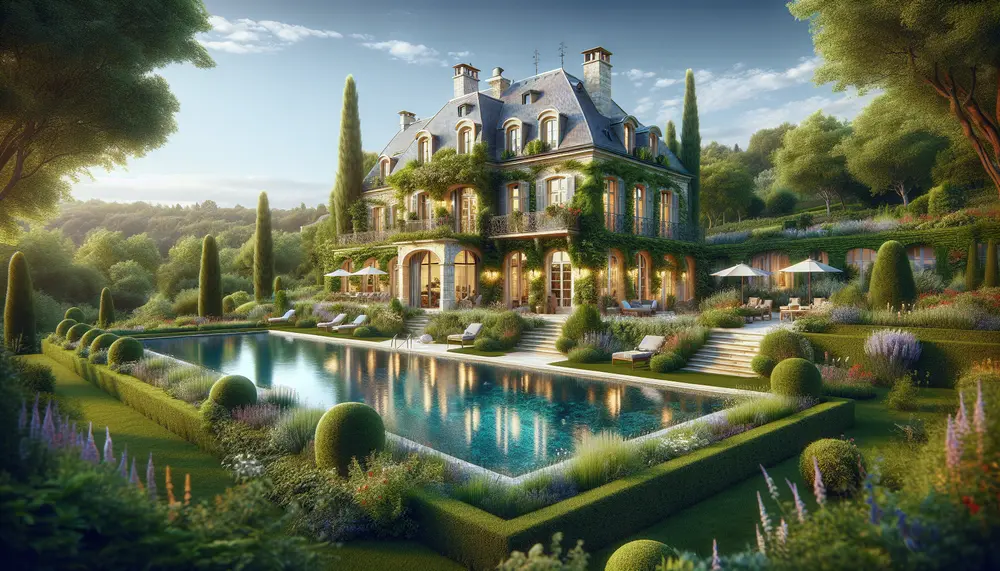
The fundamental distinction comes down to service architecture versus spatial freedom. Palace hotels deliver concierge depth, Michelin-starred dining, and institutional consistency — the Ritz Paris, for instance, employs roughly four staff members per guest room. Private châteaux and villas, by contrast, offer exclusivity of a different kind: sole occupancy of a historic estate, freedom from public spaces, and a domestic rhythm that no hotel can authentically replicate. For multi-generational groups or corporate retreats where privacy outweighs amenity breadth, a Loire Valley château sleeping 20 guests at €8,000–€15,000 per night often delivers superior value per person than equivalent palace hotel suites.
Choosing Between a Château and a Palace Hotel: Practical Criteria
Several variables consistently separate the right choice from the expensive mistake. Duration of stay is critical: palace hotels reward short stays of two to four nights through their sheer concentration of experiences, while châteaux come into their own over seven nights or more, when guests settle into local rhythms, engage private chefs, and explore surrounding villages without any sense of rush. Those seeking a genuinely immersive escape across different French regions will find the château model consistently outperforms hotels in delivering authentic territorial character.
The Relais & Châteaux network offers a useful middle ground, with 160+ French member properties blending hotel-grade service with architectural heritage. Properties like Les Sources de Caudalie in Bordeaux or La Bastide de Gordes in Provence combine the operational reliability of professional hospitality with settings that no urban palace can replicate. Nightly rates across this tier run €400–€1,800 for standard rooms, rising sharply for suites or private villa annexes attached to the main estate.
Villa Rentals: The Rising Premium Segment
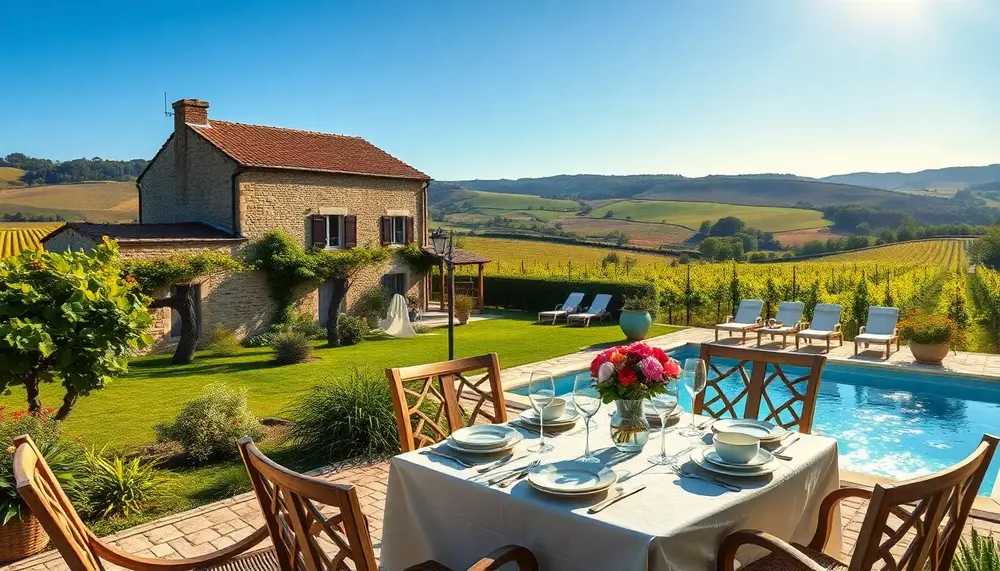
The luxury villa rental market in France has expanded significantly since 2018, with platforms like Clémentine Villas, Firefly Collection, and Oliver's Travels now curating properties with verifiable quality standards rather than relying on owner-submitted descriptions. The Côte d'Azur commands the highest rates — seven-bedroom villas above Cannes regularly reach €25,000–€50,000 per week in July and August — but Provence, the Dordogne, and the Luberon offer comparable quality at 40–60% lower price points. For those exploring France's most exceptional private retreat options, the inland villa market represents the strongest current value proposition in French luxury accommodation.
One factor many first-time luxury travellers underestimate is the total cost of ownership for a private rental. Chef fees (€250–€500 per day), provisioning, housekeeping supplements, and pool heating charges routinely add 20–35% to the headline rental figure. Palace hotels, whatever their rack rates, present a transparent all-inclusive pricing structure that simplifies budgeting considerably. Those drawn to France's most refined high-end experiences should always request a full cost breakdown before comparing accommodation categories on headline price alone.
Regional Breakdown: Where France's Most Exclusive Retreats Are Concentrated
France's luxury hospitality landscape is anything but evenly distributed. Roughly 60% of the country's five-star and palace-designated properties cluster within four distinct regions, each offering a fundamentally different proposition to the discerning traveler. Understanding this geography isn't just academic — it directly determines what kind of experience you'll access and at what price point.
The Dominant Corridors: Riviera, Paris, and the Loire Valley
The French Riviera remains the undisputed heavyweight, with Cap Ferrat, Èze, and Saint-Tropez hosting properties where nightly rates routinely exceed €2,500. The Grand-Hôtel du Cap-Ferrat, a Four Seasons property, commands these figures not on brand alone but on 17 acres of private peninsula with direct Mediterranean access — a physical asset simply irreproducible elsewhere. What distinguishes this corridor is the density: within a 40-kilometer stretch, you'll find more Michelin-starred restaurants affiliated with luxury hotels than in most entire countries.
Paris operates on a different logic entirely. The 8th arrondissement's Triangle d'Or — bounded by Avenue Montaigne, Avenue George V, and the Champs-Élysées — concentrates six palace-classified hotels within walking distance. For those exploring what truly elevates certain French properties to legendary status, this neighborhood is the textbook case study: Le Bristol, Le Crillon, Four Seasons George V, and the Plaza Athénée each maintain distinct identities despite sharing the same postal code.
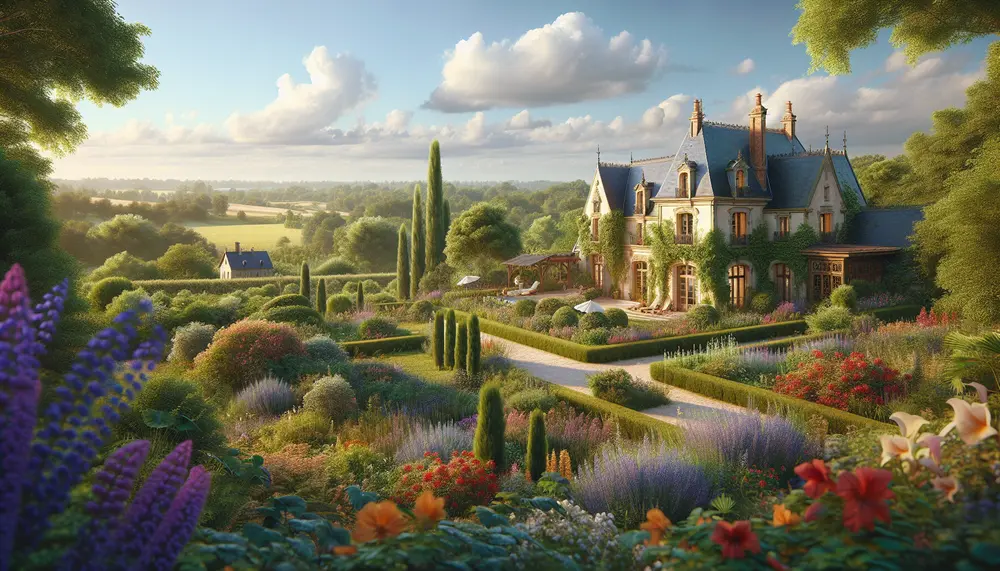
The Loire Valley represents a quieter but increasingly competitive third pillar. Châteaux-hotels like Château de Pray and the Relais & Châteaux-affiliated Domaine des Hauts de Loire offer something the Riviera and Paris fundamentally cannot: genuine historical immersion within working wine estates. Rates here are comparatively accessible, often €400–€900 per night, making it the preferred entry point for first-time luxury travelers to France.
Emerging Regions Reshaping the Map
Provence, particularly the Luberon and Les Alpilles, has undergone significant repositioning since 2015. The opening of Villa La Coste — a contemporary art hotel with a 28-suite property embedded within a 600-hectare wine estate — signaled that Provence could attract a design-forward clientele previously drawn exclusively to the Riviera. The region now captures approximately 15% of France's ultra-luxury domestic tourism revenue.
Two additional corridors deserve serious attention from anyone planning a deep itinerary through the country's finest offerings:
- The Basque Country (Biarritz, Saint-Jean-de-Luz): Atlantic-facing thalassotherapy combined with exceptional gastronomy; the Hôtel du Palais remains a benchmark Belle Époque property
- Alsace and Burgundy: Wine-destination hotels with sommelier-driven programming; Burgundy's Château de Gilly offers direct vineyard access that Napa Valley properties actively try to emulate
For travelers committed to moving between France's most lavish regional experiences in a single trip, the practical recommendation is to anchor in two complementary regions rather than attempting a grand tour. Paris paired with Provence, or the Riviera combined with the Loire Valley, delivers textural contrast without sacrificing depth. Spreading across four or five regions in under two weeks is the single most common mistake that dilutes what these extraordinary properties are actually designed to deliver.
Pros and Cons of Luxury Accommodation Options in France
| Accommodation Type | Pros | Cons |
|---|---|---|
| Palace Hotels |
|
|
| Private Châteaux |
|
|
| Luxury Villas |
|
|
The Côte d'Azur vs. Provence: Contrasting Luxury Experiences on the French Riviera
Few decisions in French luxury travel carry more weight than choosing between the glamorous coastline of the Côte d'Azur and the sun-drenched hinterland of Provence. These two regions sit within an hour's drive of each other yet represent fundamentally different philosophies of indulgence. Understanding those distinctions — not just aesthetically, but in terms of pricing, exclusivity, and the kind of guest each region genuinely rewards — is what separates an adequate holiday from a transformative one.
The Côte d'Azur: Performance Luxury and the Art of Being Seen
The Riviera corridor stretching from Saint-Tropez through Cannes, Nice, and Monaco is unambiguously the most concentrated strip of high-end hospitality in continental Europe. A standard suite at the Hôtel du Cap-Eden-Roc in Antibes commands upwards of €2,500 per night in peak season, and that figure climbs steeply for the villa accommodations. Monaco's Hôtel Hermitage and the Monte-Carlo Beach Hotel operate within an ecosystem where Michelin-starred dining, superyacht access, and Formula 1 proximity are bundled expectations, not premium extras. Those who gravitate toward these addresses are rarely seeking quietude — they are investing in visibility, connectivity, and access to a social infrastructure that Provence simply cannot replicate.
The practical calculus here matters: July and August see Nice Côte d'Azur Airport handle over 1.5 million passengers per month, with private terminal operators including TAG Aviation processing hundreds of jet arrivals weekly. If your idea of luxury involves spontaneous decisions, proximity to international connections, and a calendar dense with cultural events — the Cannes Film Festival, Monaco Grand Prix, Art Monte-Carlo — then the coast delivers with remarkable efficiency. For a curated overview of properties that genuinely achieve the pinnacle of this experience, the guide to France's most rarefied retreat addresses provides essential context.
Provence: Sensory Luxury and the Slow Accumulation of Pleasure
Provence operates on a completely different register. The Luberon, the Alpilles, and the Var backcountry offer a version of luxury built on terroir, silence, and culinary depth rather than social spectacle. Domaine Les Clos de Paulilles, Crillon le Brave, and the restored bastides around Gordes charge €800 to €2,000 per night for experiences centered on lavender-scented air, private pool pavilions surrounded by oak forest, and direct relationships with local truffle hunters and winemakers. This is luxury that requires patience to appreciate fully.
The distinction becomes most apparent at the table. While the Côte d'Azur boasts impressive Michelin credentials, Provence holds a unique position in French gastronomy: the raw ingredients available within a 30-kilometer radius of a Luberon kitchen — Maussane olive oil, Sault lavender honey, Ventoux wines, Rove goat cheese — represent a culinary terroir that no coastal address can match. Travelers who understand this tend to extend their stays. A five-night Provence itinerary frequently becomes eight. For those building a broader French journey around these kinds of sensory priorities, the lavish regional escapes across France that combine both landscapes deserve serious consideration.
The most sophisticated approach, however, is not to choose exclusively. A well-constructed southern France itinerary might open with three nights at a Cap Ferrat villa rental — prices begin around €15,000 per week for serious properties — before retreating inland to a Luberon bastide for four nights of deliberate deceleration. This sequencing, coast to countryside, mirrors the rhythm that experienced France travelers recognize as the most satisfying structure. Those ready to build exactly that kind of layered itinerary will find the full strategic framework within this exploration of France's most compelling luxury getaway combinations.
Curated High-End Experiences: Wine Tours, Private Gastronomy, and Cultural Immersion
France's luxury experience market has undergone a fundamental shift over the past decade. Discerning travelers no longer settle for guided group tours or fixed tasting menus — they demand bespoke access to people, places, and knowledge that simply cannot be booked through a standard travel agency. The country's most sought-after experiences are now built around exclusivity, genuine expertise, and a level of personalization that turns a holiday into something far more lasting. For those exploring the full spectrum of what France offers, the distinction between a good trip and an extraordinary one often comes down to who you know and how you plan.
Private Wine Access in Bordeaux, Burgundy, and Beyond
France produces over 7 billion bottles of wine annually, yet the experiences worth having are radically concentrated. In Bordeaux, Châteaux Pétrus and Mouton Rothschild occasionally open their cellars to private guests — visits that require months of advance planning and, often, an introduction through a négociant or wine merchant. In Burgundy, the most revealing experiences happen not at the grands crus domaines that appear in every guide, but in smaller appellations like Gevrey-Chambertin, where a fifth-generation vigneron walks you through a premier cru plot at harvest time for a fee typically ranging from €500 to €1,500 per person. The Rhône Valley and Alsace offer similarly intimate access for those willing to move beyond the obvious itinerary. Always engage a specialist wine concierge based in the region rather than a generalist luxury travel firm — the difference in access quality is substantial.
For a broader perspective on integrating these wine experiences into a longer French journey, the approach detailed in guides covering serene retreats combined with curated regional exploration offers a strong strategic framework — pairing slow travel with high-access moments rather than rushing between destinations.
Private Gastronomy: Beyond the Michelin Table
France holds more Michelin three-star restaurants than any other country — 30 as of the 2024 guide — but the real connoisseur's move is securing experiences outside the public dining room entirely. Chef's table arrangements at institutions like Maison Troisgros in Roanne or Régis et Jacques Marcon in Saint-Bonnet-le-Froid place guests inside working kitchens for multi-course dinners that begin with a two-hour immersion in preparation. Private cooking ateliers with MOF (Meilleur Ouvrier de France) pastry chefs in Lyon cost between €800 and €2,500 per session and provide technical instruction unavailable in any culinary school curriculum.
- Marché privé tours with executive chefs at Rungis — the world's largest fresh food market near Paris — start at 4 a.m. and require trade credentials or a direct chef connection
- Truffle hunts in Périgord paired with a private déjeuner prepared on-site run between €600 and €1,200 per couple during the winter black truffle season (January–February)
- Private cellar dinners in Champagne houses such as Krug or Salon, where the host sommelier curates vertical tastings alongside a bespoke menu, represent some of the most prestigious food-and-wine pairings available anywhere
Cultural immersion at this level extends naturally into the arts. Private after-hours access to the Louvre's Egyptian antiquities collection, arranged through the museum's corporate patronage program, costs upward of €15,000 for a group of twelve — but delivers a silence and intimacy impossible during public hours. Similarly, the kind of refined indulgence that defines true French luxury travel consistently traces back to this principle: access is the ultimate currency, and the best experiences are those that can't be purchased off the shelf.
Booking Strategies and Insider Access: Securing France's Most In-Demand Luxury Properties
The uncomfortable truth about France's top-tier luxury properties is that the best ones are never truly "available" in the conventional sense. Château de la Messardière in Saint-Tropez, for instance, releases its peak summer inventory to a closed list of returning guests and preferred travel partners as early as 18 months in advance. By the time a property appears on a public booking platform, you're already looking at second-tier availability. Understanding this layered access system is the single most valuable piece of knowledge any serious luxury traveler can carry.
The Architecture of Priority Access
France's most coveted properties operate on a tiered release structure that rewards loyalty and relationships over spontaneity. The inner circle consists of returning guests with established spending profiles, followed by vetted luxury travel advisors with consortium affiliations — primarily Virtuoso, Signature Travel Network, and Traveller Made. These advisors don't just have early access; they often have genuine relationships with property directors that translate into suite upgrades, complimentary experiences, and the flexibility to negotiate around published minimums during shoulder periods. A direct booking through an independent website rarely unlocks these levers.
For villa rentals — particularly in the Luberon, Saint-Jean-Cap-Ferrat, and the Dordogne — the dynamics are even more exclusive. The finest properties, those commanding €15,000 to €80,000 per week, are largely managed by boutique agencies such as Leggett Prestige, Côte d'Azur Sotheby's International Realty Rentals, or Miam Miam Luxury Villas. Many of the most exceptional retreat properties across France never appear in general search results at all — they circulate exclusively within agency portfolios accessible only through direct agent engagement.
Practical Timing and Negotiation Windows
Contrary to popular belief, last-minute luxury bookings in France can yield extraordinary value — but only outside the July–August corridor and only when you're flexible on exact dates. Late September through mid-October represents the sweet spot: the Riviera retains genuine warmth, Provence harvests are underway, and properties carrying €4,000-plus nightly rates sometimes release inventory at 30–40% reductions rather than leaving rooms dark. Set up alerts through platforms like Mr & Mrs Smith or Five Star Alliance, and maintain a direct relationship with the reservations director at two or three properties you'd genuinely return to.
- Book peak season (July–August) 12–18 months ahead for palace hotels and Riviera villas
- Engage a Virtuoso-affiliated advisor for access to unpublished amenity packages worth €500–€2,000 per stay
- Target November through March for Parisian palace hotels — rates at properties like Le Bristol or La Réserve can drop 35–50% with superior room availability
- Request the "Director of Residences" directly when booking extended stays of 5+ nights — this contact has the actual authority to customize arrangements
- Leverage cancellation windows strategically — many luxury properties release held inventory 45–60 days out
The travelers who consistently access France's most coveted indulgences and hidden gems share one common trait: they treat booking as a relationship-building exercise, not a transaction. Sending a handwritten note to a château director after a stay, referencing a sommelier by name in a return inquiry, or simply expressing genuine knowledge of a property's history — these gestures signal the kind of guest a property wants to accommodate during its most sought-after periods.
Seasonality and Pricing Dynamics in France's Luxury Travel Market
France's luxury travel market operates on pricing logic that differs fundamentally from standard hospitality economics. Demand compression at the ultra-premium tier means that the most sought-after properties — think Cheval Blanc in Courchevel or Villa La Coste in Provence — rarely discount during peak periods. Instead, rate floors rise steeply: a suite that commands €1,800 per night in October can easily reach €4,500 in August along the Côte d'Azur, while availability windows shrink to single-digit nights for the finest rooms. Understanding this structure is not optional — it is the prerequisite for any serious planning.
Peak Seasons and Their Regional Variations
France does not have a single peak season; it has several, layered by region. The Riviera peaks sharply from late June through August, driven by yacht traffic, international clientele, and the film and fashion circuit. Paris operates on two distinct high-demand periods: late April through June and September through mid-October, corresponding to fashion weeks, art fairs, and the temperate shoulder season preferred by affluent American and Asian travelers. Provence and the Dordogne experience their premiums in July and August, while the Alps — Megève, Val d'Isère, Courchevel 1850 — see their absolute ceiling rates between Christmas and New Year's Eve and during the February school holidays, when a week in a catered chalet can exceed €150,000.
For those who have explored the full geographic range of lavish French retreats, it becomes clear that the off-season is not a compromise — it is often the superior experience. The Loire Valley in October offers château access without crowds and some of the most compelling wine harvest programming available anywhere in France. The Normandy coast in May or September delivers dramatic light and uncrowded five-star hotel service at rates running 25–35% below summer highs.
Strategic Booking Windows and Rate Positioning
The luxury tier in France splits into two distinct booking behaviors. Ultra-high-net-worth clients — particularly those engaging private villa rentals or flagship palace suites — regularly book 12 to 18 months in advance for peak periods. Meanwhile, a secondary market of last-minute luxury inventory does exist, particularly for properties managing cancellations, but it is unreliable and skews toward less desirable room categories. The practical window for serious luxury planning sits at 6 to 9 months ahead for most five-star hotels and at least 12 months for destination properties like Les Airelles or the Hôtel du Cap-Eden-Roc.
Pricing transparency varies significantly by property type. Palace hotels typically publish BAR (Best Available Rate) structures, while the most exclusive pinnacle-tier retreats across France operate on quote-only models, using rate opacity as a deliberate signaling tool. Working with a specialist travel advisor connected to the Virtuoso or Internova networks provides not just access but genuine rate leverage — typically worth €200–€600 per night in added-value inclusions even when the rack rate remains fixed.
- Best value windows: Provence (May–June), Paris (November), Riviera (September–early October)
- Non-negotiable advance booking: All major ski resorts during Christmas and February holidays
- Shoulder season advantage: Service ratios improve significantly — staff-to-guest ratios at top properties can shift from 1.5:1 to nearly 3:1
Anyone assembling a multi-destination luxury itinerary should also account for event-driven surcharges. The Monaco Grand Prix weekend in May pushes Riviera rates up by 300–400% within a 40-kilometer radius. Similarly, Paris during FIAC or Frieze week commands premiums across all palace-category properties. Cross-referencing your travel dates against the French events calendar — Formula 1, Cannes Film Festival, Roland-Garros, Paris Fashion Week — is not peripheral research; it is core financial planning. Those indulging in France's most exclusive experiences at these moments pay a premium measured in multiples, not percentages.
Sustainable Luxury in France: How High-End Retreats Balance Opulence With Responsibility
The French luxury hospitality sector has undergone a quiet but decisive transformation over the past decade. Guests who once measured five-star quality purely by thread counts and Michelin-starred menus now demand something more: proof that their indulgence doesn't come at the planet's expense. France, with its deep-rooted culture of terroir and regional identity, has positioned itself exceptionally well to meet this expectation — and the most forward-thinking properties are redefining what responsible opulence actually looks like in practice.
Certifications, Standards, and What They Actually Mean
The Green Globe certification and France's own Clef Verte (Green Key) label have become meaningful benchmarks rather than marketing ornaments. Château de Berne in Provence, for instance, operates its own certified organic vineyard across 750 hectares, feeding both its wine production and its kitchen. The property reduced water consumption by 34% between 2018 and 2022 through drip irrigation and greywater recycling — figures that reflect genuine operational commitment rather than greenwashing. When evaluating a retreat's sustainability claims, always ask for third-party certification numbers and annual sustainability reports, not just a vague "eco-friendly" label on the website.
The broader conversation around finding genuine peace and grandeur across different French regions is increasingly inseparable from how a property interacts with its natural surroundings. The most credible luxury operators understand that preserving a landscape — whether the Dordogne valley or the Alsatian forests — is ultimately what protects their most valuable asset: an irreplaceable sense of place.
Local Sourcing, Architecture, and Energy as Luxury Differentiators
The shift toward hyper-local gastronomy is perhaps the most visible expression of sustainable luxury. Les Sources de Caudalie near Bordeaux sources over 80% of its restaurant ingredients within a 50-kilometer radius, with a dedicated kitchen garden supplying herbs and vegetables year-round. This isn't cost-cutting — it's a deliberate positioning that connects guests to the land and commands premium pricing precisely because the supply chain is transparent and traceable.
Architectural heritage plays a dual role here. Many French luxury retreats operate within classified historic buildings, which imposes natural constraints on demolition and reconstruction while simultaneously creating the authentic character that mass-market hotels simply cannot replicate. Properties like Le Domaine des Etangs in Charente have retrofitted 13th-century stone buildings with geothermal heating systems and solar thermal panels — achieving energy self-sufficiency during summer months without compromising the visual integrity of the estate.
- Carbon offset programs: Look for properties partnered with verified schemes like Gold Standard, not generic airline-style offsets
- Biodiversity commitments: Rewilding initiatives, bee colonies, and wildlife corridors are increasingly common on large domaine properties
- Staff locality: The percentage of employees sourced from surrounding villages is a reliable proxy for genuine community integration
- Plastic elimination: Leading retreats have moved beyond removing plastic straws to eliminating single-use packaging throughout the entire supply chain
For travelers crafting an itinerary around France's most exceptional experiences, the properties explored in depth as France's most distinguished luxury escapes increasingly share one common thread: sustainability is embedded in their identity, not appended to it. The practical takeaway for discerning guests is straightforward — request a property's environmental report before booking, prioritize those with measurable targets over vague commitments, and recognize that genuine sustainable luxury in France almost always tastes better, feels more authentic, and leaves a far more compelling story to bring home.
Hidden Luxury Gems: Underexplored French Regions Rivaling Established Prestige Destinations
While the Côte d'Azur and Paris command global attention, seasoned luxury travelers increasingly seek destinations where exclusivity isn't diluted by overtourism. France's lesser-known regions deliver precisely that — estate-level privacy, Michelin-starred gastronomy, and architectural grandeur without the summer crowds that can overwhelm Cannes or Saint-Tropez. Those who have already explored the full spectrum of lavish retreats France offers often name these hidden territories as their most memorable discoveries.
The Basque Hinterland and Southwest Valleys
Inland Pays Basque and the Gers department represent arguably France's most undervalued luxury corridor. The Gers alone hosts over 400 châteaux, many now operating as intimate boutique properties with fewer than 12 rooms — a stark contrast to the 200-key resorts dominating the Riviera market. Properties like Château de Mascaraàs near Pau command nightly rates between €450 and €1,200, yet routinely achieve summer occupancy below 65%, meaning last-minute availability that Monaco-adjacent addresses would never offer. The regional cuisine — Gascon duck confit, black Périgord truffles, Jurançon wines — rivals anything plated in Lyon, and private foraging experiences with local chefs have become a signature offering here.
The thermal spa tradition in this region dates back to the Roman era, and modern wellness operators have built exceptional facilities atop these ancient mineral sources. Eugénie-les-Bains, Michel Guérard's legendary village where cuisine minceur was invented in 1974, remains one of France's most sophisticated yet chronically underpublicized luxury wellness destinations, combining three-Michelin-star dining with medically supervised detox programs starting at €3,500 per week.
Alsace Beyond Strasbourg: The Wine Route's Quiet Northern Reaches
Most itineraries focus Alsace luxury travel on Strasbourg's grand hotels and Colmar's postcard aesthetics. The northern stretch of the Route des Vins, however — covering villages like Obernai, Andlau, and Mittelbergheim — offers a more concentrated, unhurried form of prestige hospitality. Domaine Weinbach and Zind-Humbrecht offer private cellar tastings for serious collectors that bear no resemblance to the ticketed tourist experiences further south. Converted Renaissance merchant houses here operate as exclusive guesthouses at €300–€600 per night, often including a dedicated sommelier for your stay.
For travelers who have browsed France's most celebrated high-end retreat concepts, the contrast in the Alsatian north is instructive: luxury here is measured in craft, silence, and culinary depth rather than infinity pools and designer spa brands. The regional winstub culture — informal wine taverns attached to domaines — creates access to winemakers and local aristocracy that no amount of money can replicate in Bordeaux's grand châteaux circuit.
- Corrèze (Nouvelle-Aquitaine): Medieval market towns with restored manor hotels; average luxury nightly rate 30% below comparable Dordogne properties
- Haute-Savoie's Aravis Valley: Ski-in chalets and farm-to-table Savoyard cuisine without Courchevel's price inflation
- Aveyron's Millau corridor: Dramatic limestone plateaux, Sébastien Bras's three-star restaurant, and virtually zero international tourist infrastructure
Experienced luxury travelers looking to move beyond predictable prestige circuits will find that France's most genuinely indulgent experiences are often concentrated precisely where the guidebooks go quiet. The investment logic is equally compelling: these regions typically offer superior value-to-experience ratios, and properties are actively competing for discerning guests with exceptional service standards rather than relying on brand name alone.
FAQ on Luxury Escapes in France
What distinguishes a luxury escape in France?
A luxury escape in France is characterized by personalized experiences, exclusive access to properties, high-end amenities, and exceptional service that exceeds typical hospitality standards.
How do palace hotels differ from private châteaux?
Palace hotels offer institutional consistency, Michelin-star dining, and extensive concierge services, while private châteaux provide exclusive use, a domestic atmosphere, and a unique historical immersion.
What are some exceptional experiences to try in France?
Exceptional experiences include private wine tours at prestigious vineyards, culinary classes with renowned chefs, and exclusive after-hours access to famous cultural sites.
What should I consider when booking luxury accommodation?
Consider factors such as the property's tier classification (palace hotels vs. boutique villas), service styles, and whether you prefer privacy and exclusivity over the amenity breadth offered by hotels.
How can I secure reservations at highly sought-after luxury properties?
To secure reservations, engage with luxury travel advisors, build relationships with booking directors, and consider booking well in advance, especially for peak seasons and exclusive venues.