Table of Contents:
Istria's Coastal Architecture: Roman Ruins, Venetian Ports, and Medieval Hill Towns
Istria's built environment reads like a compressed history of Mediterranean civilization — layer upon layer of Roman, Byzantine, Venetian, and Habsburg influence compressed into a peninsula roughly the size of Luxembourg. What makes this region architecturally extraordinary is not just the individual monuments, but the density and variety of well-preserved structures within a 3,600 km² area. Nowhere else in the Adriatic can you move from a 1st-century Roman amphitheater to a 15th-century Venetian loggia to a hilltop medieval borgo within a single afternoon's drive.
Roman Foundations: Pula and the Arc of Imperial Ambition
Pula's Arena — constructed between 27 BCE and 68 CE under Augustus and Vespasian — ranks among the six largest Roman amphitheaters in the world, with a capacity originally estimated at 23,000 spectators. Unlike the Colosseum, much of its outer wall survives intact, with all four corner towers still standing. The Temple of Augustus in the Forum is equally remarkable: built between 2 BCE and 14 CE, it remains one of the best-preserved Roman temples north of Rome, its Corinthian columns showing almost no structural deterioration. Serious visitors should also seek out the Arch of the Sergii (29–27 BCE), a triumphal arch commissioned by a local family of Roman officers, whose intricately carved vine scrolls directly influenced later Istrian decorative stonework. If you want to understand how deeply Roman infrastructure shaped this landscape, exploring some of the peninsula's most significant Roman-era sites reveals just how systematically Pula was planned as a colonia — with a grid street pattern still visible in the old town today.
Venetian Urbanism: The Lion's Mark from Poreč to Piran
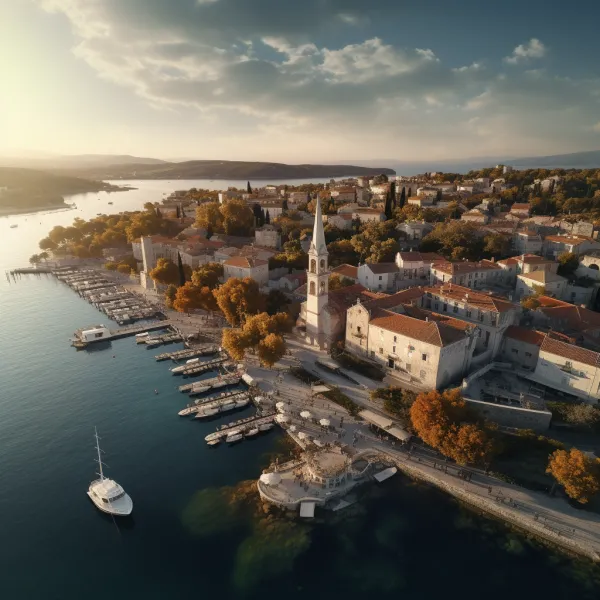
From 1267 until 1797, Venice controlled most of Istria's coastline, and the architectural imprint is unmistakable. The winged lion of St. Mark appears on municipal buildings, city gates, and loggie from Novigrad to Kopar. Poreč's Euphrasian Basilica complex (6th century) predates Venetian rule but benefited from it — its gold mosaics, ranking alongside Ravenna's finest, were preserved precisely because the Serenissima valued the town as a strategic port. The Venetian loggia in Poreč's main square and similar structures in Rovinj and Piran illustrate a consistent urban planning philosophy: the ground floor open to commerce, upper floors for administration, the ensemble framing a public piazza oriented toward the harbor.
Istria's medieval hill towns represent a third distinct architectural register. Motovun, Grožnjan, Oprtalj, and Hum — which claims the title of world's smallest town with around 20 inhabitants — were built on defensible ridges, their walls, gates, and bell towers engineered for visibility and protection rather than commercial access. Hum's Romanesque church and 12th-century frescoes survived intact precisely because the town was too remote to attract either modernization or war damage. For travelers interested in how landscape, gastronomy, and architecture interweave across the peninsula's interior, Istria's rural hinterland offers a completely different experience from its coastal towns.
- Pula Arena: Visit at dusk when tour groups thin out; the summer film festival transforms it into one of Europe's great open-air cinemas
- Euphrasian Basilica, Poreč: UNESCO-listed since 1997; the atrium baptistery and bishop's palace complex are as significant as the basilica itself
- Grožnjan: Partially repopulated since the 1960s by artists and musicians — the broader cultural renaissance across Istria found one of its earliest expressions here
- Rovinj old town: Built on a former island connected to the mainland in 1763; the street pattern still follows the original island topography
Truffle Hunting in Istria: White and Black Varieties, Seasons, and the Motovun Forest Ecosystem
Few culinary experiences rival the thrill of unearthing truffles from the oak-lined riverbanks of the Mirna Valley. Istria produces some of the world's most prized specimens of both Tuber magnatum pico (white truffle) and Tuber melanosporum (black truffle), and the region has built an entire cultural identity around this subterranean treasure. The forests surrounding Motovun — particularly the floodplain stretching along the Mirna River — provide the precise combination of clay-limestone soil, high humidity, and mature oak canopy that these fungi demand. Nowhere is the intersection of gastronomy and landscape more visceral than here, where trained dogs nose through leaf litter while their handlers listen for the faintest scratch of paw on earth.
White vs. Black: Understanding the Key Distinctions
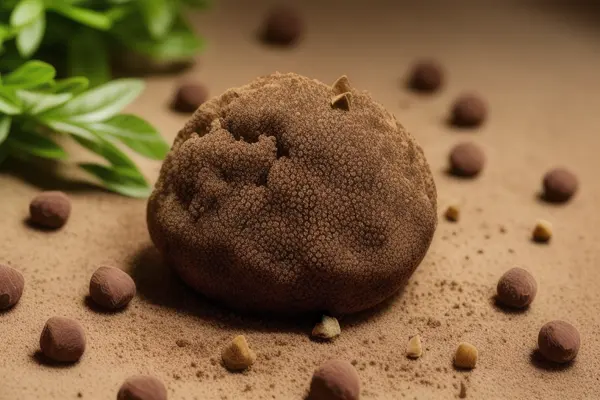
The Istrian white truffle (locally called tartufo bianco or bijeli tartuf) commands prices between €2,000 and €5,000 per kilogram for premium grade specimens, occasionally exceeding those figures when exceptional examples surface late in the season. Its season runs from late September through January, with October and November representing peak intensity. The black summer truffle (Tuber aestivum) offers a longer harvest window from May to November but carries a milder, nuttier profile and trades at a fraction of the white truffle's price — typically €200–500 per kilo. The legendary 1.31 kg white truffle found by Giancarlo Zigante near Buje in 1999, certified by the Guinness World Records, put Istrian truffle hunting on the global map permanently. The annual Zigante celebration in Livade commemorates that discovery each October and draws thousands of visitors from across Europe.
When selecting a truffle on the market or at a restaurant, aroma is everything. A fresh white truffle should deliver an assertive, garlicky, almost fermented complexity. Any specimen smelling faintly of ammonia is past its prime. Black truffles should offer earthy, chocolate-adjacent depth. Both varieties deteriorate rapidly after harvest — whites lose roughly 5–10% of their aromatic compounds daily at room temperature, which is why local chefs insist on same-week sourcing.
The Motovun Forest Ecosystem and Hunting Logistics
The Motovun Forest (Motovunska šuma) covers approximately 900 hectares of lowland floodplain, making it one of Central Europe's largest remaining alluvial oak forests. The symbiotic relationship between truffle mycelium and the roots of pedunculate oak (Quercus robur) defines the ecosystem; without these centuries-old trees, there are no truffles. Seasonal flooding from the Mirna River deposits mineral-rich sediment that sustains the soil chemistry truffle mycelium requires. Responsible hunters know to probe gently, replace disturbed soil, and never over-harvest a single area — practices increasingly enforced by local truffle associations.
Joining an organized hunt is the most practical entry point for visitors. Numerous agritourism operations around Oprtalj, Buzet, and Livade offer 2–3 hour morning hunts, typically starting before 8 AM when soil moisture and cooler temperatures enhance scent detection. Dogs — most commonly Lagotto Romagnolo breed — take 18–24 months of training before they hunt productively. As part of Istria's broader portfolio of immersive activities, truffle hunting stands out because it requires no prior expertise from participants yet delivers an unscripted, genuinely wild experience. The region's gastronomic depth, explored extensively in resources covering Istria's landscape and culinary heritage, consistently positions truffles as the cornerstone ingredient that elevates everything from scrambled eggs to hand-rolled fuži pasta.
- Best white truffle months: October and November for maximum aroma and availability
- Key hunting villages: Buzet, Livade, Oprtalj, Paladini
- Booking lead time: Reserve organized hunts at least 2–3 weeks ahead during peak autumn season
- Dog breeds used: Lagotto Romagnolo dominates, though mixed-breed working dogs are common among veteran hunters
- Legal note: Independent hunting requires a permit from local truffle associations; unauthorized harvesting carries significant fines
Advantages and Disadvantages of Visiting Istria
| Pros | Cons |
|---|---|
| Diverse cultural heritage with Roman, Venetian, and medieval influences | Peak tourist crowds in July and August |
| Exceptional culinary experiences, including truffles and local wines | Higher accommodation prices during the peak season |
| Beautiful coastal landscapes and numerous water sports activities | Limited access to some rural areas without a car |
| Rich festival calendar showcasing local culture and gastronomy | Winter tourism options are fewer due to some closures |
| Easily navigable borders between Croatia, Slovenia, and Italy | Changing regulations regarding cross-border travel |
Istrian Wine Regions: Malvazija, Teran, and the Emergence of Boutique Wineries
Istria's wine scene has undergone a quiet revolution over the past two decades, transforming from a bulk-production economy into one of the most exciting fine-wine territories in the Adriatic. The peninsula sits at a continental crossroads — Adriatic winds, terra rossa soils in the west, and grey flysch limestone in the east — producing dramatically different expressions from vineyards sometimes fewer than 20 kilometers apart. Anyone serious about exploring Istria's extraordinary food and drink culture will find that wine is inseparable from the identity of this place.
Malvazija Istarska: The Peninsula's White Identity
Malvazija Istarska is not simply the most-planted variety in Istria — it accounts for roughly 70% of all white wine production across Croatian Istria — it is a genuinely distinct genetic variety, unrelated to other Malvasia clones found throughout the Mediterranean. On the red iron-rich soils of the western coast near Poreč and Rovinj, Malvazija expresses ripe stone fruit, white flowers, and a characteristic saline mineral finish. Move inland toward Motovun and Grožnjan, and the cooler microclimates and grey soils yield leaner, more aromatic wines with citrus peel and bitter almond notes. The best producers — Roxanich, Kabola, and Clai among them — are also making extended skin-contact Malvazija, amber wines aged for six to eighteen months on the skins, generating considerable international attention from natural-wine importers in Japan, Scandinavia, and the United States.
Teran, Istria's signature red, is a more polarizing grape. A sub-variety of Refosco, it thrives almost exclusively on the karst flysch soils of the Istrian interior, particularly around Buzet and the Ćićarija plateau. Classic Teran is deeply colored, sharply acidic, and loaded with iron — old-school winemakers literally market its high iron content as a health virtue. The grape's natural austerity makes it demanding to work with: under-ripe vintages can be brutally tannic and sour, but in skilled hands, Teran produces wines of remarkable depth, dark cherry, wild herbs, and an almost blood-like mineral density that pairs perfectly with the region's game meats and aged sheep cheese.
The Boutique Winery Movement
Since the mid-2000s, small family estates producing under 50,000 bottles annually have reshaped Istria's wine map. Producers like Moreno Coronica, whose single-vineyard Malvazija bottlings command prices above 40 EUR ex-cellar, or Giorgio Clai near Momjan, who farms biodynamically and maintains minimal intervention throughout the cellar, represent a generation that studied in Burgundy, Friuli, and the Wachau before returning to apply classical European terroir thinking to Istrian varieties. Many of these estates operate agriturismo facilities and winery visits, meaning you can taste directly from barrel during harvest season — typically late September through early October.
For visitors planning a structured wine itinerary, the stretch between Buje, Momjan, and Motovun forms a logical circuit covering both the coastal limestone terroir and the inland flysch zone in a single day. The wealth of experiences available across the peninsula means pairing winery visits with truffle hunting around Buzet or a cooking class in a hilltop village creates a genuinely immersive programme. If you are planning a longer stay and want to track down limited-production bottles, the Istria300 initiative has documented dozens of small producers who rarely appear in export markets but open their cellars to serious visitors by appointment.
- Best Malvazija producers to visit: Roxanich (Motovun area), Kabola (Momjan), Clai (Brtonigla), Benvenuti (Kaldir)
- Best Teran specialists: Coronica (Umag), Matošević for modern-style Teran blends, Trapan (Fažana)
- Harvest window: Malvazija picks typically begin mid-September; Teran follows in early October
- Insider tip: Many boutique cellars require advance contact — show up unannounced and you will often find locked gates, even during summer peak season
Adriatic Water Sports and Coastal Activities: Sailing Routes, Diving Sites, and Secluded Coves
Istria's 445 kilometres of coastline — counting every inlet, cape, and peninsula — deliver a remarkably diverse aquatic playground that rewards those who venture beyond the marina promenade. The Kvarner Gulf to the east and the open Adriatic to the west create distinctly different sea conditions within just a few nautical miles of each other, which is why serious sailors and divers consistently rate this peninsula among the top five Mediterranean destinations for combined water-sport touring. Water temperatures average 26°C in July and August, visibility regularly exceeds 20 metres in the northern Adriatic, and the prevailing Maestral (northwest wind) provides reliable afternoon sailing conditions from June through September.
Sailing the Istrian Coast: Key Routes and Anchorages
The classic Poreč–Rovinj–Pula triangle covers roughly 60 nautical miles and can be comfortably sailed over three days, offering a mix of marinas, small harbours, and open-sea stretches. Experienced skippers typically leave Poreč early to catch the Maestral, anchor off the Limski kanal (Lim Fjord) for lunch — the oysters sold directly from boats here are genuinely exceptional — and reach Rovinj by late afternoon. The archipelago around Rovinj alone contains 14 islands, with Sveta Katarina and Crveni otok providing sheltered overnight anchorage outside peak season. If you're combining sailing with the broader peninsula experience, the many outstanding activities Istria offers on land make stopping in each port town worthwhile rather than rushing through.
Charterers should note that ACI Marina Pula (capacity 200 berths) and Marina Funtana near Poreč both offer full provisioning. Booking berths in July and August requires at least six weeks advance notice. The Brijuni National Park waters require a park entry permit for anchoring, currently priced at 150 HRK per vessel per day — but the protected sea around the 14 Brijuni islands rewards the extra administration with extraordinary marine biodiversity and some of the calmest water along the entire coast.
Diving Sites: From Roman Wrecks to Underwater Walls
Istria's diving heritage is unusually rich because centuries of Venetian, Roman, and Austro-Hungarian maritime traffic created an accidental underwater museum. The Baron Gautsch wreck near Rovinj — an Austro-Hungarian passenger steamer sunk in 1914 at 28–42 metres depth — is the peninsula's flagship technical dive and draws certified wreck divers from across Europe. More accessible for recreational divers (Open Water certification sufficient) is the Corallo dive site near Poreč, a submerged wall at 12–22 metres that hosts gorgonian sea fans, scorpionfish, and occasional sunfish sightings in late summer.
- Bone dive site, Pula: Roman amphora fragments and anchor stocks scattered across a sandy bottom at 18 metres
- Zlatne Stijene, Rovinj: Shallow reef at 5–15 metres, ideal for beginners and snorkellers
- Istra dive site, Novigrad: Visibility regularly hits 25 metres; eagle rays sighted May–June
For those building a broader itinerary around Istria's coastline, the Istria300 route integrates coastal cycling with ferry connections that conveniently link several of the peninsula's best swimming coves. Secluded spots like Kamenjak Cape at the southern tip — technically a nature park with 30 kilometres of wild coastline — require a short walk from the access road but deliver sea-grass meadows, crystal-clear shallow water, and almost no jet-ski traffic. This combination of wild nature, culinary culture, and maritime history is precisely what makes Istria such a compelling destination, as anyone who has explored both its landscapes and food scene will confirm.
Istria's Festival Calendar: Film, Music, Culinary, and Cultural Events Throughout the Year
Istria's event calendar runs almost year-round, and knowing which festivals align with your travel dates can transform a standard holiday into something genuinely memorable. The peninsula punches well above its weight culturally — a region of just 200,000 permanent residents hosts events that draw international audiences, award-winning filmmakers, and Michelin-starred chefs. If you want a full overview before diving deep, the complete guide to what's happening across the region is the best starting point for planning.
Flagship Events: Pula Film Festival and Beyond
The Pula Film Festival is Istria's most iconic cultural event — held every July inside the 2,000-year-old Roman amphitheater, it has been running since 1954, making it one of Croatia's oldest film festivals. Screenings begin after dark, with the arena accommodating up to 8,000 spectators under an open sky. The festival traditionally centers on Croatian cinema but has expanded to include international titles, retrospectives, and industry panels. Arriving early matters here — the best seats in the stone tiers go fast, and the atmosphere during a quality Croatian drama inside those ancient walls is genuinely unlike any cinema experience elsewhere.
For music, Outlook Festival (held at Pula's Fort Punta Christo) and the smaller but beloved Dimensions Festival attract electronic music communities from across Europe each August and September. Both use the 19th-century Austro-Hungarian fortress as their venue — a setting that adds industrial drama to the bass-heavy programming. Ticket allocation typically sells out 3–4 months in advance, so forward planning is non-negotiable.
Culinary Festivals: Truffle Season as a Cultural Moment
Istria's food festivals are inseparable from its agricultural identity. The truffle season runs from September through January, with white truffles peaking in October and November around the Motovun forest — the same dense oak woodland that produces specimens regularly exceeding 300 grams. The annual celebration at the Zigante estate in Livade is the region's most prominent truffle event, drawing thousands of visitors for tastings, live cooking demonstrations, and record-breaking truffle presentations. Livade is a small village, so logistics require thought: parking fills by mid-morning, and accommodation in Buzet or Motovun books out weeks ahead.
Beyond truffles, look for these recurring culinary and cultural markers throughout the year:
- Subotina (Buzet, September): A street festival celebrating the new truffle season with a giant frittata cooked in a 2-meter pan — roughly 2,000 eggs and 10 kg of truffles go into a single batch
- Grožnjan Summer Concerts: This hilltop artists' village hosts classical and jazz performances through July and August, embedded directly into the medieval streetscape
- Asparagus Days (Rovinj area, April–May): Local restaurants build seasonal menus around wild Istrian asparagus — informal but worth timing a visit around
- Fažana Sardine Festival (late July): One of the Adriatic coast's most unpretentious food events, with locally caught sardines grilled en masse along the harbor
The rhythm of Istrian festivals rewards visitors who plan thematically rather than just geographically. If you're still building your itinerary around these events, cross-referencing the festival calendar with the broader range of activities Istria offers helps avoid the common mistake of clustering everything into peak-season July and August, when accommodation costs spike and the best local experiences are actually spread across May, September, and October.
Crossing Borders in Istria: Navigating the Croatian, Slovenian, and Italian Tripoint Region
The Istrian peninsula is one of Europe's most fascinating geopolitical puzzles: three countries share a landmass smaller than Luxembourg, and travelers can cross international borders multiple times in a single afternoon without noticing a dramatic change in landscape, architecture, or cuisine. Croatian Istria makes up roughly 90% of the peninsula, while Slovenia holds a narrow but strategically vital coastal strip around Koper, Izola, and Piran, and Italy's contribution — though largely symbolic today — echoes through every piazza and campanile from Trieste southward.
Understanding the Schengen and Non-Schengen Divide
Since Croatia joined the Schengen Area on January 1, 2023, the practical border experience across Istria has fundamentally changed. Crossings between Croatia, Slovenia, and Italy are now passport-free for Schengen citizens, but travelers arriving from non-Schengen countries must still carry valid documentation. The former border crossing at Dragonja — once a notorious bottleneck between Croatian and Slovenian Istria — now sees uninterrupted traffic flow. That said, occasional spot checks still occur, particularly during summer peak seasons when traffic between Pula and Trieste surges past 15,000 vehicles per day on the main coastal route.
For road travelers, the E751/A9 motorway corridor is the backbone of cross-border movement. From Pula in the south, the drive to Trieste covers roughly 150 kilometers and passes through all three national jurisdictions. A practical tip: Croatian motorways require a digital vignette (purchased at hac.hr) while Slovenian roads require a separate vignette — many rental car agencies include these, but always verify before departure to avoid fines up to €500.
The Maritime Border: A Different Kind of Crossing
Istria's borders aren't limited to land. The Adriatic coastline introduces a parallel set of regulations for sailors and ferry passengers. The Piran Bay territorial dispute between Croatia and Slovenia — still technically unresolved despite a 2009 arbitration ruling — means that nautical charts and AIS tracking data occasionally reflect different boundary lines depending on the issuing country. Serious sailors should cross-reference both Croatian and Slovenian official maritime charts when navigating the northern Adriatic. The practical solution most skippers use is to stay clearly within Croatian waters south of the Savudrija lighthouse until well clear of the contested zone.
For visitors planning to explore both the Croatian interior and the Slovenian coast in a single trip, the route through Buzet and Koper offers exceptional rewards. This corridor runs through the truffle heartland and karst highlands, revealing the culinary richness that defines this entire peninsula regardless of which flag flies overhead. The villages of Grožnjan, Motovun, and Oprtalj sit within 30 kilometers of the Slovenian border yet retain a distinctly Venetian-Istrian identity.
Currency logistics still require attention in this multi-national zone. Croatia and Slovenia both use the Euro, so that particular friction point has disappeared. However, if your itinerary takes you toward Trieste or Grado in Friuli-Venezia Giulia, the currency is consistent throughout. Cross-border cycling has exploded in popularity — the 300-kilometer Istrian cycling network deliberately crosses national boundaries to showcase the region's geographic unity. Seasonal timing matters enormously: the calendar of festivals and cultural events across Istria often clusters around border towns like Umag, Buje, and Piran precisely because their cross-cultural heritage makes them natural gathering points.
Istria as a Year-Round Destination: Shoulder Season Travel, Crowds, and Climate Strategy
Most visitors to Istria make the same mistake: they arrive in July or August, pay peak-season prices, fight for parking in Rovinj's old town, and leave wondering what all the fuss was about. The peninsula's tourism infrastructure handles roughly 3.5 million overnight stays annually, and a disproportionate share of that volume is compressed into eight weeks. Understanding when to go is arguably more important than knowing where to go.
The Shoulder Season Advantage
May, June, and September represent the strategic sweet spot for experienced travelers. Temperatures in May typically range from 18–24°C, truffle season is still active in the interior, and the Adriatic is warm enough for swimming by mid-June. September arguably offers the best conditions of all: sea temperatures around 23–25°C, harvested vineyards, olive pressing beginning in October, and restaurant owners who actually have time to talk to you. Accommodation prices drop 30–45% compared to peak rates, and the 300 km of marked cycling and hiking routes across the peninsula are far more enjoyable without summer heat and traffic.
October deserves special mention for food-focused travelers. The truffle season peaks in Motovun Forest between late September and November, with white truffles commanding prices upward of €3,000 per kilogram. Local konobas in Buzet, Livade, and Oprtalj serve fresh truffle preparations that simply don't exist in summer. The Subotina festival in Buzet each September draws thousands, but the real access is in the weeks after—when you can join an actual tartufo hunt with local hunters and their dogs for €40–60 per person.
Climate Realities and Microclimates
Istria's geography creates meaningful climate differences across a relatively small area. The western coastal strip—Poreč, Rovinj, Pula—benefits from a classic Mediterranean climate with hot, dry summers and mild winters averaging 5–8°C. The Istrian interior around Pazin and the Učka mountain range sits 300–400 meters higher and runs noticeably cooler and wetter. This matters practically: fog is common in the Mirna Valley from October through February, and the bora wind can make coastal outdoor dining unpleasant even in April. Winter visitors should plan to base themselves in Rovinj or Pula, which have enough open restaurants and cultural infrastructure to support a meaningful trip even in January.
Winter tourism remains underdeveloped but genuinely viable for those willing to self-cater and drive. Pula's Roman arena hosts concerts and events year-round, and the festival calendar across the peninsula includes film screenings, jazz events, and food festivals that stretch well into November. The challenge is accommodation: many agritourism properties and smaller hotels close between November and March, so booking options narrow considerably. Apartments in Rovinj or Pula provide the most reliable year-round base.
For visitors trying to balance crowd avoidance with optimal conditions, the range of experiences available across the peninsula shifts meaningfully by season—cycling and hiking peak in spring and autumn, beach culture dominates summer, and gastronomy and cultural tourism are strongest in late autumn. Building an itinerary around this seasonal logic rather than defaulting to August will consistently produce a better trip. The peninsula rewards those who treat timing as a strategic decision rather than an afterthought.
Istrian Gastronomy Beyond Truffles: Fuži, Maneštra, Olive Oil Traditions, and the Slow Food Movement
Istrian cuisine is one of Europe's most coherent regional food cultures — shaped by centuries of Venetian, Habsburg, and Slavic influences converging on a peninsula that produces exceptional ingredients almost effortlessly. While truffles dominate international headlines (and events like the annual truffle celebration in Livade draw visitors from across the globe), the daily cooking of Istrian households tells a richer, more layered story. Understanding that story requires getting beyond the tourist menu and into the real kitchen traditions.
Pasta, Pulse Soups, and the Architecture of the Istrian Plate
Fuži is the defining pasta of Istria — hand-rolled egg pasta cut into small squares and folded into hollow quill shapes. The texture is slightly rough, which means it holds sauces brilliantly, particularly slow-braised game ragùs, wild boar, or the region's celebrated truffle preparations. In most inland towns, you'll find fuži made fresh daily, and the quality difference versus dried pasta is immediately obvious. Equally important is pljukanci, a hand-rolled, tapered pasta with no eggs that pairs particularly well with lighter seafood sauces along the coast.
Maneštra is Istria's soul food — a thick vegetable and bean soup that varies by village, season, and whatever happens to be in the garden. The base typically involves dried borlotti or white beans, corn grits (sometimes called žgvacet corn), seasonal vegetables, and cured pork or pancetta. A proper maneštra simmers for hours and improves on day two. It's peasant food in the most respectful sense, and several Istrian restaurants now serve elevated versions using heritage bean varieties sourced from local producers. If you're planning activities across the peninsula, scheduling a farmhouse lunch centered on maneštra in the interior hills is one of the most authentic experiences available.
Olive Oil: A World-Class Product Hiding in Plain Sight
Istrian olive oil has won more international awards per capita than almost any other producing region in the world. The dominant variety is Buža, an indigenous cultivar that produces intensely green, peppery oils with exceptional polyphenol content. Producers like Chiavalon, Ipša, and Šember consistently rank in the top tiers of global competitions, including Flos Olei and the New York International Olive Oil Competition. The harvest window runs from mid-October to late November, and visiting a frantoio (oil mill) during pressing is genuinely worth planning around.
The Slow Food movement found fertile ground in Istria long before it became fashionable. The peninsula hosts several Slow Food Presidia protecting threatened ingredients and methods:
- Istrian Prosciutto (Istrski pršut) — dry-cured with sea salt only, no nitrates, aged minimum 12 months
- Rovinj Salted Sardines — packed in ceramic vessels using traditional techniques nearly unchanged since the 19th century
- Žlahtina grape variety — indigenous white grape from the Kvarner area, increasingly championed by natural wine producers
What makes Istrian gastronomy genuinely coherent is the short distance between producer and plate. As the peninsula's extraordinary agricultural diversity demonstrates, within 30 kilometers you can move from high-quality inland olive groves to coastal fishing villages to truffle forests to sheep pastures. That compression of terroir into a small geographic space is what allows Istrian cooking to remain hyper-local even as it gains international recognition. The most practical advice: eat where the menu changes weekly and the wine list features surnames you can't pronounce.
FAQ about Istria Travel Guide
What is the best time to visit Istria?
The ideal times to visit Istria are during the shoulder seasons of May, June, and September when temperatures are pleasant, crowds are fewer, and prices are lower.
What culinary specialties should I try in Istria?
Visitors should not miss trying local dishes like truffles, fuži pasta, maneštra (bean soup), and high-quality olive oil, which are integral to Istrian gastronomy.
Are there any cultural events in Istria throughout the year?
Yes, Istria hosts numerous cultural events, including the Pula Film Festival in July and various food festivals celebrating local produce and traditions throughout the year.
What activities can I enjoy while visiting Istria?
Istria offers a variety of activities, including wine and truffle hunting tours, sailing along the coast, hiking in scenic areas, and exploring charming medieval towns.
How can I travel around Istria?
Traveling around Istria is best done by car, as this allows easy access to both coastal and inland areas. Public transport is available but might be limited for reaching remote destinations.