Table of Contents:
Croatia's Agrotourism Landscape: Regional Diversity from Istria to Dalmatia
Croatia's agrotourism sector has grown from a niche curiosity into a structurally significant segment of the national tourism economy, generating an estimated €180 million annually and encompassing over 1,500 registered agrotourism operations across the country. What makes this market genuinely compelling for the serious traveler or investor is not its size, but its extraordinary regional heterogeneity — no two Croatian agricultural regions deliver the same experience, the same produce, or the same cultural framework for hospitality.
Istria: The Benchmark Region
Istria functions as Croatia's agrotourism flagship, and for good reason. The peninsula combines a Mediterranean climate with rich red terra rossa soil, producing olive oils that consistently rank among Europe's finest — Chiavalon and Ipša estates regularly appear on the Flos Olei top-100 list. Istrian agrotourism operations, locally called agriturismo (reflecting deep Italian cultural influence), typically integrate accommodation, farm-to-table dining, and direct product sales under one roof. The Motovun and Buzet hinterland adds a further layer of exclusivity through black and white truffle harvesting, with estates like Zigante Tartufi offering structured farm experiences that attract guests willing to pay €150–300 per person for guided foraging. If you want to understand how taste, landscape, and agricultural tradition interlock into a coherent visitor experience, exploring the sensory depth that defines quality agrotourism helps contextualize why Istria consistently outperforms other regions in guest satisfaction scores.
Dalmatia and the Hinterland: Wine, Stone, and Subsistence Heritage
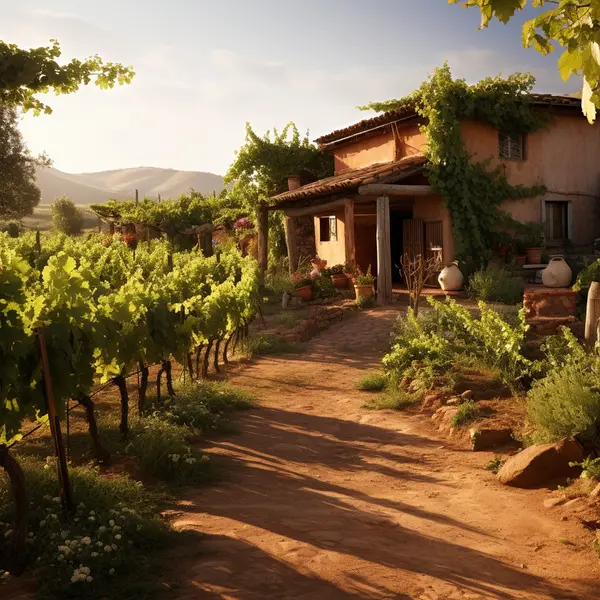
Dalmatia operates on an entirely different register. The coastal strip and its offshore islands — Hvar, Brač, Korčula — are dominated by indigenous grape varieties such as Plavac Mali, Pošip, and Grk, all of which thrive in conditions that would defeat most European cultivars: poor limestone soils, extreme summer drought, and intense UV exposure. Winery-based agrotourism here is arguably Croatia's most commercially sophisticated offering; estates like Saints Hills on Korčula and Zlatan Otok on Hvar have invested heavily in visitor infrastructure while maintaining genuine agricultural identity. For travelers specifically drawn to viticulture, understanding the intersection of winery operations and agricultural hospitality clarifies what separates a true agrotourism winery from a standard tasting room with a vineyard backdrop.
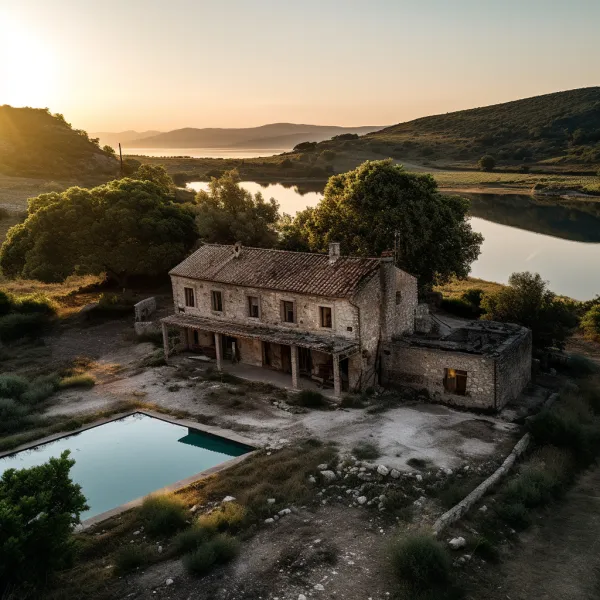
The Dalmatian hinterland — Zagora — remains dramatically underexplored by international visitors despite offering some of the country's most authentic agrotourism experiences. Operations here center on lamb and goat farming, traditional smoked meats (pršut from Drniš rivals its Istrian counterpart), and stone-built farmsteads where agricultural methods have changed little since the 19th century. Average nightly rates run 40–60% below coastal equivalents, making Zagora an exceptional value proposition for travelers prioritizing cultural immersion over Instagram aesthetics.
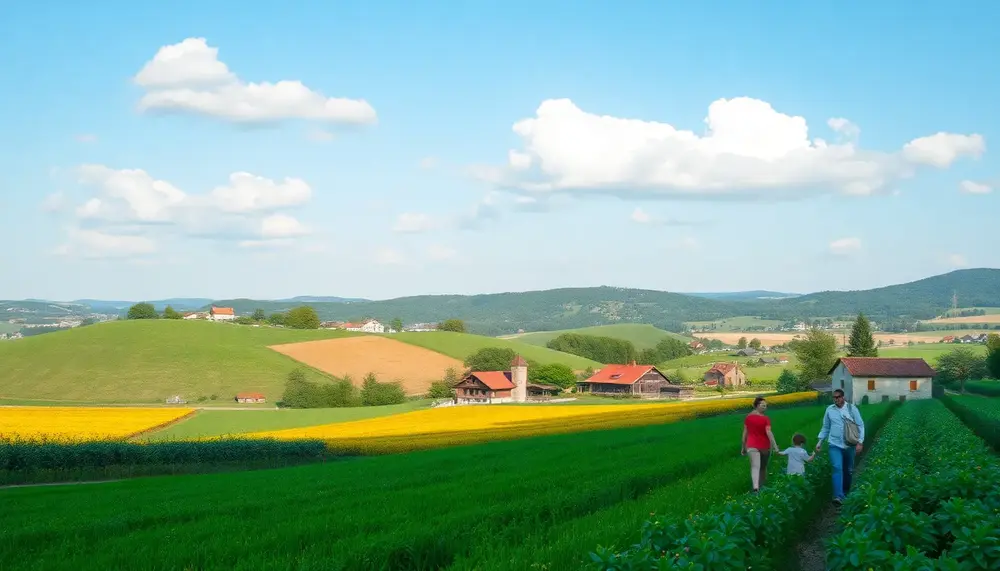
Further north, Slavonia and the Baranja complete Croatia's agrotourism map with a continental character — flat agricultural plains, paprika cultivation, fish ponds, and a wine culture centered on Graševina that remains largely unknown outside regional markets. The Kutjevo wine zone alone encompasses over 2,400 hectares of vineyards, yet fewer than 15 estates currently offer structured visitor programs. This gap represents both an underdevelopment problem and, for early-moving operators, a significant market opportunity.
- Istria: Olive oil, truffles, Malvazija wine, Italian-influenced agriturismo model
- Dalmatian Coast and Islands: Indigenous varietals, premium winery experiences, Mediterranean produce
- Dalmatian Hinterland (Zagora): Livestock, cured meats, authentic low-infrastructure heritage farms
- Slavonia/Baranja: Continental viticulture, paprika, fish farming — largely undiscovered internationally
Farm-to-Table Experiences: How Croatian Agrotourism Redefines Authentic Gastronomy
Croatian agrotourism doesn't merely offer proximity to food production — it collapses the entire distance between soil and plate. When you sit down for a meal at a working OPG (obiteljsko poljoprivredno gospodarstvo, Croatia's family farm designation), the pršut you're eating was likely hung to dry six to eighteen months ago in the same courtyard where you're sitting. The olive oil came from trees that may be centuries old. This isn't a curated performance of rurality; it's the actual economic and cultural infrastructure of Dalmatian, Istrian, and Slavonian households made visible to guests.
What separates Croatia from more commodified agrotourism markets like Tuscany or Provence is the relatively recent formalization of the sector. Croatia's Law on Providing Services in Agriculture and Rural Areas (amended in 2019) permits registered farms to serve meals exclusively made from ingredients produced on-site, with a maximum of 20% sourced externally. This legal framework forces authenticity — it's not optional. A spit-roasted lamb (janjetina na ražnju) at an inland Dalmatian farm must come from that farm's own flock. If you want to truly go beyond the standard tourist experience and engage with food at its source, Croatia's regulatory structure actually protects that promise.
Regional Gastronomy as a Direct Function of Landscape
Croatia's geographic compression — from the Pannonian plains of Slavonia to the karst terrain of the Dalmatian hinterland and the terra rossa soils of Istria — produces radically different farm tables within a few hundred kilometers. Slavonian farms center their offer around kulen (paprika-spiced cured sausage), freshwater fish from the Drava and Sava rivers, and corn-based dishes that reflect centuries of Ottoman and Austro-Hungarian influence. Istrian agrotourism, by contrast, operates on truffles, Malvazija wine, prosciutto from Drniš and Tinjan, and foraged herbs — a Mediterranean-continental hybrid cuisine with 2,500+ registered agritourism operators in the county alone as of 2023. Dalmatian islands like Brač and Hvar have begun leveraging endemic varieties: the Brač lamb (raised on sage and rosemary-covered karst), Stari Grad olive oil (produced from cultivars over 2,400 years old), and Faros wine from Stari Grad Plain, a UNESCO World Heritage site.
Practical Integration: What Guests Actually Experience
The most sophisticated Croatian farm operations structure their offer around participation, not just consumption. Guests who engage with the intersection of wine production and rural hospitality will often find that harvest seasons — September for grapes, October through November for olives — create entirely different experiences than summer visits. Many farms now offer structured activities:
- Cheese-making workshops using morning milk, particularly prevalent in Lika and on Pag island (home of the famous paški sir)
- Bread baking under the peka — the cast-iron bell used for slow-cooking, a technique that requires 3–4 hours and significant skill to execute properly
- Olive harvest participation from mid-October, with immediate cold-pressing and tasting of early-harvest oil (polyphenol content often exceeds 500 mg/kg at this stage)
- Kitchen herb and vegetable garden tours, where the geometry and philosophy of Croatian cultivated garden spaces reflects centuries of Mediterranean agronomic tradition
For operators, the critical differentiator is storytelling density. Guests who understand why Pag lamb tastes different — saltwater spray from the bura wind mineralizes the grass, creating a natural seasoning effect — leave with knowledge, not just a meal. That intellectual dimension is what drives repeat visits and premium pricing, with top-tier agrotourism meals in Istria now regularly commanding €45–80 per person for multi-course experiences.
Pros and Cons of Agrotourism in Croatia
| Pros | Cons |
|---|---|
| Authentic cultural experiences | Lack of mainstream awareness and promotion |
| Direct connection to food production | Inconsistent quality across different farms |
| Support for local economies and sustainable practices | Seasonal fluctuations in visitor numbers |
| Diverse regional offerings from Istria to Slavonia | Potential regulatory complexities for new operators |
| Opportunities for hands-on participation in farming activities | Infrastructure limitations in remote areas |
Winery Integration in Croatian Agrotourism: Business Models and Visitor Revenue Streams
Croatian wineries operate across three distinct commercial zones — Istria, Dalmatia, and Slavonia — each producing fundamentally different varietals and attracting different visitor profiles. Istrian Malvazija and Teran draw a design-conscious, gastronomy-oriented crowd willing to pay premium cellar-door prices. Dalmatian Plavac Mali producers near Pelješac Peninsula see younger wine tourists combining sailing itineraries with vineyard stops. Understanding which visitor segment your region attracts determines which revenue model actually generates sustainable returns rather than seasonal cash spikes.
The most financially resilient Croatian wine estates have moved beyond simple bottle sales toward a layered experience model. A basic cellar tour with tasting typically yields €15–25 per visitor. Add a guided vineyard walk, seasonal harvest participation, or a paired lunch using estate-grown produce, and the same visitor generates €60–120. Operators in the Kozlović winery model near Motovun have demonstrated that experience-led visitors also purchase 40–60% more bottles than walk-in customers, creating a compounding revenue effect that purely transactional approaches miss entirely.
Structuring the Revenue Mix: Beyond the Tasting Room
Successful operators treat the winery not as the destination but as the anchor within a broader agricultural narrative. This means integrating the vineyard into the surrounding farm operation — olive groves, truffle grounds, vegetable gardens — so visitors can experience the full agricultural context behind the wine, rather than arriving for a 30-minute pour and leaving. Estates that structure multi-hour or multi-day programs consistently report higher per-visitor revenue and significantly better review profiles on platforms that drive booking decisions.
Revenue streams worth building out systematically include:
- Accommodation packages: Offering 2–3 night stays anchored around harvest events or seasonal wine releases; Croatian estates charging €150–220 per night for agriturismo rooms see occupancy rates of 70–80% during peak season (June–September)
- Wine club subscriptions: Quarterly shipments to domestic and EU customers who visited and converted; retention rates are substantially higher than cold-acquired subscribers
- Cooking and winemaking workshops: 3–4 hour formats priced at €45–80 per person, particularly effective when tied to seasonal ingredients from the same estate
- Corporate and incentive groups: A largely underdeveloped segment in Croatia compared to Tuscany; groups of 20–40 represent guaranteed revenue blocks that smooth seasonal cash flow
- Branded product sales: Estate olive oil, grape-based spirits (lozovača), and preserves extend the commercial relationship beyond wine alone
Licensing, Zoning, and the OPG Framework
Croatian family wine producers operating under the OPG (Obiteljsko Poljoprivredno Gospodarstvo) classification gain access to simplified licensing for on-site hospitality, including food service and accommodation — a structural advantage over purely commercial wine businesses. However, the cap on non-agricultural income (currently 49% of total revenue for OPG status retention) requires careful revenue tracking. Operators who breach this threshold without restructuring risk losing agricultural subsidies worth €3,000–8,000 annually, depending on the estate's land holdings and subsidy tier.
For anyone building or scaling a wine-anchored agrotourism operation, the reference point isn't just neighboring Croatian estates — it's the broader framework of how terrain, tradition, and taste combine into a coherent visitor proposition that justifies premium pricing. Croatian wine tourism has the raw ingredients; the operators who monetize them most effectively are those who architect the visit as intentionally as they architect the wine itself.
Sustainable Agriculture Practices Driving Eco-Conscious Rural Tourism in Croatia
Croatia's agrotourism sector is increasingly defined not just by its landscapes and traditions, but by how consciously those landscapes are managed. Farms across Dalmatia, Istria, and Slavonia are adopting certified organic production, water-conservation irrigation systems, and biodiversity-focused land management — and visitors are actively choosing destinations based on these commitments. According to Croatia's Ministry of Agriculture, the number of certified organic farms grew by over 40% between 2018 and 2023, now exceeding 6,000 registered producers. That shift has a direct and measurable impact on rural tourism demand.
The connection between sustainable farming and tourism authenticity runs deep. Guests who travel specifically for agricultural experiences are far more discerning than standard holidaymakers. They want to understand soil health, seed-saving traditions, and the reasoning behind polyculture planting. Croatian farms that can articulate these practices — not just perform them — consistently report higher repeat visitor rates and stronger word-of-mouth referrals. Agrotourism done well is essentially sustainability storytelling grounded in real production cycles.
Key Sustainable Practices Shaping the Visitor Experience
What differentiates leading Croatian agrotourism properties is their ability to integrate ecological practices into tangible guest activities. This isn't greenwashing — it's operational philosophy made visible. Some of the most impactful practices guests encounter include:
- Cover cropping and composting workshops on Slavonian grain farms, where guests participate in hands-on sessions rather than observing from a distance
- Rainwater harvesting systems in Dalmatian olive and fig orchards, particularly relevant given the region's water scarcity challenges during peak summer months
- Heritage seed preservation programs on Istrian farms maintaining pre-industrial vegetable and grain varieties — some properties offer seed-packet take-home kits as part of longer stays
- Rotational grazing management on livestock farms in the Lika and Gorski Kotar highlands, directly tied to guided morning walks with shepherds
- No-till and minimum-tillage cultivation increasingly adopted in wine-growing regions, reducing soil erosion while preserving microbial diversity
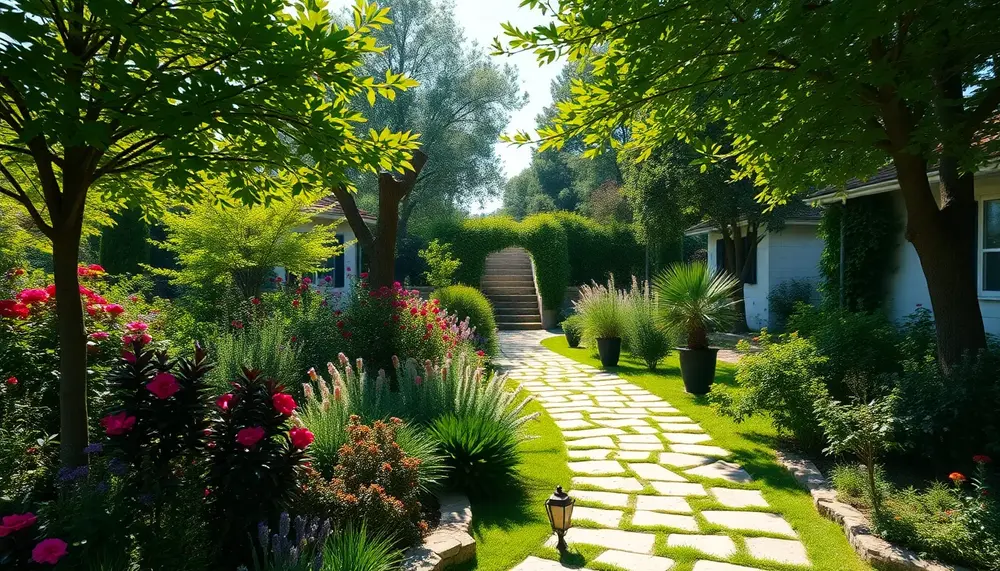
For guests seeking a slower, more contemplative dimension to their stay, the garden itself becomes a primary attraction. Properties that maintain traditional thoughtfully designed Croatian garden spaces — featuring aromatic herbs, heritage roses, and dry-stone wall terracing — often see guests spending hours in these areas without structured programming. The garden functions as both a productive agricultural space and a restorative environment.
Wine Production and Ecological Responsibility
Croatia's wine regions are emerging as particularly strong examples of sustainable agrotourism integration. Producers in Pelješac, Krk, and the Plavac Mali belt are transitioning to biodynamic and low-intervention viticulture, reducing synthetic inputs while emphasizing terroir-driven production. Visitors who want to understand how winemaking philosophy and land stewardship intersect will find that combining vineyard stays with winery education provides one of the most layered agrotourism experiences available in the country.
For travelers building an itinerary around agricultural ethics rather than just aesthetics, Croatia rewards deeper engagement. The farms worth seeking out are those where sustainability isn't a marketing add-on but the operational foundation — where the guide explaining nitrogen fixation in the cover crop is the same person who planted it. Those experiences, which place taste, tradition, and land knowledge at the center of the journey, represent the highest tier of what Croatian agrotourism can deliver.
Regulatory Framework and EU Funding Opportunities for Croatian Agrotourism Operators
Croatia's agrotourism sector operates under a dual regulatory architecture that combines national legislation with EU-harmonized standards — a framework that has evolved significantly since accession in 2013. The primary legal basis is the Act on Tourism Activities in Rural Areas (Zakon o turističkoj djelatnosti), supplemented by the Ordinance on the Provision of Tourism and Hospitality Services in Rural Areas. Under this structure, agricultural households can register as OPG (Obiteljsko Poljoprivredno Gospodarstvo) — family farming enterprises — which grants them favorable tax treatment and simplified licensing compared to conventional hospitality businesses. The distinction matters operationally: an OPG offering supplementary tourism services pays a flat annual tax (paušalni porez) calculated per bed or service unit, rather than standard corporate income tax.
Licensing Categories and Compliance Requirements
Croatian law recognizes three core agrotourism service categories: accommodation (up to 20 beds for preferential tax treatment), food and beverage services using farm-produced ingredients, and recreational or educational activities tied to agricultural production. Each category carries its own certification pathway through the county-level administrative office (Upravni odjel) and the Croatian Tourism Inspectorate. Accommodation must meet minimum star-category standards under the Pravilnik o razvrstavanju, kategorizaciji i posebnim standardima, which means a basic inspection covering room dimensions, bathroom ratios, and safety certifications. Food service operations additionally require HACCP implementation and registration with the Croatian Veterinary and Food Safety Directorate — a step many small operators underestimate in terms of preparation time, typically 3–6 months from initial application to approval.
Wine and spirits production tied to agrotourism adds another compliance layer. Operators combining vineyard visits with tastings and sales must hold a vinogradarski upisnik (vineyard register entry) and, for distilled products, a license from the Customs Administration. For those developing this integrated model, understanding how agritourism and winery operations intersect legally and commercially is essential before committing capital to cellar infrastructure.
EU Funding Pathways: IPARD III and Rural Development Grants
The most significant funding vehicle currently available is IPARD III (2021–2027), administered through the Agency for Agriculture and Rural Development (APPRRR). Measure 7 specifically targets diversification of rural livelihoods, covering up to 50% of eligible investment costs for agrotourism infrastructure, with a maximum grant of €200,000 per project. Eligible expenditures include accommodation construction or renovation, visitor facilities, agritourism equipment, and digital infrastructure. The catch: applicants must demonstrate that at least 30% of revenue originates from agricultural production — meaning new entrants need an established farming track record before applying.
Beyond IPARD, operators should monitor the European Agricultural Fund for Rural Development (EAFRD) calls channeled through Croatia's Strategic Plan for the CAP 2023–2027. Local Action Groups (LAGs) operating under the LEADER approach distribute sub-grants at the micro level — typically €10,000–€50,000 — with faster approval cycles than national programs. Contacting your regional LAG directly and joining their information sessions is the most reliable way to anticipate call openings, which often have 30-day submission windows.
Operators building a comprehensive agrotourism concept — one that weaves together land, produce, culture, and hospitality — will find that EU evaluators consistently reward projects with clear visitor journey narratives. If you want to understand what assessors look for when scoring experiential depth, reviewing how sensory and cultural immersion defines a compelling agrotourism offer provides a practical framework for structuring both your grant application and your actual product design.
- Pre-application audit: Verify OPG status, HACCP registration, and category compliance at least 12 months before submitting an IPARD application
- Business plan benchmarks: APPRRR requires 5-year financial projections with occupancy rates referenced against regional tourism statistics
- Co-financing readiness: Grants cover 50%; operators must demonstrate liquid capital or confirmed bank commitment for the remaining investment
- LAG membership: Active participation in local action groups improves project scoring under LEADER's community-integration criteria
Croatian Gardens and Botanical Heritage as Agrotourism Magnets
Croatia's horticultural heritage remains one of the most underestimated assets in its agrotourism portfolio. From the Renaissance garden complexes of Dubrovnik's hinterland to the indigenous medicinal herb gardens of Dalmatian islands, botanical landscapes here carry centuries of cultivated knowledge. The Arboretum Trsteno near Dubrovnik, established in 1494, stands as one of Europe's oldest arboreta still in active use — a living document of Croatian botanical tradition that draws over 40,000 visitors annually. Operators who integrate garden experiences into their agrotourism programs consistently report 25–35% longer average visitor stays compared to farm-only offerings.
Heritage Gardens as Structured Visitor Experiences
The distinction between a garden visit and a genuine botanical heritage experience lies in storytelling density and hands-on engagement. Guests who simply walk through a garden leave with aesthetic impressions; guests who learn to identify lavanda dalmatinska (Dalmatian lavender), understand its harvest cycle, and participate in distillation leave with transferable knowledge and emotional attachment to the destination. Hvar Island's lavender farms have built entire tourism economies around this principle, with family estates like Vukovic Lavanda offering structured 2–3 hour workshops that include garden walks, harvesting, and essential oil production for approximately €35–50 per person. The conversion from casual visitor to repeat customer or brand advocate is measurably higher in experiential garden programs.
For operators developing botanical offerings, the most commercially successful programs typically combine:
- Guided ethnobotanical walks with a focus on endemic and endangered species
- Seasonal harvesting participation tied to specific calendar windows (e.g., sage in May–June, figs in August–September)
- On-site processing demonstrations — drying, pressing, infusing, distilling
- Take-home products produced during the visit, which function as both souvenir and marketing material
- Gastronomy integration linking harvested botanicals to the table within the same visit
Island and Coastal Microclimates as Competitive Differentiators
Croatia's biogeographic diversity gives its botanical agrotourism a rare competitive edge. The Kvarner islands support Mediterranean-continental transitional flora found nowhere else in Central Europe, while Mljet's saltwater lakes generate microclimates that sustain plant communities unique to the Adriatic. Operators on Vis Island have begun positioning their endemic capers (Capparis spinosa) and indigenous wine grape varieties as a form of living botanical sanctuary, attracting specialist botanists and slow-travel enthusiasts willing to pay premium rates for access. This niche skews older, higher-income, and significantly more likely to book directly — reducing OTA commission costs for estate owners.
The continental interior offers equally compelling material. Zagorje and Slavonia maintain traditional orchard systems — stara sorta (heritage variety) apple, pear, and plum cultivation — that are actively disappearing from the agricultural mainstream. These orchards represent both conservation challenges and tourism opportunities. Guests increasingly seek the deeper connection between landscape, cultivation history, and what ends up on their plate that only heritage sites can credibly provide. Documenting and certifying heritage varieties through Croatia's agricultural extension services (savjetodavna služba) adds institutional credibility and opens access to EU rural development co-financing for restoration projects.
Digital Marketing and Booking Strategies for Croatian Agrotourism Farms
Croatian agrotourism operators who rely solely on word-of-mouth and roadside signs are leaving significant revenue on the table. Research from the Croatian National Tourist Board shows that over 74% of rural tourism bookings in Croatia now originate from online searches, yet fewer than 40% of registered agrotourism farms maintain a functional website with direct booking capability. Closing this gap is the single most impactful step a farm owner can take to increase occupancy and revenue per guest.
Building a Conversion-Focused Online Presence
A dedicated website remains the cornerstone of any serious digital strategy. For agrotourism farms, this means high-resolution photography of the actual property — not stock images — combined with clear descriptions of what guests will experience day-to-day. Farms that integrate real-time availability calendars and direct booking forms reduce their dependency on OTA commissions, which typically run 15–25% on platforms like Booking.com and Airbnb. A well-structured property page should also highlight seasonal programming: olive harvest weeks in October, wine-making workshops in September, or lavender cutting in June on Hvar all convert significantly better than generic "rural retreat" copy.
Search engine visibility for Croatian agrotourism hinges on long-tail keywords tied to specific regions and experiences. Phrases like "agrotourism farm Dalmatian hinterland family stay" or "olive oil experience Istria accommodation" attract high-intent visitors. Farms that operate a winery component should study how wine tourism and farm stays can be packaged together to command premium pricing — a combined wine-and-stay offer consistently outperforms accommodation-only listings in average booking value.
Social Media, OTAs, and Direct Channel Management
Instagram and TikTok have become primary discovery channels for agrotourism in Croatia, particularly among guests aged 25–45 from Germany, Austria, and the Netherlands — the three largest source markets for Croatian rural tourism. Short-form video content showing authentic farm activities — feeding animals, preparing peka, harvesting figs — generates substantially higher organic reach than static promotional posts. Consistency matters more than production value: farms posting three times weekly outperform those posting sporadically with polished content.
Listing on multiple OTAs simultaneously while protecting your direct channel is the standard approach. Set your direct website rate at parity or offer a small exclusive benefit — a welcome bottle of local wine, a farm breakfast upgrade — to incentivize direct bookings. Google Business Profile optimization is frequently overlooked but drives substantial local and map-search traffic; farms with complete profiles including guest reviews average 35% more profile interactions than those with incomplete listings.
Email marketing remains underutilized in Croatian agrotourism despite its exceptional ROI. Guests who have already experienced the genuine pleasure of learning through food, culture, and landscape are highly likely to return or refer others — a targeted post-stay email sequence capturing this loyalty can generate 20–30% of repeat bookings for established farms. Pair this with a simple CRM, even a well-maintained spreadsheet, and you build a direct audience that no algorithm change can take away.
Farms with distinctive landscaping and outdoor spaces should actively showcase this on Pinterest and Google image search, where travelers planning slow-travel itineraries often begin their research. Properties that highlight the restorative quality of their surroundings — the kind of peaceful garden environments unique to Croatian rural properties — attract longer average stays, which directly improves per-booking profitability and reduces operational turnover costs.
Seasonal Programming and Year-Round Visitor Retention in Croatian Rural Tourism
Croatia's agrotourism sector faces one of the most structurally challenging problems in rural hospitality: approximately 78% of overnight stays historically concentrate between June and September, leaving farms and rural estates operating at single-digit occupancy rates during the remaining eight months. Operators who have successfully broken this pattern share a common approach — they treat each season not as a period of abundance or scarcity, but as a distinct product with its own narrative, activities, and target audience.
Building a Four-Season Activity Calendar
Spring in Dalmatia and Istria offers arguably the most underutilized programming window. Olive grove pruning workshops (typically March through April), asparagus foraging expeditions in Istrian forests, and lavender planting events in Hvar attract small groups of garden enthusiasts and culinary travelers willing to pay premium rates for hands-on access. Guests who experience the meditative rhythm of a Croatian working garden in April report significantly higher satisfaction scores than peak-season visitors, largely because of the personalized attention they receive. Limiting spring programs to groups of 6–12 participants and pricing accordingly — typically 40–60% above summer per-night rates — compensates for lower volume with higher margin.
Autumn is where Croatian agrotourism operators have made the most measurable progress. Harvest tourism packages built around olive picking (October–November), grape harvesting (late August–October), and truffle hunting in Istria now generate meaningful revenue for properties that previously closed after September. Operators who combine farm stays with working winery experiences during harvest season report repeat booking rates exceeding 35%, compared to an industry average closer to 12% for summer-only operators. The participatory element — guests genuinely working alongside farm families rather than simply observing — is the retention driver that no marketing budget can replicate.
Retention Mechanisms Beyond the Single Visit
Community-supported agriculture (CSA) models adapted for tourism contexts are emerging as one of the most effective year-round retention tools. Several Slavonian and Zagorje farms now offer annual membership programs where subscribers receive quarterly shipments of seasonal produce, priority booking rights, and invitations to farm events — maintaining a financial and emotional relationship with guests across all twelve months. Membership pricing typically ranges from €180–€350 annually and generates predictable off-season cash flow while building a loyal visitor base who function as word-of-mouth ambassadors.
Digital content programming has proven equally valuable for retention. Farms that document seasonal transitions through consistent newsletters, recipe sharing, and live-streamed events — think a cheese-making session in February or a fig harvest in September — maintain guest engagement between visits. This approach directly supports the deeper aspiration that many agrotourism visitors carry: a desire to genuinely connect with agricultural life across its full sensory and seasonal range, not merely sample it once during peak season.
- Winter programming: Kulen and pršut production workshops in Slavonia and Dalmatia (November–January) attract food professionals and culinary tourists during the lowest-demand period
- Shoulder season incentives: Offering a complimentary third night for bookings in October or April demonstrably increases average length of stay by 1.8 nights
- Loyalty pricing structures: Returning guests receive first access to harvest event slots, creating genuine scarcity value that drives repeat bookings without discounting
- Corporate retreat packages: Small-group farm retreats (8–15 people) for urban businesses fill weekdays in spring and autumn, a segment largely ignored by rural operators focused exclusively on leisure travelers
The operators achieving genuine year-round viability in Croatian agrotourism are not those with the largest marketing budgets — they are those who have built seasonal programming specific enough to attract niche audiences willing to travel in any month for an experience unavailable elsewhere.
Frequently Asked Questions About Croatian Agrotourism
What is agrotourism in Croatia?
Agrotourism in Croatia combines agricultural experiences with tourism, allowing visitors to engage with local farms, enjoy authentic cuisine, and learn about traditional farming practices across various regions.
What regions of Croatia are best known for agrotourism?
The main regions known for agrotourism in Croatia include Istria, Dalmatia, the Dalmatian hinterland (Zagora), and Slavonia. Each region offers unique experiences and local products, such as olive oil, wine, and lamb.
How has Croatian legislation impacted agrotourism?
Recent legislation, particularly the 2019 amendments to the Croatian Agriculture Act, has formalized agrotourism, allowing registered farms to host guests and serve homegrown products, thus promoting sustainable tourism practices.
What types of activities can visitors experience in Croatian agrotourism?
Visitors can participate in a variety of activities, including wine tasting, olive oil production workshops, truffle hunting, and traditional cooking classes, all while enjoying authentic farm-to-table dining experiences.
What are the benefits of choosing agrotourism in Croatia?
Agrotourism in Croatia offers authentic cultural experiences, direct connections to food production, support for local economies, and opportunities for hands-on participation in farming activities, making it a rewarding alternative to conventional tourism.