Table of Contents:
Best Snowshoe Hiking Regions in Germany: A Terrain and Difficulty Comparison
Germany's snowshoe terrain spans an impressive range — from the rolling, forested plateaus of the Black Forest to the craggy, exposed ridges of the Bavarian Alps. With reliable snow coverage between December and March at elevations above 800 meters, the country offers conditions that rival more celebrated Alpine destinations, yet without the crowds or complexity. Understanding the regional differences in terrain, elevation gain, and technical challenge is the single most important factor in planning a rewarding tour.
Beginner-Friendly Highlands: Bavarian Forest, Black Forest, and Harz
The Bavarian Forest (Bayerischer Wald) is arguably the most accessible entry point for newcomers to snowshoeing. Elevations range from 700 to 1,456 meters at the Großer Arber summit, and the trails are predominantly wide forestry tracks with gentle gradients under 15°. Snow depths of 40–80 cm are common from January through February, providing excellent flotation even on basic snowshoes with 8-point crampons. The area around Bodenmais and the Arber massif offers a dense network of marked winter routes — many of them converted summer hiking trails — making navigation straightforward even without prior backcountry experience.
The Black Forest (Schwarzwald) offers a slightly more varied topography. The southern section around Feldberg (1,493 m) sees average snow depths of 60–120 cm in peak winter, while the northern Black Forest around Baiersbronn and the Murgtal valley provides mellower terrain ideal for half-day tours. Those looking to explore Germany's most scenic winter trails will find the Black Forest particularly rewarding for its combination of panoramic ridge walks and sheltered valley routes. The Harz mountains in Saxony-Anhalt top out at 1,141 meters (Brocken) and remain underrated — the wind-exposed summit plateau demands proper layering, but the approach trails through dense spruce forest are beginner-appropriate and consistently snow-covered from late December.
Intermediate to Advanced: Allgäu Alps and Berchtesgaden
For hikers with solid fitness and basic avalanche awareness, the Allgäu Alps deliver a fundamentally different experience. Elevation gains of 500–900 meters per tour are standard here, and terrain angles regularly exceed 25°, entering the range where slab avalanche risk must be actively assessed using the European Avalanche Danger Scale. The area around Oberstdorf is particularly well-suited — it combines classic backcountry touring with a strong local guide infrastructure. Those drawn to Germany's most remote winter wilderness should also consider the Berchtesgaden Alps, where routes like the Hochkalter circuit demand crampons, traction devices, and experience reading snow conditions.
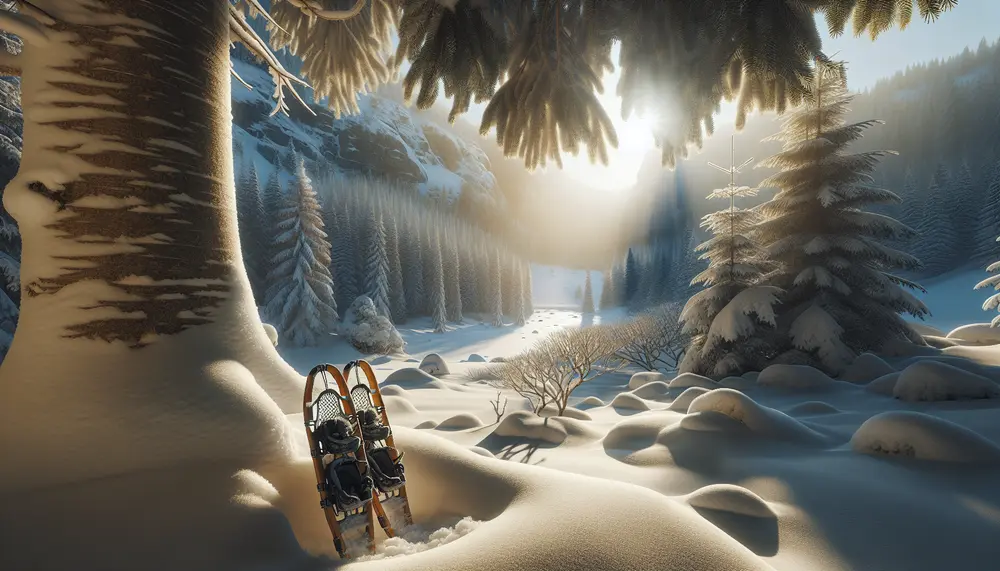
Across all regions, snowshoe selection makes a measurable difference. For flat to moderate terrain, MSR Evo-style frames (22–25 inches) perform well. Steeper Alpine routes reward a longer, narrower frame — 30 inches — with heel-lift bars to reduce calf fatigue on sustained climbs. Germany's most rewarding snowshoe destinations vary significantly in what they demand technically, so matching gear to terrain is non-negotiable.
- Bavarian Forest: Best for first tours, max elevation ~1,456 m, grades under 15°
- Black Forest/Feldberg: Mixed terrain, excellent snow reliability, good infrastructure
- Harz/Brocken: Wind-exposed summit, solid beginner approach trails, underrated destination
- Allgäu Alps: 500–900 m elevation gain, requires avalanche awareness
- Berchtesgaden: Most demanding, technical gear essential, spectacular scenery
Essential Gear Selection for German Winter Conditions: Snowshoes, Poles, and Layering Systems
Germany's winter terrain demands gear that matches its specific character: typically moderate snow depths of 30–80 cm in the Bavarian Alps and Black Forest, frequent temperature fluctuations around the freezing point, and terrain that swings between groomed forest paths and exposed ridge lines. Getting your equipment selection wrong doesn't just mean discomfort — it can mean postholing through crusted snow or overheating on a 600-meter ascent. The investment in region-appropriate gear pays off immediately.
Choosing the Right Snowshoes for Central European Terrain
For the diverse landscapes you'll encounter across Germany's premier winter routes, a mid-sized snowshoe in the 22–25 inch range handles the majority of conditions effectively. Smaller frames (under 20 inches) struggle in wet, heavy Mittelgebirge snow, while oversized Alaskan-style designs are overkill and actively clumsy on mixed terrain. Aluminum-frame snowshoes with aggressive heel crampons — look for at least 8–10 stainless steel teeth — outperform plastic composite models on the icy morning crust common in the Allgäu and Berchtesgaden regions.
Binding systems matter enormously in cold German winters. Boa-style or ratchet bindings can stiffen significantly below -10°C, making mid-trail adjustments frustrating with gloved hands. Tested alternatives like MSR's Boa system or Tubbs' Flex bindings maintain reasonable dexterity down to -20°C. Always test your binding operation at home with your actual winter gloves before heading out — a simple 30-minute dry run eliminates 90% of field problems.
Poles and the Layering Formula That Works
Telescoping poles with large powder baskets (10–12 cm diameter) are non-negotiable. Standard trekking baskets sink straight through German powder, wasting energy on every push. Poles set at roughly 10 cm shorter than your normal trekking length — typically 105–115 cm for most adults — provide optimal leverage on steeper Black Forest climbs without creating imbalance on flats. Carbon poles save 150–200 grams per pair versus aluminum, a meaningful difference over a 4-hour tour.
The layering system for German winter snowshoeing follows a proven three-part architecture. Start with a moisture-wicking merino wool base layer (150–200 g/m² weight), which manages the inevitable perspiration from sustained uphill effort better than synthetic alternatives in the 0°C to -8°C range typical across German highland winters. Mid-layer should be a 50–100 g down or synthetic insulation piece you can stuff into a pack within 60 seconds — you will remove it on every significant climb. For those exposed forest and wilderness trails where wind exposure changes suddenly, a hardshell outer layer with taped seams and a minimum 20,000 mm water column rating handles the wet snow and freezing rain that characterizes Harz and Eifel conditions.
- Footwear: Insulated boots rated to -20°C with a stiff midsole; Lowa Renegade GTX and Scarpa Mont Blanc Pro GTX are proven choices for German mixed terrain
- Gaiters: Knee-high gaiters prevent the wet snow infiltration that causes rapid heat loss — essential above 1,200 m elevation
- Gloves: Carry two systems — liner gloves for active climbing, waterproof mittens for exposed ridge traverses and rest breaks
- Eyewear: Category 3 UV protection goggles; reflected UV on open snowfields at Zugspitze approaches reaches dangerous levels even in January
Pack weight discipline separates comfortable day tours from exhausting slogs. A realistic target for a full-day German snowshoe tour is a base pack weight of 6–8 kg including emergency gear, hydration (minimum 2 liters), and the layering components described above. Exceeding 10 kg noticeably increases fatigue and fall risk on technical descents.
Pros and Cons of Snowshoe Hiking in Germany
| Pros | Cons |
|---|---|
| Diverse terrain across different regions like Bavarian Alps and Black Forest. | Snow conditions can be inconsistent due to climate change. |
| Over 200 documented snowshoe routes suitable for all skill levels. | Avalanche risks in certain areas require awareness and safety gear. |
| Difficulty levels range from beginner-friendly to expert trails. | Weather can change rapidly, impacting visibility and conditions. |
| Access to breathtaking winter landscapes and wildlife. | Some areas may have restrictions due to wildlife protection laws. |
| Availability of guided tours for enhanced safety and navigation. | Costs can add up with rentals or guided services. |
Bavarian Alps Snowshoe Routes: Technical Profiles, Elevation Gains, and Seasonal Windows
The Bavarian Alps deliver the most technically demanding and scenically rewarding snowshoe terrain in Germany, with reliable snow cover from late November through April at elevations above 1,200 meters. What separates this region from other German winter destinations is the sheer vertical relief — routes regularly gain 600 to 1,000 meters of elevation, and the alpine exposure demands genuine navigation skills and weather awareness. Anyone who has explored the breadth of Germany's winter snowshoe landscape will recognize immediately that the Bavarian highlands operate on a different technical register entirely.
Benchmark Routes and Their Technical Demands
The Rotwand (1,884 m) above Spitzingsee is arguably the most accessible alpine snowshoe objective in Bavaria. The standard route from Rotwandhaus gains approximately 550 meters over 6.5 kilometers, with a sustained 35° slope section below the summit ridge that requires crampon-compatible snowshoes and solid axe technique in hard-pack conditions. The Herzogstand (1,731 m) near Kochel am See offers a shorter approach — roughly 4 kilometers and 450 meters of gain from the upper cable car station — but the northeast-facing bowl above treeline accumulates significant wind slab, making avalanche assessment non-negotiable. For the most committed objective, the Zugspitze Plateau routes via Ehrwald on the Austrian side cross into glaciated terrain above 2,400 meters, requiring full alpine equipment and should only be attempted by parties with rope-management experience.
Seasonal windows vary dramatically by aspect and elevation. South-facing slopes at 1,200 to 1,500 meters typically offer optimal conditions from late December through mid-March, when snow consolidates but hasn't yet become isothermal and unstable in afternoon sun. North-facing cirques above 1,600 meters often hold quality powder well into April. The critical mistake most intermediate snowshoers make is underestimating the February consolidation cycle — a three-day warming event followed by overnight refreeze produces boilerplate conditions that render standard aluminum-frame snowshoes essentially useless without aggressive crampons integrated into the binding system.
Route Selection by Skill Level
- Beginner/Intermediate: Sylvenstein reservoir area and Jachenau valley floors — maximum 300 m elevation gain, forest terrain, avalanche risk minimal
- Intermediate: Schliersee-Miesbach highlands, including the Brecherspitz approach (700 m gain, moderate ridge exposure)
- Advanced: Berchtesgaden National Park, Watzmann eastern approaches, Hagengebirge plateau traverses — full alpine commitment required
- Expert: Zugspitze area, Wetterstein traverses, multi-day Karwendel crossings with hut-to-hut navigation
The Karwendel range deserves particular attention for multi-day objectives. A three-day traverse from Mittenwald to Hinterriß covers approximately 45 kilometers with cumulative elevation gain exceeding 2,800 meters, relying on staffed and unstaffed Alpine Club huts. Reservations at the Karwendelhaus (1,765 m) must be secured weeks in advance for weekends between January and March. Those planning first forays into Bavarian alpine snowshoeing should consult local guides who understand the particular rhythms of Germany's winter wilderness before committing to technical objectives above 1,600 meters.
Equipment specification matters as much as route choice. At elevations above 1,500 meters, MSR Lightning Ascent or equivalent aggressive-crampon models outperform recreational snowshoes in all but fresh powder conditions. Flotation becomes secondary to traction — the Bavarian alpine snowpack typically consolidates to 30–50 cm settled depth by January, and the real hazard is not postholing but uncontrolled sliding on sun-crusted or wind-affected slopes. Pairing technical snowshoes with knowledge of Bavaria's most rewarding and well-documented destinations gives experienced hikers a reliable framework for route selection across the entire season.
Black Forest and Harz Mountains: Trail Conditions, Snow Reliability, and Route Planning
Germany's two most iconic mid-elevation mountain ranges offer fundamentally different snowshoe experiences, and experienced hikers treat them accordingly. The Black Forest (Schwarzwald) tops out at 1,493 meters at the Feldberg, while the Harz Mountains peak at 1,141 meters on the Brocken — yet the Harz often delivers more reliable snow coverage due to its northern continental exposure and frequent orographic precipitation. Understanding these differences is the foundation of smart route planning in both regions.
Black Forest: Feldberg Plateau and the Southern Highlands
The Feldberg area receives an average of 100+ snow days per year above 1,200 meters, making the southern Black Forest a genuinely dependable snowshoe destination from late December through early March. The Feldsee circular route (approximately 7 km) is a benchmark trail — manageable for intermediate hikers, with consistent snow depth of 40–80 cm in good winters. More demanding is the traverse from Feldberg to Herzogenhorn (1,415 m), a 14 km route that rewards hikers with open ridgeline terrain and sweeping views toward the Alps on clear days. Lower elevations below 900 meters are notoriously unreliable; trails around Freiburg and the Rhine Plain frequently see rain while the plateau is buried under fresh powder, so always check elevation-specific forecasts via snow-forecast.com or the regional Schwarzwald webcam network before committing to a route.
For those exploring the broader landscape of Germany's most scenic winter terrain, the Black Forest's network of marked winter trails — many maintained by the Schwarzwaldverein — stands out for its density and accessibility. The organization maintains roughly 23,000 km of trails overall, with dedicated winter routing available on their digital portal.
Harz Mountains: Brocken Plateau and the Witch's Trail Network
The Harz operates differently. The Brocken sits exposed to North Sea weather systems and records an average of 300 cloudy days annually — visibility can drop to under 20 meters within minutes, even on mornings that start clear. This is not a mountain for casual navigation. Carry a compass and a 1:25,000 topographic map (the Harzkarte series by Landesvermessung Niedersachsen is the industry standard) regardless of GPS reliability. The Brocken Plateau itself covers roughly 4 km² of sub-alpine moorland above the treeline at approximately 1,000 meters, and route-finding errors here can become serious quickly.
The most rewarding multi-day snowshoe itinerary in the Harz follows sections of the Harzer Hexenstieg, a 100 km ridge trail connecting Osterode and Thale. In winter conditions, hikers typically cover 15–20 km per day with snowshoes, with reliable hut accommodation at Torfhaus (1,100 m elevation) and Schierke. Snow depths on the northern slopes around Schierke consistently run 30–60 cm in January and February, with north-facing gullies holding snow into April. Those researching the full spectrum of Germany's quiet mountain destinations will find the Harz particularly compelling for its combination of historical depth — the Brocken's Cold War observation post, the narrow-gauge steam railway — and genuine winter wilderness.
- Trail marking: Black Forest uses white-on-green diamond blazes for winter routes; Harz uses white-on-red horizontal bars — know both systems before departure
- Avalanche risk: Generally low in both ranges, but cornices form on the Feldberg's eastern face after sustained westerly winds; check lawine.de daily
- Best snow window: Black Forest peaks mid-January to late February; Harz slightly earlier, with optimal conditions from late December through mid-March
- Emergency contacts: Save the regional mountain rescue numbers — DRK Bergwacht Baden-Württemberg for the Black Forest, Bergwacht Harz for the northern range
Avalanche Awareness, Weather Risks, and Safety Protocols on German Snowshoe Trails
Germany's alpine and pre-alpine snowshoe terrain sits firmly within avalanche-prone zones for roughly four months of the year. The Bavarian Alps, the Allgäu, and elevated sections of the Black Forest all record significant avalanche activity between December and April, with the danger level shifting daily — sometimes within hours. The European Avalanche Danger Scale runs from 1 (Low) to 5 (Very High); statistically, roughly 90% of all avalanche accidents occur at danger levels 3 (Considerable) and above. Before stepping onto any trail above 1,200 meters, checking the current bulletin from the Bavarian Avalanche Warning Service (Lawinenwarndienst Bayern) or its counterpart in Baden-Württemberg is non-negotiable.
Reading the Terrain: Where German Snowshoers Get Into Trouble
Most avalanche accidents involving snowshoers in Germany happen on slopes between 30° and 45° — steep enough to slide, accessible enough to tempt. North- and northeast-facing aspects in the Berchtesgaden and Zugspitz regions retain unstable wind-deposited slabs well into March, long after south-facing slopes have consolidated. The key terrain traps are convex rolls, gully entries, and lee slopes behind ridges — exactly the places where dramatic views attract hikers. When exploring Germany's quieter winter wilderness routes, trail-breaking through untracked powder often feels rewarding, but leaving a marked path on a loaded slope is a decision that warrants deliberate risk assessment, not impulse.
Carry and know how to use the avalanche safety triad: avalanche transceiver (LVS-Gerät), probe (Lawinensonde), and shovel (Schaufel). A burial deeper than 1 meter reduces survival probability to under 50% after 15 minutes — rescue teams in the Alps average 30–45 minutes response time under good conditions. Self-rescue within the first 15 minutes is the realistic scenario. Practice transceiver searches before the season; a device switched on but never tested is functionally useless under stress.
Weather Windows and the Rapid Deterioration Problem
Bavarian mountain weather is notoriously unstable. Visibility on the Zugspitz plateau can drop from 30 kilometers to under 50 meters in under 20 minutes during föhn transitions or incoming Atlantic fronts. Many of Germany's scenic snowshoe routes cross featureless plateaus where whiteout conditions make trail-finding impossible without GPS or prior knowledge. Download offline topographic maps — apps like Komoot or Locus Map with cached layers work without signal, which you will lose above 1,500 meters in most Bavarian valleys.
- Check three forecasts: Bergwetter (mountain-specific), MeteoBlue, and the DAV summit weather for your target peak
- Apply the 1/3 rule: Plan turnaround time so one-third of available daylight remains as buffer
- Wind chill at elevation: At 1,800 meters with a 40 km/h wind, an air temperature of -5°C produces a felt temperature near -20°C — frostbite onset under 30 minutes on exposed skin
- Carry a bivy sack: A simple SOL emergency bivy weighs 113 grams and has preserved lives in unexpected overnight situations in the Allgäu
Registration with local mountain rescue (Bergwacht) is free and takes two minutes via the Bergwacht App or a quick call to the hut you depart from. If you're venturing into Germany's most remote snowshoe destinations, leave a detailed route plan — including planned return time and vehicle location — with someone who will act on it. These procedural habits have a higher survival value than any single piece of gear.
Guided vs. Self-Guided Snowshoe Tours in Germany: Costs, Logistics, and Experience Levels
Choosing between a guided and self-guided snowshoe tour fundamentally shapes your experience in the German winter landscape — not just in terms of cost, but in safety margins, local knowledge, and the depth of experience you walk away with. Both approaches have legitimate merit, but matching the right format to your skill level and objectives is what separates a memorable adventure from a miserable — or dangerous — one.
Guided Tours: What You Pay For and What You Actually Get
Professional guided snowshoe tours in Germany typically run between €35 and €90 per person for a half-day outing (3–4 hours), with full-day tours reaching €80–€150, equipment rental often included. Operators in the Bavarian Alps, the Black Forest, and the Harz region — areas known for their exceptional snowshoe terrain across Germany's mountain landscapes — tend to offer group sizes of 8–12 participants, though private guiding starts around €180–€250 for up to two people.
The real value of a guide isn't route navigation — it's real-time avalanche and terrain assessment, wildlife tracking knowledge, and the ability to adapt the pace and difficulty on the fly. Certified mountain guides (DAV-certified or UIAGM/IFMGA licensed) can read snowpack conditions that no app or trail report will tell you. For beginners and intermediate hikers tackling steeper terrain above 1,200 meters, this expertise directly reduces risk.
Practically speaking, guided tours handle logistics that first-timers often underestimate:
- Equipment fitting — correct snowshoe size for body weight and terrain type
- Transportation — many operators include trailhead transfers from local towns
- Emergency protocols — guides carry first aid kits, emergency bivouacs, and communication devices
- Permit knowledge — some protected areas in Germany (e.g., Berchtesgaden National Park) have restricted zones that vary by season
Self-Guided Tours: Requirements and Realistic Preparation
Experienced hikers with solid winter navigation skills can absolutely tackle Germany's snowshoe routes independently. The cost equation is straightforward: snowshoe rental runs €10–€20 per day at most ski resorts and outdoor shops near major trailheads, or around €120–€200 to purchase entry-level MSR or Tubbs models outright. If you're planning multiple trips per season, ownership pays off quickly.
The prerequisite skill set for self-guided winter touring is higher than many people assume. You need practical competence in map and compass reading, familiarity with avalanche terrain classification (even in lower ranges like the Eifel or Sauerland after heavy snowfall), and the ability to assess weather windows in mountain environments. If you're planning routes in areas covered by comprehensive trail guides covering Germany's winter hiking network, use those resources alongside the official DAV (Deutscher Alpenverein) route databases for current condition reports.
For self-guided tours, a baseline checklist should include:
- Avalanche safety gear — transceiver, probe, and shovel for any alpine terrain above 30-degree slopes
- Layering system — merino base layer, insulating mid-layer, and a waterproof shell rated for sustained wind and moisture
- Navigation tools — downloaded offline maps (Komoot or OsmAnd) plus a physical 1:25,000 topographic map
- Communication — fully charged phone, emergency contacts informed of your itinerary, and knowledge of the European emergency number 112
The honest recommendation: if you're new to snowshoeing or unfamiliar with a specific region's terrain character, start with at least one guided tour to calibrate your assumptions. Germany's mountain environments in winter are genuinely demanding, and the investment in local expertise on your first outing will make every subsequent self-guided trip significantly safer and more rewarding.
Wildlife, Protected Zones, and Environmental Regulations Affecting Winter Hiking Routes
Germany's winter landscape may appear dormant under its snow cover, but it is anything but inactive. Winter is arguably the most ecologically sensitive season for hiking, and snowshoers need to understand the legal and biological realities that govern where they can go — and when.Protected Areas and Restricted Zones
Germany operates under a tiered system of protected areas defined by the Bundesnaturschutzgesetz (BNatSchG), the Federal Nature Conservation Act. The most restrictive category, Naturschutzgebiet (NSG), prohibits off-trail movement entirely in many cases, and over 800 such zones exist across Germany covering approximately 4% of the national territory. Within these areas, snowshoeing off marked paths can result in fines starting at €500 and escalating significantly for repeated or damaging violations. Nationalparks like the Bavarian Forest and Berchtesgaden operate under their own zonation systems — core zones are completely off-limits year-round, while buffer zones impose seasonal restrictions between November 1 and May 15 to protect wintering wildlife. Biosphere reserves, such as the Schwäbische Alb Biosphere Reserve, apply softer regulations but still designate quiet zones where noise and off-trail movement are restricted during winter months. Always check the specific management plan of any protected area before planning your route. Regional nature authorities (Untere Naturschutzbehörde) publish current zone maps and seasonal closures on their official portals.Wildlife Sensitivity in Winter Months
The animals most affected by snowshoer disturbance in German winter habitats include red deer (Cervus elaphus), capercaillie (Tetrao urogallus), and hazel grouse. Red deer in areas like the Black Forest and Harz Mountains are in a physiological energy-conservation state from December through February. A single disturbance event can force a deer to expend energy reserves equivalent to several days of foraging — repeated disturbances across a winter can be fatal. Capercaillie, critically endangered in Germany with fewer than 1,000 individuals remaining, are the primary reason for strict winter closure zones in the Bavarian Alps above 1,200 meters elevation. When exploring Germany's quieter winter landscapes on snowshoes, maintaining a minimum distance of 300 meters from visible wildlife is not a guideline — in NSG zones it is enforceable law. Dogs must remain on leash (maximum 2 meters) throughout all protected areas from October 1 to June 30 under most regional ordinances. Practical measures every snowshoer should follow:- Download the BayernAtlas or Naturschutz-App for real-time layer overlays showing NSG, Nationalpark, and Biosphere Reserve boundaries
- Stick to designated winter hiking trails, especially in zones marked Ruhezone or Wildtierschutzgebiet
- Avoid dawn and dusk movement in forested transition zones — peak wildlife activity hours
- Report poaching or suspicious activity to the local Jagdbehörde or forest rangers (Förster)
Climate Trends and Shifting Snow Conditions: How Warmer Winters Are Reshaping Snowshoe Tourism in Germany
Germany's snowshoe tourism sector is navigating a fundamental transformation. Since the 1950s, average winter temperatures across German low and mid-elevation mountain ranges have risen by approximately 1.5–2°C, and the consequences are measurable: the Black Forest now sees reliable snow cover roughly 30–40 days fewer per season than it did in the 1970s, and the Bavarian Foothills face similar attrition. For operators, guides, and enthusiasts who have built their winter recreation planning around historical snow calendars, these shifts demand a serious recalibration of expectations and strategies.
The impact is unevenly distributed. High-altitude areas — the Zugspitze plateau above 2,400 m, the Berchtesgaden backcountry, and upper Allgäu ridgelines — still receive consistent, deep snowpack and often deliver the kind of pristine conditions that make winter wilderness exploration on snowshoes genuinely spectacular. Below 800 m elevation, however, reliable snowshoe conditions have become the exception rather than the rule, with seasonal windows shrinking to brief cold spells in January and February. The Rhön and lower Harz, once considered moderate snowshoe destinations, now average only 15–20 snowshoe-viable days per season.
Adaptive Strategies for Guides and Tour Operators
The most resilient operators have shifted toward elevation-flexible itineraries — designing programs with built-in altitude alternatives that allow groups to pivot upward when lower routes lack sufficient snow depth (a minimum of 20–25 cm is generally needed for a satisfying snowshoe experience on standard terrain). Pre-trip snow monitoring via platforms like Snowforecast.com, regional avalanche bulletins, and webcam networks has moved from optional to essential. Booking windows have compressed, with many experienced participants now reserving tours just 5–10 days in advance based on live conditions rather than committing months ahead.
Tour scheduling has also shifted temporally. The reliable window for snowshoe hiking across most German destinations — once spanning late November through March — now concentrates most dependably between mid-January and late February. Operators who have adjusted their peak marketing and staffing to this tighter window report maintaining 70–85% of historical trip completion rates despite worsening average conditions.
Which Destinations Are Proving Most Climate-Resilient?
Elevation and aspect are now the primary planning variables. North-facing slopes above 1,000 m retain snow significantly longer than south-exposed terrain at the same altitude, a detail worth building into route selection. Among Germany's established snowshoe regions, the Berchtesgaden National Park and the Allgäu Alps consistently outperform as climate-resilient destinations, while areas thoroughly covered in guides to Germany's most rewarding snowshoe trails increasingly stratify by elevation in their reliability ratings. The Saxon Switzerland region and Thuringian Forest, meanwhile, now require flexible backup plans in most seasons.
For participants planning independent tours, the practical recommendation is straightforward: prioritize destinations above 1,200 m elevation, verify snow depth reports within 48 hours of departure, and consult updated assessments of Germany's most snow-reliable snowshoe destinations when building a season itinerary. Carrying traction devices like microspikes alongside snowshoes has become standard practice, covering the growing number of days when conditions fall between ice and full snow cover. Adaptability — not rigid season planning — is now the defining competency for anyone serious about snowshoe hiking in Germany.
FAQ about Snowshoe Hiking in Germany
What are the best snowshoe hiking regions in Germany?
The best regions for snowshoe hiking in Germany include the Bavarian Alps, Black Forest, Allgäu Alps, and the Harz Mountains, each offering unique terrain and conditions.
What should I wear for snowshoe hiking?
Wear insulated, waterproof boots rated for sub-zero temperatures, moisture-wicking base layers, and a layering system that includes insulating and waterproof outer layers to adapt to changing weather conditions.
Do I need special gear for snowshoe hiking?
Yes, essential gear includes snowshoes suitable for your weight and terrain, trekking poles with large powder baskets, and avalanche safety equipment if you're hiking in alpine areas.
How do I assess avalanche risks while snowshoe hiking?
Always check avalanche forecasts and understand the terrain before heading out. Be aware of factors like recent snowfall, slope angles, and weather conditions that may increase risk.
Are guided tours recommended for snowshoe hiking?
Guided tours are highly recommended, especially for beginners, as they offer local knowledge, safety strategies, and equipment fitting which enhance the overall hiking experience.