Table of Contents:
Regional Flavor Profiles: How Spain's 17 Autonomous Communities Shape Distinct Food Tour Experiences
Spain's culinary geography is one of the most complex and rewarding in Europe, and understanding it before booking any food tour is non-negotiable. The country's 17 autonomous communities aren't just administrative divisions — they represent deeply distinct gastronomic cultures shaped by centuries of agricultural tradition, Moorish influence, Atlantic vs. Mediterranean climates, and fierce local pride. A food tour in San Sebastián operates on an entirely different logic than one in Seville, and conflating them is the single biggest mistake travelers make when planning a culinary trip through the Iberian Peninsula.
The Atlantic-Mediterranean Divide: More Than Just Geography
The most fundamental distinction separating Spain's regional food cultures runs along a climatic and historical fault line. The Green Spain of the north — Galicia, Asturias, Cantabria, and the Basque Country — produces exceptional seafood, hearty stews like cocido montañés, and some of the world's most technically refined cuisine. The Basque Country alone holds more Michelin stars per capita than any other region globally, with San Sebastián counting roughly 16 starred restaurants within city limits. Food tours here emphasize pintxos bars, cider houses (sidrerías), and txakoli wineries — an experience thoroughly documented for travelers seeking to understand what makes northern Spain's culinary identity so singular.
Mediterranean communities — Catalonia, Valencia, Murcia, and the Balearic Islands — operate on entirely different culinary principles. Olive oil replaces butter, rice supplants wheat in many applications, and seafood preparations lean lighter and more aromatic. Valencia's La Ribera market, covering 8,000 square meters, is Europe's largest covered fresh market and the ideal starting point for understanding how a Mediterranean pantry is actually constructed. Catalan cuisine adds a further layer of complexity with its romesco and picada sauce traditions, which have no direct equivalent anywhere else in Spain.
The Interior Communities: Underrated and Misunderstood
Castile-La Mancha, Extremadura, and Castile and León consistently get overlooked by food tourists fixated on coastal destinations — which is a strategic error for anyone serious about Spanish culinary heritage. Extremadura produces Ibérico de bellota ham from free-range pigs fed exclusively on acorns, with the top-tier Joselito Gran Reserva retailing at over €500 per leg. Castile-La Mancha contributes Manchego cheese, pisto manchego, and game dishes that represent the backbone of traditional Spanish cooking. These regions reward slower, more immersive food tours that prioritize authentic encounters with producers over curated urban tasting menus.
Andalusia, covering 87,000 square kilometers in the south, warrants separate treatment entirely. Its food culture is defined by tapas culture in Granada (where tapas remain free with drinks), pescaíto frito along the Costa del Sol, sherry-based gastronomy in Jerez, and some of Europe's finest olive oils from Jaén — the world's single largest olive oil-producing province at over 500,000 tons annually.
For travelers building an itinerary around Spain's layered culinary history, the practical recommendation is clear: select a maximum of three communities per trip, choose guides with demonstrable regional specialization, and prioritize market visits on weekday mornings when professional chefs shop — that's when you see what a region actually eats, not what it performs for tourists.
- Basque Country: Pintxos culture, haute cuisine, txakoli wine pairings
- Galicia: Pulpo a feira, Albariño wines, Padrón peppers at source
- Valencia: Authentic paella origins, horchata culture, fresh seafood rice dishes
- Andalusia: Sherry gastronomy, free tapas tradition, Jaén olive oil heritage
- Extremadura: Ibérico ham estates, migas, slow-food rural traditions
Tapas Culture, Pintxos Bars and Market Visits: The Core Stops on Any Authentic Spanish Food Tour
Any serious food tour of Spain revolves around three non-negotiable pillars: the tapas bar, the pintxos counter, and the municipal market. These aren't tourist attractions bolted onto a sightseeing itinerary — they are the living infrastructure of Spanish food culture, operating on rhythms and rituals that have barely changed in decades. Understanding how they function, and what to look for inside them, separates a meaningful culinary experience from an expensive snapshot.
Tapas Bars: Reading the Room Before You Order
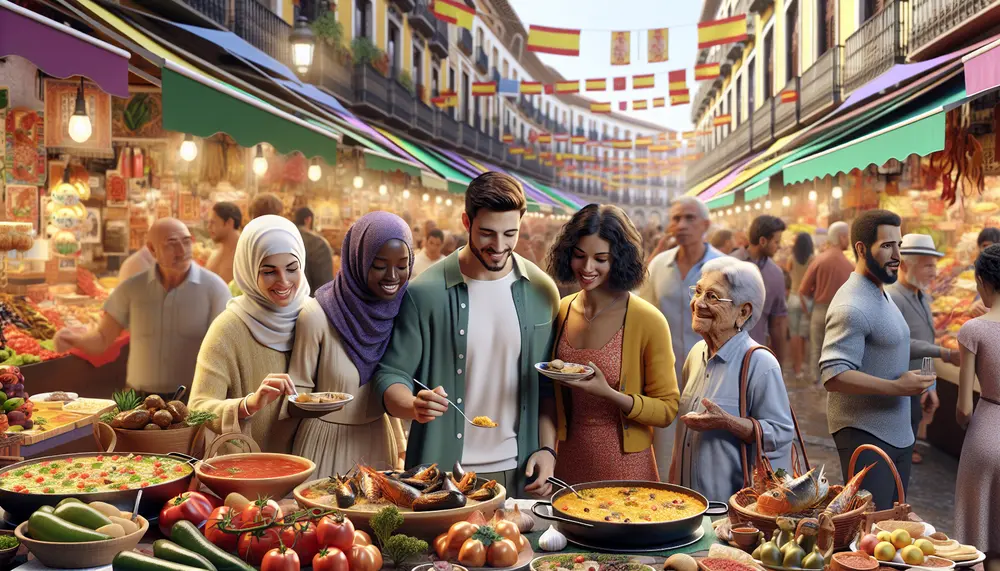
The classic Andalusian tapas bar still operates on a principle that baffles many visitors: the best items are rarely on a written menu. In Seville's Triana district or Granada's city center — where tapas still come free with every drink — the most experienced operators will tell you to watch what locals are eating at the bar before placing an order. A tortilla de patatas that arrives at the table rather than sitting under a glass dome for three hours is your clearest signal of kitchen quality. Seek out bars where the daily specials are chalked on a blackboard, turnover is high, and the bartender barely looks up when you walk in — that indifference usually signals regulars running the show.
For anyone building a deeper understanding of what makes Spain's regional food scenes so distinct from one another, the tapas bar is the most efficient classroom available. A single afternoon moving between three or four bars in a Spanish city can cover more culinary ground than a week of restaurant dinners.
Pintxos Bars in the Basque Country: A Different System Entirely
San Sebastián's Parte Vieja (Old Town) concentrates more Michelin stars per square kilometer than almost anywhere on the planet, and its pintxos bars operate as a proving ground for that culinary ambition. Unlike tapas, pintxos are typically pre-assembled and displayed along the bar counter — but the serious items, the pintxos calientes, are made to order and require you to engage with the bartender directly. Bars like Bar Nestor famously produce only two tortillas per day, each at a fixed time; arriving late means going without. That scarcity is deliberate and instructive: quality over volume is the baseline expectation in Basque food culture.
A well-structured food trail through Spain's culinary heritage will inevitably dedicate significant time to the Basque Country for exactly this reason — the pintxos tradition is both highly accessible and technically sophisticated in ways that reward attention.
Market Visits: Where to Go and What to Actually Do
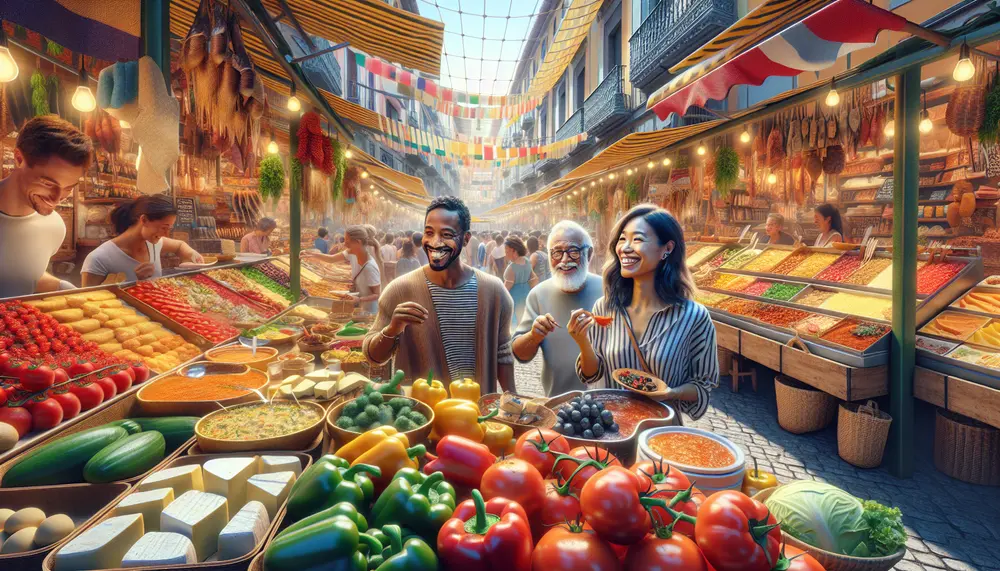
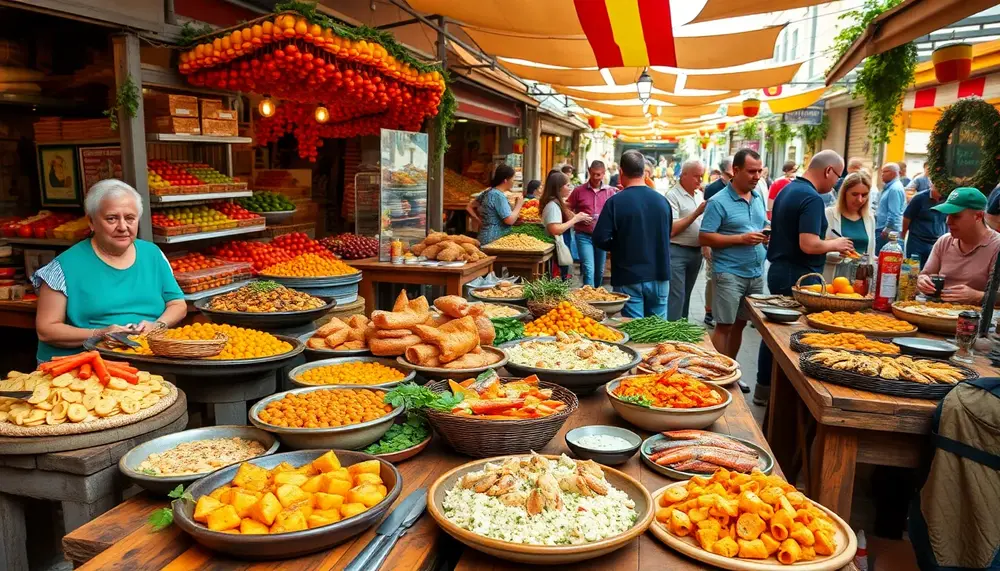
Spain's best food markets — La Boqueria in Barcelona, Mercado de San Miguel in Madrid, Mercado de la Bretxa in San Sebastián — each serve a different function and attract different crowds. La Boqueria has become heavily tourist-facing near the main entrance; the serious produce is deeper inside, in the sections supplying local restaurants. When visiting any Spanish market on a food tour, prioritize these actions:
- Arrive before 10:00 AM when professional buyers and local households are still present
- Focus on seasonal produce stalls rather than prepared food counters near the entrance
- Ask vendors directly which restaurants they supply — this is reliable intelligence for dinner reservations
- Look for jamón ibérico de bellota cut to order rather than pre-sliced and vacuum-packed
- Use the market's bar counters for a breakfast of pan con tomate alongside working locals
Markets function as real-time indices of what is in season and what local chefs are currently prioritizing. A twenty-minute walk through a provincial market — say, Mercado de Atarazanas in Málaga — will tell you more about the local food culture than any curated tasting menu assembled for tourists.
Advantages and Disadvantages of Joining Food Tours in Spain
| Pros | Cons |
|---|---|
| Access to local culinary insights from experienced guides | Higher cost compared to self-guided tours |
| Opportunity to taste dishes not available in tourist spots | Limited flexibility in itinerary |
| Structured experiences that save time and effort | Potential for tourist traps if not selecting reputable operators |
| Connections with local chefs and producers | Group size may limit personal interaction with guides |
| Insider access to markets and local food festivals | May not cater to specific dietary needs as thoroughly |
Guided vs. Self-Guided Food Tours in Spain: Cost, Flexibility and Depth Compared
Choosing between a guided and self-guided food tour in Spain is rarely about budget alone — it fundamentally shapes how deeply you'll connect with the food culture. A structured guided tour in Barcelona's El Born neighborhood typically runs €65–€120 per person and includes six to eight tastings with a local guide who can explain, for instance, why the pa amb tomàquet at a specific bakery uses a particular tomato variety from Montserrat. That contextual layer is difficult to replicate on your own, especially in regions where menus are written exclusively in Catalan or Basque.
Self-guided tours, by contrast, cost whatever you eat — which in San Sebastián's Parte Vieja can mean €25–€40 for an excellent pintxos crawl if you know which bars to prioritize. The freedom to linger at Borda Berri for another round of risotto de hongos, or to skip a bar entirely, is genuinely valuable. But this flexibility comes with a real knowledge gap: without local insight, most visitors gravitate toward the most tourist-visible spots rather than the neighborhood gems that define authentic culinary exploration across Spain's diverse regions.
Where Guided Tours Justify Their Premium
Guided tours deliver the clearest return on investment in gastronomically complex cities — Seville, Granada, and Madrid's Malasaña district are prime examples. In these locations, the guide's role extends beyond navigation: they negotiate access to producers, translate generational knowledge, and often have standing relationships with chefs who'll explain techniques they'd never share with random walk-in customers. In Granada specifically, where tapas are still served free with drinks, a knowledgeable guide can structure your evening so you receive a coherent progression of flavors rather than three plates of cold cuts and two portions of patatas bravas.
Premium operators like Devour Tours or Withlocals typically cap group sizes at eight to ten people, which preserves the quality of conversation and ensures you're not sharing a single jamón croqueta among fifteen strangers. For those wanting a broader understanding of how Spain's food culture varies from coast to interior, guided regional food experiences offer a structured way to make sense of those differences without months of independent research.
Building an Effective Self-Guided Route
Self-guided touring works best when you've done the pre-trip research that most travelers skip. Concrete preparation makes the difference:
- Use local food blogs over travel platforms — sites like ElTenedor data and regional food press reveal current quality better than three-year-old TripAdvisor reviews
- Time your visits precisely — Madrid's Mercado de San Miguel is genuinely enjoyable before 11:00 a.m. and after 20:00; between those hours it's a tourist bottleneck
- Build in one anchor reservation — even a self-guided day benefits from one confirmed booking at a serious restaurant to anchor the experience
- Learn five to eight product-specific terms — knowing the difference between jamón ibérico de bellota and jamón serrano prevents €30 mistakes at market counters
The honest verdict for most travelers: spend one guided tour early in your Spain trip to establish a reference framework, then use self-guided exploration to revisit and expand what you've learned. A single well-chosen guided experience in Valencia will recalibrate how you evaluate every paella you encounter independently for the rest of the trip.
Seasonal Timing and Local Festivals: When Food Tours in Spain Deliver Maximum Culinary Value
Booking a food tour in Spain without considering the seasonal calendar is like visiting a vineyard during dormancy — technically possible, but you'll miss everything that makes the experience extraordinary. Spain's culinary landscape shifts dramatically across its four seasons, and aligning your visit with local harvest cycles or regional festivals can transform a good food tour into an unforgettable one. Experienced culinary travelers know that timing is often the single most impactful variable in the quality of what ends up on your plate.
The Seasonal Sweet Spots: Month-by-Month Considerations
Spring (March through May) is arguably Spain's most underrated food travel season. The calçots season in Catalonia peaks in late February and runs through April — these oversized spring onions grilled over vine cuttings and served with romesco sauce attract dedicated food tourists from across Europe. Meanwhile, Andalusia's strawberry harvest around Huelva delivers peak produce between March and May, and white asparagus from Navarra hits market stalls at its absolute best during this window. Tour operators running market-focused experiences in Barcelona and Valencia consistently report higher satisfaction scores from spring visitors precisely because ingredient quality is at its seasonal apex.
Autumn delivers arguably the most concentrated culinary intensity anywhere in the country. Truffle season in Teruel and Soria begins in November, with black truffles commanding prices between €300 and €600 per kilogram at the source. The grape harvest (vendimia) runs September through October across Rioja, Ribera del Duero, and Priorat, with many wineries offering harvest participation alongside tasting experiences. Mushroom foraging tours in the Pyrenean foothills and Basque Country reach peak availability in October, connecting participants directly to the centuries-old foraging traditions that shaped Spain's regional cooking long before modern gastronomy claimed the spotlight.
Festival Calendars That Serious Food Tourists Bookmark
Spain operates on a dense festival calendar, and the best food-focused events are frequently overlooked by mainstream travel guides. The Feria del Queso in Trujillo (Extremadura) takes place each May and concentrates over 100 artisan cheese producers in one location — a format that would take weeks of independent travel to replicate. San Sebastián's Gastronomika congress in October draws every serious chef in the country and coincides with peak pintxos competition season, meaning bar-hopping tours during this period offer a caliber of execution that's simply absent in quieter months.
- La Tomatina (Buñol, August) — overlook the spectacle and focus on the surrounding valencian rice and tomato cuisine tours offered in the days surrounding the event
- Feria de Abril (Seville, April/May) — the private caseta culture exposes visitors to home-style Andalusian cooking rarely accessible to outsiders
- Fiesta de la Sidra Natural (Gijón, August) — pairs naturally with Asturian seafood tours that showcase the region's coastal larder
- Mercat de Santa Llúcia (Barcelona, December) — extends into extraordinary winter food market tours featuring seasonal game and preserved foods
For travelers who want to move beyond tourist-facing experiences and into genuinely local culinary territory, the approach detailed in understanding how authentic food tours are structured regionally provides essential context for selecting operators who actually build their calendars around these seasonal peaks rather than running identical tours year-round. The difference in product quality between a tour built around seasonal availability and one running on a fixed itinerary is measurable — and in Spain, that difference is often dramatic.
Wine, Sherry and Cava Pairings: Integrating Spanish Beverage Routes into Food Tour Itineraries
Spain's beverage landscape is as complex and regionally distinct as its food culture, and the most compelling food tours treat wine, sherry, and cava not as afterthoughts but as structural pillars of the itinerary. With over 70 Denominaciones de Origen (DO) for wine alone, the country offers an almost overwhelming palette of liquid heritage. The real craft lies in aligning these beverage routes with local gastronomy in a way that feels inevitable rather than orchestrated — a skill that separates transformative culinary experiences from generic tasting menus.
Matching Beverage Regions to Their Natural Food Partners
The most effective pairings emerge when geography drives the decision. In the Marco de Jerez, a fino sherry served ice-cold alongside a plate of jamón ibérico de bellota creates a textbook umami counterpoint — the wine's sharp salinity cutting through fat while amplifying the nuttiness of the acorn-fed pig. Tour operators working this region should build dedicated time at bodegas like González Byass or Lustau, where educational tastings can contextualize the difference between fino, manzanilla, amontillado, and oloroso — each demanding a different food partner. A well-structured 90-minute sherry flight with matched tapas can genuinely shift how participants understand the concept of terroir.
In Catalonia, Cava from the Penedès DO pairs precisely with the region's seafood-forward cuisine. A glass of Gramona Imperial Brut Nature alongside a plate of espardenyes (sea cucumbers) or fideuà at a coastal restaurant in Sitges demonstrates how sparkling acidity strips richness from dense marine proteins. When planning these stops, operators should note that Cava's tirage minimum of 9 months for non-vintage versus 30 months for Gran Reserva creates meaningfully different pairing profiles — detail that serious food travelers actively want to understand. Those looking to build a broader picture of how Spanish regions express their identity through food and drink will find useful context in this deep dive into the regional essence of Spanish culinary culture.
Designing Beverage Stops That Sustain Narrative Momentum
The risk with beverage integration is disrupting the tour's rhythm — a poorly timed winery visit can feel like a detour rather than a destination. The solution is to treat each beverage stop as a chapter that advances the story. In La Rioja, an Alavesa sub-zone visit should be paired specifically with lamb chops grilled over vine cuttings (chuletillas al sarmiento), a pairing so culturally embedded that it practically explains itself. Operators should schedule harvest-season visits between September and October when the connection between landscape, fruit, and final product becomes viscerally apparent to participants.
Practical logistics matter as much as curation. Confirm producer visits at least six weeks in advance during peak season (April–June, September–October), budget approximately €25–45 per person for guided bodega experiences with food, and limit spirits-focused stops to early afternoon to maintain group energy. Spain's culinary journey from coast to meseta rewards those who sequence beverages thoughtfully — a subject explored in detail for anyone mapping their own route through Spain's most authentic food experiences.
- Txakoli in the Basque Country: Pair with anchovies from Getaria — the wine's effervescence and low alcohol (10.5%) make it ideal for multi-stop pintxos tours
- Albariño in Galicia: Non-negotiable with percebes (barnacles) or grilled turbot; its Atlantic minerality mirrors the sea's salinity
- Priorat Garnacha: Match with slow-roasted suckling pig or aged manchego; the wine's power needs fat and protein to resolve its tannins
- Manzanilla from Sanlúcar: Serve with chilled boquerones and olives as a pre-dinner aperitif stop — keeps groups focused before heavier evening meals
The deeper you take travelers into Spain's beverage geography, the more they recognize that wine, sherry, and cava are inseparable from the food cultures that shaped them. This is precisely the kind of layered heritage that serious culinary travelers want to unpack — and that operators can explore further through resources covering Spain's rich culinary heritage across its many distinct regions.
Dietary Restrictions and Allergen Navigation on Spanish Food Tours: Practical Strategies for Travelers
Spanish cuisine is built on a foundation of bold, cross-contaminating ingredients — pork fat renders vegetables, shellfish stocks flavor paellas, and gluten binds sauces that appear deceptively simple. For travelers with dietary restrictions, this creates real challenges that require proactive management, not last-minute improvisation. Anyone who has explored Spain's regional food culture on an organized culinary tour knows that the gap between what a dish appears to contain and what actually went into its preparation can be significant.
Spain's EU-mandated allergen regulations require restaurants and food businesses to disclose the 14 major allergens — including gluten, crustaceans, eggs, fish, peanuts, soy, milk, tree nuts, celery, mustard, sesame, sulphites, lupin, and molluscs. However, compliance in informal tapas bars and market stalls varies considerably. Larger food tour operators working with vetted venues have a stronger track record here; smaller neighborhood crawls may involve stops where allergen documentation simply doesn't exist in written form.
Before the Tour: Information Architecture That Actually Works
Submit your dietary requirements at least 72 hours before the tour date — not through a general contact form, but directly to the guide or operations team with a specific request for written confirmation. Reputable operators maintain a dietary restriction matrix for each stop on their itinerary, indicating which dishes can be modified or swapped. Ask for this document explicitly. If a company cannot provide it, that tells you something meaningful about their preparation standards.
Prepare a laminated or digital Spanish allergen card that goes beyond simple translations. Generic "I am allergic to gluten" cards often fail because they don't address hidden sources. A well-crafted card should include:
- Specific cross-contamination language: "No puedo consumir alimentos que hayan estado en contacto con..."
- Common hidden sources: jamón stocks (contain pork), caldo bases (often contain shellfish), morcilla (blood sausage containing rice or onion depending on region)
- The severity indicator: "Es una alergia grave, no una preferencia" — this distinction meaningfully changes how kitchen staff respond
- Your emergency contact and medication information if anaphylaxis is a risk
Celiac travelers face a particularly complex landscape. While gluten-free awareness has improved dramatically in Madrid and Barcelona since 2018, traditional markets in cities like Cáceres or Jaén operate with far less allergen literacy. The Spanish Celiac Association (FACE) maintains a certified restaurant database that overlaps partially with popular food tour stops — cross-referencing this list before departure adds a practical layer of verification.
On-Tour Management and Real-Time Adaptation
During the tour itself, build a working relationship with your guide in the first 15 minutes. Experienced guides in Spain's competitive culinary tourism market — particularly those running deep-dive regional gastronomy experiences — carry substitute options or have pre-arranged alternatives at each venue. Don't treat dietary communication as a one-time declaration; confirm with venue staff directly at each stop, even if your guide has already done so. Kitchen teams change shifts, and verbal handoffs degrade.
Vegetarians and vegans should note that Spanish "vegetarian" dishes frequently contain jamón or tuna as flavoring agents considered too minor to mention. Asking "¿Lleva carne o pescado en algún ingrediente, aunque sea en pequeña cantidad?" closes this gap more reliably than simply requesting a vegetarian option.
The Rise of Immersive Food Tourism: Cooking Classes, Farm Visits and Chef-Led Experiences in Spain
Passive food tourism — wandering from tapas bar to tapas bar with a guidebook — is rapidly giving way to something far more engaging. Across Spain, a growing segment of travelers now wants to touch the dough, harvest the olive, and stand beside the chef rather than simply eat the result. This shift reflects a broader maturation of culinary travel: visitors arrive with genuine curiosity about technique, provenance and culture, not just flavor. According to the World Food Travel Association, experiential food tourism now accounts for roughly 25% of all tourism spending in gastronomy-forward destinations — and Spain sits at the epicenter of this movement.
Cooking Schools and Chef-Led Workshops: Beyond the Tourist Circuit
The most compelling cooking experiences in Spain are not generic tourist-friendly demos. Basque Culinary Center in San Sebastián offers short-format masterclasses where participants work directly with techniques used in Michelin-starred kitchens — think precise emulsification for pil-pil sauce or the controlled oxidation behind a proper txakoli pairing. In Barcelona, operators like Cook & Taste and Espai Mescladís run market-to-table classes that begin at La Boqueria or Mercat de Santa Caterina, requiring participants to negotiate with vendors and select ingredients before a single pan is heated. This market-first model forces a genuine understanding of Spain's ingredient-driven culinary philosophy that no restaurant meal can replicate.
Chef-led private dinners have also emerged as a premium tier within this space. Services like Take a Chef, operating across 30+ Spanish cities, connect travelers with vetted local chefs who cook in private villas or rented kitchen spaces. Prices typically range from €80 to €250 per person depending on the chef's background and menu complexity. For serious food travelers, this format unlocks regional specificity that standardized tours rarely achieve — a Murcian chef preparing caldero del mar menor in a coastal finca delivers a story no restaurant menu communicates.
Farm Visits, Artisan Producers and the Field-to-Fork Connection
Rural agritourism has accelerated sharply since 2020, with farms producing Ibérico ham, Manchego cheese, saffron and extra virgin olive oil now structuring formal visitor programs. Dehesa Maladúa in Córdoba, one of Spain's most respected Ibérico producers, offers guided walks through the dehesa ecosystem where visitors observe the montanera — the final acorn-feeding phase — and participate in guided catas of different curing stages. Saffron farms around Consuegra in La Mancha open during the October harvest window, allowing visitors to join the delicate hand-picking process that justifies saffron's price point of €3,000–€10,000 per kilogram.
For travelers planning a deeper engagement with regional food culture, Spain's diverse culinary landscape rewards those who move beyond urban centers into the producing regions themselves. A logical itinerary might combine a Rioja bodega tour with a lamb roasting session at a local asador, then continue south toward Extremadura for a jamon master class — creating a coherent narrative rather than a collection of disconnected tastings.
The operational detail matters here. Booking windows of 3–6 weeks are realistic minimums for quality chef-led experiences in high season, particularly in the Basque Country and Catalonia. Many farm experiences have strict seasonal availability and group size caps of 8–12 participants. Travelers who treat these experiences as the architecture of their trip — rather than optional add-ons — consistently report significantly higher satisfaction. Those ready to structure an entire journey around Spain's food culture will find that building an itinerary around culinary depth rather than geography produces far more memorable results.
Hidden Culinary Regions Beyond Barcelona and Madrid: Underrated Food Tour Destinations Gaining International Attention
Spain's culinary map extends far beyond its two metropolitan giants, and the most discerning food travelers have known this for years. Regions like Extremadura, Murcia, and Aragón are now drawing serious gastronomic attention — not because of marketing campaigns, but because their food cultures are genuinely extraordinary and largely intact. Extremadura alone produces roughly 80% of Spain's acorn-fed Ibérico pork, yet receives a fraction of the culinary tourism that flows into Andalusia or the Basque Country. That imbalance is slowly correcting itself.
Murcia and the Huerta Tradition: Spain's Forgotten Garden
Murcia has operated under the radar for decades despite being Spain's most productive agricultural region per square kilometer. The huerta murciana — a centuries-old irrigation network dating to Moorish rule — produces pimientos, artichokes, and lettuces that supply much of Europe, yet almost no culinary tourism infrastructure existed here before 2018. Local tour operators like Sabores de la Huerta now run three-hour market-to-table experiences in Murcia city for around €65 per person, incorporating visits to working farms, local mercados, and traditional zarangollo preparation. Food tour participants consistently report that Murcia's cuisine feels more honest and less performative than in better-known destinations — a quality that travelers tracing Spain's deeper culinary roots increasingly prioritize.
Extremadura: Ibérico Country and the Last Frontier of Spanish Gastronomy
Cáceres and Mérida are emerging as anchor cities for food tourism in Extremadura, a region where the dehesa landscape — open oak forest grazed by free-range pigs — is itself a UNESCO-recognized agricultural heritage system. A dedicated food tour through this region should include a visit to a montanera in November or December, when pigs feed exclusively on bellotas, producing the fat marbling that gives jamón ibérico de bellota its distinctive flavor profile. Prices for Extremaduran food experiences remain 30–40% lower than comparable tours in San Sebastián, making them exceptional value. For travelers planning their first serious encounter with the full range of authentic Spanish food experiences, Extremadura offers an immersive entry point that Barcelona simply cannot replicate.
Aragón deserves particular mention for its role in Spain's truffle economy. The province of Teruel produces approximately 40% of Europe's black truffle harvest, yet fewer than 5% of Spain's food tourists ever visit the region. Tours departing from Zaragoza now include truffle hunting expeditions near Sarrión between December and February, pairing the experience with local ternasco lamb dishes and Garnacha wines from the Cariñena DO.
Several additional regions warrant attention from serious food tour seekers:
- Cantabria — anchovy preservation traditions in Santoña, aged cheeses from Liébana valley
- Almería — Moorish-influenced rice dishes and the underexplored Alpujarra mountain cuisine
- La Rioja — beyond wine, a robust vegetable-canning culture and the pochas bean harvest season in August
- Soria — Spain's least-populated province and home to arguably its finest wild mushroom foraging territory
The structural shift in Spanish food tourism is real and accelerating. Regional governments in Extremadura and Murcia invested a combined €12 million in culinary tourism infrastructure between 2021 and 2024, including signposted rutas gastronómicas and certified guide training programs. Travelers who build their itineraries around these emerging destinations — rather than defaulting to the established circuits — will find the kind of essential Spanish cuisine encounters that feel genuinely undiscovered, because in many cases, they still are.
FAQ about Food Tours in Spain
What are the key benefits of joining a food tour in Spain?
Food tours provide access to local culinary insights from experienced guides, the opportunity to taste authentic dishes not available in tourist spots, and structured experiences that save time while connecting you to local chefs and producers.
How do I choose between a guided and a self-guided food tour?
Guided tours typically offer structured experiences with local insights that are hard to replicate on your own, while self-guided tours allow for greater flexibility and cost-efficiency. Consider taking one guided tour to establish a baseline and then explore independently.
When is the best season to go on a food tour in Spain?
Spring and autumn are prime seasons for food tours in Spain. Spring features harvests like calçots and strawberries, while autumn boasts truffles and grape harvests, enhancing culinary experiences significantly.
What should I look for in a reputable food tour operator?
Look for operators with demonstrable regional specialization, positive reviews emphasizing authentic experiences, and a focus on market visits during peak shopping hours for a richer understanding of local food culture.
How can I navigate dietary restrictions during food tours?
Communicate your dietary restrictions at least 72 hours before the tour and prepare a detailed allergen card in Spanish. Reputable operators should provide a matrix indicating which dishes can be modified or swapped at each stop.