
Table of Contents:
Italy's Living Cultural Heritage: From Ancient Rome to Renaissance Masterpieces
Italy holds more UNESCO World Heritage Sites than any other country on Earth — 58 as of 2024 — and that statistic alone hints at the sheer density of cultural weight packed into a peninsula roughly the size of Arizona. But statistics don't capture what it actually feels like to stand inside the Pantheon, a building completed in 125 AD that still outperforms most modern structures in terms of engineering ingenuity, with its unreinforced concrete dome spanning 43.3 meters. Italy doesn't preserve its history behind glass. It lives inside it.
What separates Italy from other historically rich destinations is the layering of civilizations. A single city block in Rome can contain Etruscan foundations, Republican-era temples, Imperial baths, medieval churches, Baroque fountains, and a working trattoria that has occupied the same spot since the 1880s. This isn't accidental accumulation — it's the result of each civilization treating the previous one as raw material and inspiration simultaneously. Understanding this layering is the first step toward getting genuine value from any Italian cultural itinerary. Those who want to go deeper into what shapes everyday life and ritual across the country will find that Italy's regional identities and living traditions reveal a country far more complex than any single monument can suggest.
The Roman Foundation: More Than Ruins
Most visitors approach Roman antiquity as a visual experience — photographs of the Colosseum, a walk through the Forum, perhaps a trip to Pompeii. Experienced travelers, however, treat these sites as interactive archives. The Colosseum hosted an estimated 400,000 deaths and 1 million animal killings over its operational centuries, but its real significance lies in what it reveals about Roman social engineering: free entry, tiered seating by class, 80 vomitoria for crowd management, and a retractable awning system called the velarium operated by sailors from the imperial fleet. These details transform a pile of travertine into a statement about power, spectacle, and civic control that resonates far beyond antiquity.
Outside Rome, sites like Herculaneum (often overlooked in favor of Pompeii) offer an even more intimate window into daily Roman life. Herculaneum's preservation is superior precisely because it was buried under volcanic mud rather than ash, protecting wooden furniture, food in carbonized form, and even papyrus scrolls. Budget at least four hours here, and consider hiring a licensed guide who specializes in the Republican and Imperial periods.
The Renaissance as a Cultural Operating System
The Renaissance wasn't a stylistic movement — it was a fundamental rewiring of how Europeans understood the relationship between humanity, knowledge, and divinity. Florence between 1420 and 1520 functioned as the laboratory, with the Medici family essentially funding an intellectual infrastructure that produced Brunelleschi, Donatello, Botticelli, Leonardo, and Michelangelo within a single century. The Uffizi Gallery holds the most important collection of Renaissance painting in existence, but limiting yourself to its famous rooms means missing the preparatory drawings, correspondence, and workshop models that explain how these masterpieces were actually made.
For travelers ready to move past the standard checklist of monuments and museums, Italy rewards curiosity with extraordinary depth. The towns of Sansepolcro, Arezzo, and Cortona in Tuscany contain Piero della Francesca's finest frescoes with a fraction of the crowds that clog Florence, while offering a more honest sense of the regional context in which Renaissance art actually developed. This kind of deeper engagement with Italy's interconnected cultural landscape consistently produces more meaningful travel experiences than moving between headline attractions alone.
- Prioritize Herculaneum over Pompeii if you have time for only one Vesuvian site — the preservation quality is significantly higher
- Book Uffizi tickets 60-90 days in advance for peak season visits; the early morning slot (opening at 8:15 AM) offers the best lighting for Botticelli's work
- Seek out secondary Renaissance towns — Mantua, Ferrara, and Urbino each hosted independent courts that produced distinct artistic traditions
- Engage licensed guides with academic backgrounds — in Italy, the distinction between a licensed guida turistica and an unlicensed operator is legally and qualitatively significant
Hidden Gems and Off-the-Beaten-Path Cultural Sites Beyond the Tourist Trail
Italy receives roughly 65 million visitors per year, and the vast majority funnel through the same dozen landmarks. The real cultural depth of the country, however, lives in places most travelers never find on their first — or even third — visit. Getting beyond the obvious requires both local knowledge and a willingness to plan around the tourist infrastructure rather than with it.
Southern Italy and the Mezzogiorno's Overlooked Heritage
Basilicata remains one of Europe's most undervisited regions despite containing Matera, a UNESCO World Heritage Site where roughly 9,000 years of continuous habitation have carved an entire city into tufa rock. Most visitors now know Matera, but few venture further into the region to find Aliano, the village where Carlo Levi was exiled and which he immortalized in Christ Stopped at Eboli. The Carlo Levi Museum here holds original paintings and manuscripts in a setting completely untouched by mass tourism. In Calabria, the Museo Nazionale della Magna Grecia in Reggio Calabria houses the Riace Bronzes — two fifth-century BC Greek warrior statues considered among the finest surviving examples of ancient Greek sculpture — yet queues rarely exceed 20 minutes even in peak season.
The heel of Italy, Puglia's Salento peninsula, holds a living tradition that almost disappeared entirely: Pizzica, a ritual dance connected to the legend of the tarantula bite, which experienced a grassroots revival starting in the 1990s. The La Notte della Taranta festival in Melpignano each August draws over 100,000 attendees, but traveling through smaller towns like Galatina — where the tradition was practiced inside the Basilica di Santa Caterina d'Alessandria — provides far more intimate context. As explored in regions where ancient ritual and daily life still overlap, southern Italy consistently rewards travelers who commit to slower, more deliberate exploration.
The Hidden North: Beyond Venice and the Lakes
Northern Italy's cultural geography extends well past its famous drawcards. Sacri Monti — a network of nine UNESCO-listed mountain sanctuaries across Piedmont and Lombardy — combines Renaissance architecture, painted chapels, and Alpine landscape in a format unlike anything else in Europe. The Sacro Monte di Varallo alone contains 45 chapels with over 800 painted terracotta figures depicting scenes from Christ's life, constructed between 1486 and the 18th century. Visitor numbers here rarely exceed 40,000 annually, compared to the millions crowding Venice just 200 kilometers east.
Friuli-Venezia Giulia offers another under-examined cultural layer. The Roman city of Aquileia, once the fourth-largest city in the Roman Empire, contains a basilica with the largest intact early-Christian mosaic floor in the Western world — 700 square meters dating to the fourth century AD. The surrounding archaeological zone is calm enough to walk through without guided crowds.
Understanding how these regional identities interconnect — from Lombard heritage to Byzantine influence in Ravenna's mosaics to the layered historical fabric that defines each Italian province — is what separates a genuine cultural journey from a highlights tour. Practical advice: book accommodation in secondary towns and use them as bases. Lecce instead of Bari, Noto instead of Syracuse, Spoleto instead of Assisi. Each offers full cultural infrastructure at a fraction of the crowd density.
Pros and Cons of Authentic Cultural Experiences in Italy
| Aspect | Pros | Cons |
|---|---|---|
| Immersive Experiences | Gain deep insights into local traditions and customs. | Time-consuming; requires more planning and commitment. |
| Culinary Connections | Engaging with local food culture enhances understanding of regional identity. | Can be expensive, especially for cooking classes and market tours. |
| Regional Festivals | Authentic participation in local traditions creates memorable experiences. | Event timings may be difficult to align with travel schedules. |
| Unique Destinations | Exploring lesser-known areas offers a richer cultural tapestry. | Traveling off the beaten path may lack amenities and conveniences. |
| Artisan Workshops | Learning from local artisans connects you to Italy's rich craftsmanship heritage. | Availability may be limited; advanced booking is often required. |
Regional Identity and Local Traditions: How Italy's 20 Regions Shape Distinct Cultural Experiences
Italy's administrative division into 20 regions is far more than a bureaucratic structure — it's a living map of distinct civilizations that coexisted, competed, and occasionally conquered each other for millennia before unification in 1861. A traveler who spends a week in Palermo and then flies directly to Bolzano will encounter two cultures separated by far more than the 1,400 kilometers between them. Understanding this regional fragmentation is the single most important conceptual shift visitors need to make before engaging seriously with Italian culture.
The North-South Divide and Everything In Between
The Mezzogiorno — Italy's south — operates on fundamentally different cultural rhythms than the industrialized north. In Calabria and Sicily, family clans (the cosca social structure, entirely separate from criminal associations) still dictate social obligations, festival participation, and even business relationships. Compare this to Emilia-Romagna, where civic cooperation and cooperative economics have produced Europe's highest concentration of artisan businesses per capita, with over 400,000 registered cooperatives shaping everything from food production to cultural events. The middle ground — Umbria, Marche, Tuscany — represents yet a third model, where medieval city-state rivalries persist in the form of fierce local pride during events like Siena's Palio, run twice annually on July 2nd and August 16th. To understand the full spectrum of this regional diversity, the deep roots connecting Italians to their land and ancestry provide essential context that most guidebooks overlook.
The autonomous provinces of Trentino-Alto Adige illustrate the extreme end of regional distinctiveness: here, 69% of the population speaks German as a first language, architecture follows Alpine Tyrolean models, and the local wine culture centers on Gewürztraminer and Vernatsch rather than Sangiovese. This isn't an anomaly — it's a feature of a country where Latin, Greek, Norman, Arab, Austrian, and Spanish influences all left permanent cultural sediment in different zones.
Practical Strategies for Regional Immersion
Experienced travelers prioritize regional festivals tied to agricultural calendars over generic tourist attractions. These events are rarely manufactured for visitors and provide unfiltered access to living tradition:
- Sardinia's Sartiglia (February, Oristano) — an equestrian joust with Spanish colonial origins dating to 1546, where masked riders attempt to spear a star at full gallop
- Puglia's Taranta festivals (August, Salento region) — rooted in a 15th-century ritual healing practice, now a nine-day musical pilgrimage culminating in Melpignano
- Friuli's La Festa della Polenta — a hyperlocal harvest celebration impossible to find in mainstream travel literature
- Veneto's Vogalonga (Venice, May) — a 30-kilometer non-competitive rowing event that locals guard fiercely against commercialization
The practical implication is that itinerary planning should follow regional logic rather than geographic convenience. Spending five days within a single region — learning its dialect phrases, shopping at its markets, eating its hyperlocal specialties — yields far deeper cultural returns than ticking off four regions in the same timeframe. Layers of heritage that accumulate differently in each territory reward this slower, more focused approach with experiences that remain genuinely memorable rather than interchangeable.
For travelers willing to move beyond the canonical circuit of Rome, Florence, and Venice, regions like Basilicata — with its Sassi cave dwellings inhabited continuously for 9,000 years — or Molise, Italy's second-smallest region with virtually no tourism infrastructure, offer encounters with Italian life that exist entirely outside the performance of tourism. These are places where the culture isn't presented; it simply is.
Italian Culinary Culture as a Travel Experience: Markets, Cooking Classes, and Food Rituals
Food in Italy is never just sustenance — it is choreography. The way a Venetian fishmonger arranges his catch at the Rialto Market before 7 a.m., the precise angle at which a Neapolitan pizzaiolo stretches dough, the unspoken rule that cappuccino ends at 11 a.m.: these are not quirks but deeply codified cultural practices that took centuries to develop. Travelers who engage with Italian food culture on this level leave with something fundamentally different than those who simply eat well.
Markets as Cultural Architecture
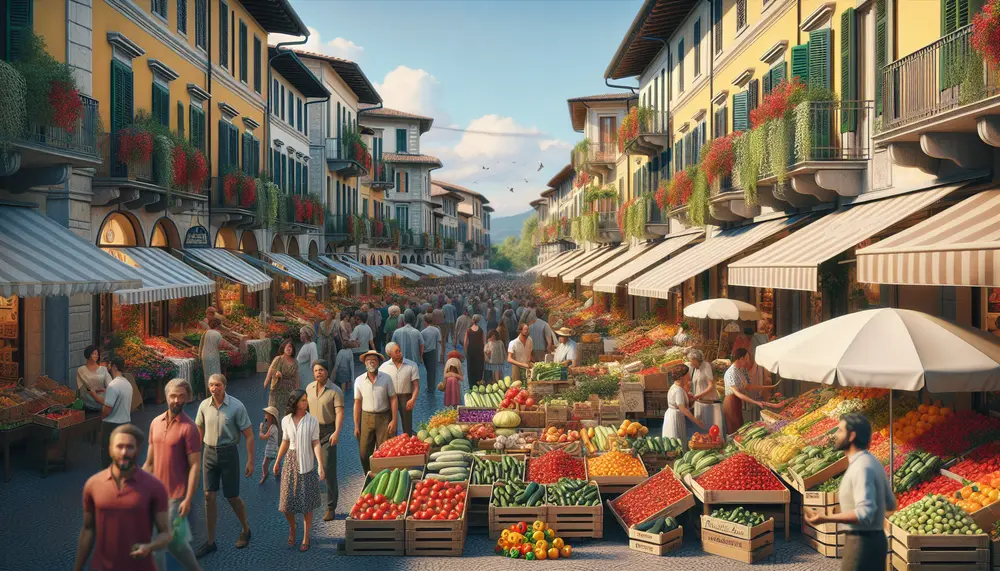
Italy's food markets function as living social institutions, not tourist attractions. The Mercato Centrale in Florence, the Mercato di Porta Palazzo in Turin (Europe's largest open-air market with over 800 stalls), and Palermo's Ballarò — each reflects a regional identity you won't find in any museum. Arriving before 8 a.m. is non-negotiable: by 10 a.m., the best produce is gone, and the authentic morning ritual of vendors and locals has concluded. Engage sellers directly; most respond warmly to genuine curiosity about provenance. Ask a vendor in Bologna's Mercato di Mezzo where their Parmigiano-Reggiano was aged, and you'll likely get a 10-minute education on wheels and months of maturation.
Understanding what you're looking at requires context. The regional food traditions that shape Italian daily life are inseparable from geography — Sicilian markets overflow with blood oranges and wild fennel that simply don't appear in Piedmontese stalls. Reading a market means reading a landscape.
Cooking Classes: Separating Substance from Performance
The Italian cooking class industry ranges from genuinely transformative to glorified entertainment. The distinguishing factor is almost always the teacher's background. Seek out classes run by home cooks (massaie) or local chefs rather than hospitality-facing tourism operators — organizations like Cesarine connect travelers with vetted home cooks across 400+ Italian cities, offering sessions that teach handmade pasta techniques refined over 40 years rather than 40 minutes. Expect to spend 3–4 hours minimum for anything meaningful; half-day formats allow time to source ingredients together at a market before cooking.
Regional specificity matters enormously. A Roman cooking class should focus on cacio e pepe, coda alla vaccinara, and offal traditions — not generic pasta. If a class in Naples doesn't address the 48-hour fermentation window for authentic pizza dough, look elsewhere. Italy's most memorable culinary encounters happen away from the standard tourist circuit, often in private homes or small towns where preservation of technique is a point of local pride.
The rituals surrounding eating deserve as much attention as the cooking itself. Aperitivo hour in Milan (traditionally 6–9 p.m.) is a social compact, not a happy hour gimmick — the Campari-based drinks are secondary to the neighborhood gathering function. Sunday lunch in any Italian household routinely runs three hours and involves four courses; accepting an invitation is one of the most culturally immersive experiences available to any traveler. The full texture of Italian heritage reveals itself most clearly at the table, where regional history, family identity, and seasonal rhythm converge into a single shared meal.
- Best market timing: Arrive 30–60 minutes before opening to observe setup; leave before 10 a.m. to experience full activity
- Cooking class red flags: Groups larger than 8, pre-portioned ingredients, no market component, English-only instruction
- Food rituals worth scheduling around: Sunday lunch (ask your accommodation host), aperitivo in northern cities, fish market auctions in Catania (starts at 5 a.m.)
Art Cities vs. Emerging Cultural Hubs: Florence and Venice Compared to Bologna and Matera
Italy's cultural geography divides neatly into two distinct layers: the canonical art cities that have anchored Western tourism for over two centuries, and a growing constellation of secondary destinations that increasingly attract discerning travelers seeking depth over spectacle. Understanding what each layer genuinely offers — and what it costs you in terms of crowds, money, and authenticity — is essential for building an itinerary that actually delivers.
Florence and Venice: Unmatched Density, Unavoidable Trade-offs
Florence contains roughly 40% of the world's Renaissance art patrimony within a city of just 360,000 inhabitants. The Uffizi alone holds over 3,000 works, and the Accademia's Michelangelo collection draws nearly 1.8 million visitors annually. Venice, meanwhile, operates as a living architectural museum — 118 islands, 400+ bridges, and a building stock that dates almost entirely to before 1700. These numbers are not just impressive; they represent an irreplaceable concentration of human creative achievement that no emerging destination can replicate.
The trade-off is structural: both cities have been fundamentally reshaped by mass tourism. Florence receives approximately 16 million visitors per year against a resident population that has shrunk by 40% since the 1970s. Venice now implements day-tripper entry fees between April and July, a clear signal that its carrying capacity has been breached. If you visit without strategic planning — pre-booked timed entries, early morning starts, off-season timing — you risk experiencing these cities primarily as crowd-management exercises rather than cultural encounters. Those looking to move past the most trafficked itineraries in Italy often find that even within Florence, neighborhoods like Santo Spirito or San Miniato al Monte offer dramatically different experiences than the Ponte Vecchio corridor.
Bologna and Matera: Substance Without the Saturation
Bologna receives roughly 2.5 million overnight visitors annually — a fraction of Florence's numbers — yet delivers a cultural product of exceptional quality. Its 40 km of medieval porticoes, recently inscribed on the UNESCO World Heritage List, frame a city that functions as a genuine academic and gastronomic capital rather than a museum. The University of Bologna, founded in 1088, continues to animate the city's intellectual life in ways that are tangible on any given Tuesday afternoon. The Pinacoteca Nazionale holds Raphael's Ecstasy of Saint Cecilia in conditions that allow real contemplation.
Matera operates on an entirely different register. The Sassi di Matera — cave dwellings continuously inhabited for at least 9,000 years — represent one of Europe's most extraordinary living archaeological sites. After serving as Italy's designation as European Capital of Culture in 2019, Matera has developed a sophisticated cultural infrastructure without losing the raw physical drama that makes it unique. Boutique hotels carved directly into tufa rock, serious contemporary art programming, and proximity to the Valle d'Itria and Taranto create a regional circuit that rewards several days rather than a single stop. As part of Italy's broader and often underexplored heritage landscape, Basilicata represents precisely the kind of region that repays genuine curiosity.
The practical recommendation: treat Florence and Venice as mandatory foundations that require serious logistical preparation, and allocate at least 30% of your Italian itinerary to destinations like Bologna, Matera, Lecce, or Palermo. The cultural return per euro spent and per hour invested consistently favors the secondary tier.
Festivals, Carnivals, and Sacred Celebrations: Participating in Italy's Annual Cultural Calendar
Italy operates on a cultural rhythm that most visitors never fully decipher from a guidebook. With over 5,000 registered sagre (local food and harvest festivals) held annually, plus hundreds of historical pageants, religious processions, and civic celebrations, the country's event calendar is dense enough to structure an entire trip around. The difference between watching a festival and actually participating in one comes down to timing, local knowledge, and understanding what each event actually means to the community hosting it.
The Major Anchors: Carnevale, Holy Week, and the Summer Pageants
Carnevale di Venezia draws around 3 million visitors over its two-week run in February, but the event most worth your attention is the Volo dell'Angelo — the Angel's Flight — when a costumed figure descends by wire from the Campanile di San Marco to the Piazza. Arrive at least 90 minutes early and position yourself near the Procuratie Vecchie for an unobstructed view. Meanwhile, the lesser-known Carnevale di Putignano in Puglia, running since 1394, offers satirical papier-mâché floats and genuine community involvement without the Venetian price premium.
Settimana Santa (Holy Week) transforms Sicilian towns like Trapani and Enna into living medieval theatre. Trapani's Processione dei Misteri lasts 24 hours continuously, with 20 wooden sculptural groups from the 18th century carried through the streets by barefoot confraternity members. This isn't a performance staged for tourists — the confraternities train for months, and participation in carrying the misteri is an inherited honor. Attending means respecting the religious gravity: dress conservatively, silence your phone, and observe from the sidelines unless invited closer.
Summer brings the pageant circuit: Siena's Palio (July 2 and August 16), Arezzo's Giostra del Saracino, and Asti's Palio all recreate medieval rivalries with genuine civic stakes. The Siena Palio is arguably the most misunderstood event in Italy — what tourists see as a 90-second horse race is actually the culmination of months of political maneuvering between the 17 contrade. To understand the depth of what you're witnessing, read up on how centuries of Italian civic tradition have shaped these neighborhood identities before you arrive.
The Underrated Events That Reward Advance Planning
The Infiorata di Spello in Umbria (Corpus Christi, late May or June) sees residents creating elaborate flower-petal carpets stretching 900 meters through the town's streets overnight — and then a single religious procession walks across them by morning. The artistry lasts hours; the destruction is instantaneous and intentional. Booking accommodation in Spello itself, rather than day-tripping from Assisi, means you can watch the installation process begin at midnight, which is the real spectacle.
For a broader framework of how these events connect to Italy's regional identities, exploring the layered heritage that distinguishes one Italian province from the next reveals why a festival in Calabria feels fundamentally different from one in Lombardy, even when both nominally celebrate the same saint. Regional pride, historical memory, and local cuisine converge differently in each.
- Book accommodation 6–12 months ahead for Venice Carnevale, Siena Palio, and Spello Infiorata
- Attend the eve of a sagra, not just the main day — setup and rehearsal nights show the authentic community side
- Check the Catholic liturgical calendar when planning: many of Italy's most compelling events pivot on feast days invisible in standard travel calendars
- Contact local Pro Loco offices directly — they provide schedules and often connect visitors with families who host festival-goers
Travelers who dig past the headline events consistently report the most memorable experiences. A village festa patronale with 800 people, a brass band, and three generations dancing in the piazza is exactly the kind of encounter that no itinerary built around monuments can reliably produce — but one that Italy offers in abundance if you know where to look.
Immersive Cultural Travel Strategies: Homestays, Artisan Workshops, and Slow Travel in Italy
The most transformative Italy experiences rarely appear in mainstream travel packages. Spending two weeks at a single agriturismo in Umbria, learning to press olives and harvest grapes alongside the family who has worked that land for four generations, will teach you more about Italian identity than a 10-city sprint ever could. This deliberate, unhurried approach — what practitioners call slow travel — fundamentally changes your relationship to a place and its people. Italy's infrastructure for this kind of travel is remarkably well-developed, from formal homestay networks to regional craft guilds that open their workshops to serious visitors.
Homestays and Agriturismi: Living Inside the Culture
Italy has approximately 24,000 registered agriturismi, but quality varies enormously. The ones worth seeking out are properties where the family still derives the majority of their income from agriculture, not tourism. Ask directly: what percentage of their food comes from their own land? At Fattoria La Vialla in Tuscany or comparable estates in the Langhe wine country, guests participate in seasonal cycles — truffle hunting in November, grape harvesting in September — rather than simply observing them. Expect to pay €80–150 per night for full board at a genuine working farm, significantly more than a budget hotel, but the immersive value is incomparable.
Urban homestays through platforms like Servas International or curated agencies such as Homelike offer a different dimension: daily life in a Palermo apartment, grocery shopping at the Ballarò market with your host, or Sunday lunch with a Bolognese family where the ragù simmers for four hours. These experiences connect directly to the layered social fabric that defines regional Italian identity, something no museum can replicate.
Artisan Workshops: Learning as Cultural Access
Italy's artisan traditions — liuteria in Cremona, mosaico in Ravenna, ceramica in Grottaglie, vetro soffiato on Murano — represent living heritage, not museum pieces. Multi-day workshops with master craftspeople provide cultural access that goes far beyond observation. The Scuola del Mosaico in Ravenna offers week-long intensive courses from €600, while Murano glassblowing workshops range from 2-hour introductions (€80–120) to apprenticeship-style residencies. The key is booking directly with individual maestros rather than through tourist aggregators, which often feature artisans who primarily perform for visitors rather than practice commercially viable crafts.
Researching through regional chambers of commerce (Camere di Commercio) or organizations like Confartigianato connects you with practitioners whose work sustains regional economies. As explored in resources covering craft traditions that exist well outside Italy's most-visited tourist circuits, the most authentic encounters happen in workshops where you are, at least temporarily, a student rather than a spectator.
- Minimum stay principle: Commit to at least 5–7 days in any one location to move past surface-level interactions
- Language investment: Even basic Italian (A2 level) unlocks conversations and invitations that English-only travelers never receive
- Shoulder season advantage: October–November and March–April offer authentic local rhythms without the social distortion of peak tourism
- Recurring relationships: Returning to the same agriturismo or workshop annually builds genuine long-term connections that deepen with each visit
The practical architecture of slow travel in Italy demands advance planning, particularly for workshop residencies and harvest-season agriturismi that book out 6–12 months ahead. That friction is, paradoxically, part of what makes the resulting experience so different from conventional tourism — you arrive as someone who chose this place deliberately, and Italians notice that distinction immediately.
Italian Fashion, Architecture, and Design as Cultural Expression: From Historic Palazzos to Milan's Contemporary Scene
Italy's creative output has never existed in isolation — it flows directly from centuries of craftsmanship, regional identity, and an almost philosophical commitment to la bella forma. Understanding Italian fashion and design means reading them as cultural documents, not just aesthetic products. The same sensibility that produced Palladio's Villa Rotonda in the 1590s continues to inform how Milanese architects approach a residential conversion in Porta Nuova today. Form, material, and place remain inseparable in the Italian creative vocabulary.
Milan's Design Districts: Where Industry Meets Cultural Identity
Milan operates as Italy's creative capital with a density that rewards deliberate exploration. The Fuorisalone during April's Salone del Mobile draws over 400,000 visitors annually, transforming the entire city into a design laboratory — but the real insight comes from understanding the permanent infrastructure. The Brera Design District houses around 100 showrooms and studios within a neighborhood that also contains Pinacoteca di Brera, one of Italy's finest painting collections. This proximity isn't accidental; Milanese design culture consciously positions itself within art-historical context. For visitors serious about contemporary Italian creativity, the Fondazione Prada in the Largo Isarco complex offers perhaps the most intellectually rigorous intersection of fashion heritage, contemporary art, and architectural ambition — Rem Koolhaas's 2015 conversion of a 1910 distillery remains a landmark of adaptive reuse.
Fashion houses have increasingly opened their archives and foundations to the public. Fondazione Valentino, the Museo Salvatore Ferragamo in Florence's Palazzo Spini Feroni, and Gucci Garden in the Palazzo della Mercanzia all frame fashion within broader narratives of Italian cultural production. These spaces reward visitors who approach them with the same attention they'd bring to any serious museum. Italy's rich heritage in textile manufacturing — particularly the wool mills of Biella and the silk production concentrated around Como — provides essential context that these institutions increasingly foreground.
Reading Architecture as Living History
Italy contains roughly 40% of the world's UNESCO-listed cultural heritage, but the more instructive architectural experiences often happen outside designated monuments. The cortile — the internal courtyard of a Renaissance palazzo — represents a spatial idea that migrated from Roman domestic architecture through the medieval period into the 16th century and continues influencing commercial and residential design today. In Bologna, virtually every medieval street contains cortili accessible during business hours, offering a tangible connection between historical form and daily life. Venice's Fondaco dei Tedeschi, now a luxury department store after OMA's 2016 renovation, demonstrates how contemporary design practice negotiates with a 16th-century trading house without erasure or pastiche.
For travelers who want to move beyond surface-level sightseeing, exploring Italy's layered creative traditions means recognizing that a Milanese showroom and a Venetian palazzo are speaking the same formal language across five centuries. Craft visits to Murano glassblowing studios, the leather workshops of the Santa Croce district in Florence, or tailoring ateliers in Naples's Riviera di Chiaia neighborhood all reinforce this continuity.
Practical orientation matters here. The deeply regional nature of Italian identity means design culture in Turin differs fundamentally from that in Rome or Palermo — Torino's industrial design heritage, shaped by Fiat and the Olivetti legacy in nearby Ivrea (itself a UNESCO site since 2018), produces a modernist sensibility with no direct equivalent elsewhere in the country. Visitors who treat design tourism as a single homogeneous category will miss the specificity that makes Italy genuinely instructive. As less obvious cultural destinations like Matera, Lecce, and Palermo gain international attention, their distinct architectural vocabularies — Sassi cave dwellings, Baroque excess, Arab-Norman fusion — expand the picture of what Italian design culture actually encompasses.
FAQ about Cultural Experiences in Italy
What are the best ways to engage with local culture in Italy?
To engage with local culture, consider participating in regional festivals, visiting artisan workshops, exploring local markets, and enjoying homestays or agriturismi to experience daily life.
Why is regional identity important in Italian culture?
Regional identity in Italy shapes dialects, cuisines, and traditions, revealing a diverse cultural landscape beyond the well-known landmarks and helping travelers understand the richness of Italian heritage.
How can I experience traditional Italian food culture?
To experience traditional food culture, visit local markets at early hours, take cooking classes with home cooks, and participate in family meals or local rituals such as Sunday lunch or aperitivo hours.
What are some lesser-known cultural sites in Italy?
Lesser-known cultural sites include Matera’s cave dwellings, Herculaneum’s preserved ruins, and the Sacri Monti mountain sanctuaries in Northern Italy, which offer rich, authentic experiences away from the crowds.
How should I plan my itinerary to embrace cultural immersion?
Plan your itinerary by focusing on one region at a time, participating in local festivals, and seeking accommodations in smaller towns to immerse yourself in the local culture and traditions.